




Health DG talks a major let-down, says CAHP
A much-anticipated dialogue initiated by Health Director-General Dr Mohd Ismail Merican ended as a major disappointment for the Coalition Against Healthcare Privatisation (CAHP).
A much-anticipated dialogue initiated by Health Director-General Dr Mohd Ismail Merican ended as a major disappointment for the Coalition Against Healthcare Privatisation (CAHP).
Coalition members who met Ismail said he failed to provide satisfactory answers to the three main issues on the agenda during the 90-minute meeting in Putrajaya yesterday.
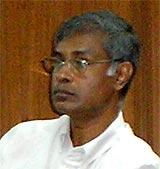 Contacted today, CAHP secretary Dr Jeyakumar Devaraj (
pix
) said they left feeling very disappointed and will now proceed to request for a meeting with Prime Minister Abdullah Ahmad Badawi.
Contacted today, CAHP secretary Dr Jeyakumar Devaraj (
pix
) said they left feeling very disappointed and will now proceed to request for a meeting with Prime Minister Abdullah Ahmad Badawi.
"We want the private treatment project to be called off and we're putting Ismail on notice. He said the issues raised were beyond his jurisdiction as he was subject to a higher authority," he said.
"Therefore, we felt it would be pointless to keep knocking our heads against the ministry, so we will be sending a letter directly to the prime minister for a meeting."
The coalition is opposed to medical specialists providing private treatment after working hours as a means of boosting their income claiming this will affect the quality of treatment for paying patients.
In a memorandum to Ismail, it argued that the presently 30 percent of government specialists were overworked. In addition to clinical work, it said the specialists were also expected to guide and train graduate doctors and trainee specialists as well as do other monitoring work.
Services commission
The coalition claimed the implementation of private wards in Universiti Hospital and Hospital Universiti Kebangsaan Malaysia in Kuala Lumpur since 1998 had affected the treatment of regular patients and quality of medical courses.
"We proposed a service commission for doctors similar to what the armed forces and judges have in order to reform the system but the idea was shot down yesterday," said Jeyakumar.
Last month, Health Minister Dr Chua Soi Lek said private clinics were allowed in government hospitals to prevent rich patients from denying poor patients access to affordable and professional medical care.
 National news agency
Bernama
quoting Ismail said plans are underway to introduce the 'full-paying patients' scheme at the Putrajaya and Selayang hospitals in June as a pilot project spanning between six months and a year.
National news agency
Bernama
quoting Ismail said plans are underway to introduce the 'full-paying patients' scheme at the Putrajaya and Selayang hospitals in June as a pilot project spanning between six months and a year.
He was reported saying that the full-paying concept was "a mechanism for patients who could afford to pay for the healthcare services".
"Under the concept, the patients will be charged for the service given based on the rate certified by the Malaysian Medical Association," he said, according to Bernama .
Yesterday's meeting also proved futile in getting details on the government-appointed consultant for the proposed national healthcare financing scheme.
No details
Jeyakumar said Ismail was not forthcoming with details pertaining to the identity of the consultant and also did not provide reasons why foreign workers should pay more for health treatment.
In October last year, Chua announced that foreign patients including migrant workers will be paying 'private patient' rates for medical treatment.
Coalition partner Malaysian Trades Union Congress (MTUC) president Syed Shahir Syed Mohamud said Ismail did not provide an explanation except to say that it was beyond his authority.
"He said the issues were policy matters and not under the ministry's purview as the scheme was being finalised by the Economic Planning Unit," he said when contacted.
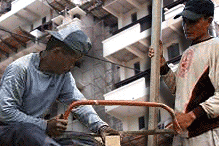 Expressing the MTUC's concerns, he said the workers were already being charged first-class rates and if the new policy was implemented, they would end up paying three times higher.
"We're saying that foreign workers are already paying a levy amounting to RM8 billion a year but they're not getting the treatment they are entitled to."
The coalition wants the government to use part of the levy to subsidise the cost of medical treatment for foreign workers in government hospitals and to immediately scrap the idea for higher charges.
The CAHP comprises over 80 non-governmental organisations, civil society bodies, political parties and trade unions.


Are you sure you want to delete this comment?
This action cannot be undone.