




Chicken culling: Farmers want compensation
The government must compensate farmers for chickens culled to control the spread of bird flu, the Federation of Livestock Farmers Association of Malaysia (FLFAM) said today.
The government must compensate farmers for chickens culled to control the spread of bird flu, the Federation of Livestock Farmers Association of Malaysia (FLFAM) said today.
The farmers believe that the survival of the RM10 billion industry is at stake due to the outbreak and compensation would help the industry weather the crisis.
"We are not seeking profit from compensation. We have contributed a lot to society and we want to ensure the sustainability of our industry," FLFAM representative Jeffrey Ng told a press conference in Subang Jaya, Selangor.
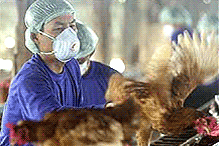 "Without compensation, the industry will be severely affected and we might not be able to supply the cheapest source of protein to consumers in the long run," he added.
Furthermore, Ng warned that some farmers might decide not to report about sick or dead chickens on their farms due to fear of financial loss.
Presently, health department officials are combing various areas in Perak - Malaysia's largest poultry-producing state - for birds infected with the deadly H5N1 virus.
News of the outbreak has led farmers in affected areas to slash the price of chicken as demand for their produce dwindle.
Towards this, FLFAM is urging all its members to cap the price of 'ex-farm' chicken at RM2.30 per kg and cut production of broilers by 30 to 40 percent in tandem with the demand slump.
The ceiling price for ex-farm chicken is RM4 per kg while the industry produces about 1.2 mil broiler chickens daily.
Effective tomorrow, the move was designed to prevent farms in affected areas being possibly forced out of business by their competitors located in unaffected states.
While admitting that there can be no enforcement of price caps and reducing production, the federation hoped that their members would show solidarity at this 'critical moment'.
Ban free-roaming chickens
The federation also blamed the unregulated rearing of free-roaming chickens as the main culprit for the virus spreading and suggested the government impose an immediate ban on such practice.
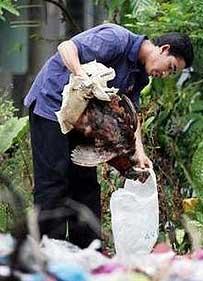 The government should also tighten surveillance along borders to curb poultry smuggling activities as well as suspend the issuance of import licenses of pet birds for at least six months.
Unlike free-roaming chickens, said Ng, commercially raised chickens were almost unable to come into contact with other birds which might carry the virus.
"Thus far, there have been no commercial farms that have been found with chickens affected with bird flu," said veterinarian and FLFAM member Dr Tan Chee Kiong.
However, Tan explained that several commercial farms nationwide had to face culling exercises just because they were within a one kilometre radius of the are where an infected bird was found.


Are you sure you want to delete this comment?
This action cannot be undone.