




2020 goal: A tough task ahead
Malaysia has a difficult task in achieving its goal of becoming a developed nation by 2020, in the face of a continuing divide between its rich and poor, and inequality between the races, experts say.
Malaysia has a difficult task in achieving its goal of becoming a developed nation by 2020, in the face of a continuing divide between its rich and poor, and inequality between the races, experts say.
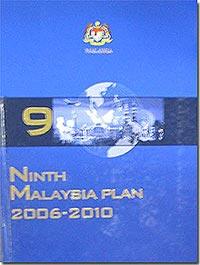
 Prime Minister Abdullah Ahmad Badawi on Friday unveiled a new five-year development plan worth about RM200 billion aimed at tackling poverty and spurring economic growth.
The Ninth Malaysia Plan (9MP) targets economic growth of 6.0 percent until 2010 and is aimed at succeeding where eight others have failed - to bridge a chasm between rich urbanites and poor rural villagers.
"It'll be a tough one. It's not going to be a smooth ride," warned AmSecurities economist Suhaimi Saidi.
"At the end of the day it's all about managing human capital, and also equitable distribution of opportunity, which is not happening at the moment," he said.
The government-linked New Straits Times newspaper predicted on Saturday that the final 15 years leading up to 2020 "may turn out to be the toughest race Malaysians will ever run.
Firm commitment
While Kuala Lumpur and other major cities are enjoying the fruits of development, Abdullah admitted that hundreds of rural schools lack even basic facilities such as piped water and electricity.
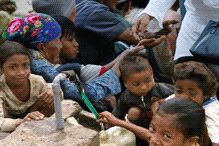 In a marked shift from previous plans which emphasised infrastructure mega-projects, Abdullah's spending priorities are education and training, to boost Malaysia's competitiveness for fear of losing out to China and India.
"If Malaysia is going to achieve its targets in terms of reducing hardcore poverty and reducing the poverty rate, the focus must be on the rural areas... and on the indigenous communities in Sabah and Sarawak," said United Nations Development Programme representative Richard Leete.
"I think there is a firm commitment now not to leave parts of Malaysia behind," he said.
The government also wants to curb the continuing income disparity between the majority Malay Malaysians and the minority ethnic Chinese Malaysians who control much of the business sector, as part of its long-running preferential race policy.
Abdullah pointed to 1960s civil strife between Malays and Chinese which he said was the result of "strained relations between different ethnic groups caused by inequitable distribution of the country's economic cake.
"If unaddressed, these disparities can threaten the harmony and stability we enjoy and consequently thwart the country's economic development," he warned.
He introduced new strategies to lift the share of corporate equity held by the bumiputera from 18.9 percent presently to 30 percent by 2020 - a deadline that has been extended three times.
But there is a growing sense that Malaysia's plan to become the world's first developed Muslim nation by 2020 is unattainable, after economic growth averaged just 4.5 percent between 2001 and 2005,
'Lofty ambition'
 "In my opinion now nobody seriously believes we can achieve it. It's a lofty ambition. We can't realise it," said noted political analyst P Ramasamy.
"I don't think the Plan addresses the fundamental problems," he said. "Malaysia needs to decrease religious and racial polarisation."
"We are not even sure what language to use in our education system," he said, referring to a long-running debate on whether schools should use English or Malay and charges that standards were higher during the British colonial era.
"Superficially, it (9MP) looks good. But if you scratch the surface, you'll be disappointed," he said.
Shamsul Amri Baharuddin from the National University Malaysia said that barring any external shocks, the 2020 goal was within reach, but even so the government was not likely to achieve other important targets.
"It is unlikely the government will achieve a 30 percent share for Malays," he said, predicting a 20 to 25 percent range instead.


