




Whole lotta love at the DBKL
Malaysia may see a protest along the lines of John Lennon's 'make love not war' gatherings of the past. However, the local variant, will be a more subdued affair and strictly without nudity.
Malaysia may see a protest along the lines of John Lennon's 'make love not war' gatherings of the past. However, the local variant, will be a more subdued affair and strictly without nudity.
The protest is not over any war but rather the right to kiss, hold hands and embrace in public. In short, it is against vague moral policing.
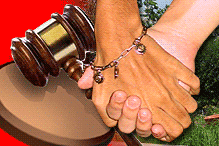 It follows a court ruling that a couple caught by Kuala Lumpur City Hall (DBKL) officers for kissing and hugging in public three years ago could be charged for indecent behaviour.
The couple have since denied the charge and claimed that they were issued summonses because they had refused to offer bribes to the officers.
Dozens of people are expected to turn up at the 1.30pm protest outside the DBKL headquarters tomorrow.
"We will be holding hands, giving our partners hugs and kisses on the cheeks. Those interested can come along with their partners and join us," said DAP Youth leader Chong Chieng Jen when contacted.
Last week, Chief Justice Ahmad Fairuz Sheikh Abdul Halim, in a federal court ruling , stated that hugging and kissing could be deemed as indecent behaviour and not the norm for Malaysians.
Vague laws
 Commenting on this, Chong said while DAP Youth does not support indecent public behaviour, it nevertheless disagreed with local authorities enforcing such laws.
There should be a uniformed law applicable throughout Malaysia stating clearly what amounts to indecency, he said, adding that the Parks (Federal Territory of Putrajaya) By Laws 2002 is too vague.
"It merely prohibits any person from behaving in an indecent manner in public without defining what is indecent.
"This leaves the City Hall enforcement officers with wide discretionary powers to selectively prosecute," said the Bandar Kuching parliamentarian.
The Bar Council has also criticised the action taken against the couple, saying decency laws should be invoked only when the conduct in question threatened public order or the public's sense of decency and not that of those in power.


