



ICC decision on crimes against Rohingyas shows flaws in anti-Rome Statute stance
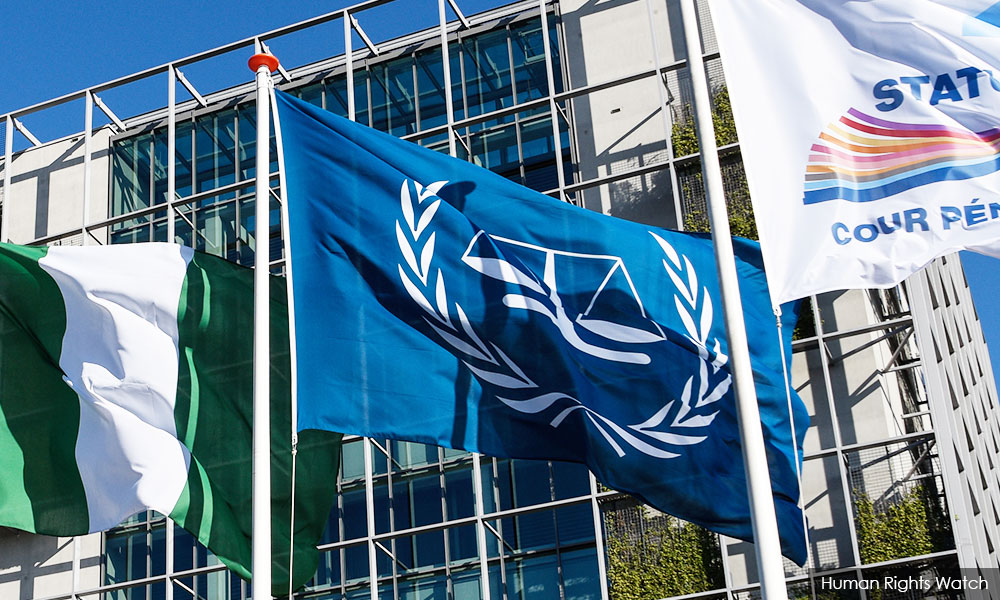
COMMENT | Yesterday, the International Criminal Court’s (ICC) Pre-Trial Chamber III announced its “Decision Pursuant to Article 15 of the Rome Statute on the Authorisation of an Investigation into the Situation in the People’s Republic of Bangladesh/Republic of the Union of Myanmar”, whereby the ICC authorised the Prosecutor to commence investigations into crimes in Myanmar/Bangladesh.
For context, under Article 13 of the Rome Statute, there are 3 ways to trigger the ICC’s jurisdiction in respect of the crimes listed in Article 5 (genocide, crimes against humanity, war crimes and crimes of aggression):
(a) a referral by a State Party to the Prosecutor;
(b) a referral by the United Nations Security Council to the Prosecutor; and
(c) the Prosecutor itself initiates an investigation (investigation proprio motu).
In this instance, the third method was triggered – the Prosecutor sought to initiate an investigation proprio motu. It is a requirement under Article 15 of the Rome Statute for the Prosecutor to seek authorization from the ICC beforehand.
At this stage, the ICC needs to consider 2 factors in order to decide whether authorization should be given:
(i) if the case appears to fall within the jurisdiction of the Court; and
(ii) if there is a “reasonable basis” to proceed with an investigation.
The ICC found that both factors have been fulfilled...
COMMENT | Yesterday, the International Criminal Court’s (ICC) Pre-Trial Chamber III announced its “Decision Pursuant to Article 15 of the Rome Statute on the Authorisation of an Investigation into the Situation in the People’s Republic of Bangladesh/Republic of the Union of Myanmar”, whereby the ICC authorised the Prosecutor to commence investigations into crimes in Myanmar/Bangladesh.
For context, under Article 13 of the Rome Statute, there are 3 ways to trigger the ICC’s jurisdiction in respect of the crimes listed in Article 5 (genocide, crimes against humanity, war crimes and crimes of aggression):
(a) a referral by a State Party to the Prosecutor;
(b) a referral by the United Nations Security Council to the Prosecutor; and
(c) the Prosecutor itself initiates an investigation (investigation proprio motu).
In this instance, the third method was triggered – the Prosecutor sought to initiate an investigation proprio motu. It is a requirement under Article 15 of the Rome Statute for the Prosecutor to seek authorization from the ICC beforehand.
At this stage, the ICC needs to consider 2 factors in order to decide whether authorization should be given:
(i) if the case appears to fall within the jurisdiction of the Court; and
(ii) if there is a “reasonable basis” to proceed with an investigation.
The ICC found that both factors have been fulfilled. Consequently, the ICC authorized the Prosecutor to commence an investigation propio motu.
While the ICC decision must be celebrated, it also reinforces the flaws contained in the alleged academic presentation to the Council of Rulers dated April 2, 2019. (I have previously critiqued the presentation.)

The Malaysian Government withdrew from the Rome Statute on April 5, 2019. The presentation was leaked to the public by a student activist on April 7, 2019.
The crime of “deportation”
The alleged academic presentation to the Council of Rulers boldly asserts as follows: “Malaysia yang tidak terjejas apa-apa dengan jenayah ini dan tidak terikat dengan krisis Rohingya di Myanmar tidak boleh memaksa ICC untuk mengambil tindakan ke atas Myanmar walaupun selepas menjadi ahli statut Rom. Hanya Myanmar sahaja yang boleh membawa kes ini ke ICC dengan sendirinya oleh kerana jenayah berlaku di dalam wilayahnya. Tetapi kemungkinan kes ini dibawa oleh Myanmar ke ICC adalah sangat rendah…” (Malaysia, not affected by this crime and not involved in the Rohingya crisis in Myanmar, cannot force the ICC to take action against Myanmar, even after it has become a signatory to the Rome Statute. Only Myanmar can refer the case to the ICC because the crime occurred within its borders. But the possibility of Myanmar referring this case to the ICC is highly unlikely...)
The first flaw: this statement is based on an erroneous assumption that crimes were conducted exclusively within the borders of Myanmar (a non-State party) and not within the borders of any State party, and hence no State party can refer the matter to the ICC. In other words, there is no territorial link.
The academics failed to take into account the crime of “deportation”, which is a “crime against humanity” under Article 7(d) of the Rome Statute. The crime of “deportation” happens when the perpetrator deports, without grounds, persons to another State or location, by expulsion or other coercive acts.
The ICC’s recent decision, in essence, held that it has territorial jurisdiction over Myanmar’s alleged “deportation” of Rohingya people because the victims crossed the borders of Bangladesh (a State Party) – the crime may have began in Myanmar, but was “completed” when the victims entered Bangladesh.
At the outset, whenever a crime of “deportation” occurs or is completed within the territory of a State party, then any State party to the Rome Statute can refer the matter to the Prosecutor for further action (see Article 14).
This means that, even if Bangladesh, as a State party, does not refer the matter to the Prosecutor, Malaysia as a State party can refer the matter to the Prosecutor. It is a symbolic fact that all States have an interest in the repression of international crimes.
But even if we accept the academics’ line of reasoning that a State party can only make a reference if a crime occurs within its territory, there is good ground to believe – based on the ICC’s recent decision – that Malaysia does have a territorial link to the crime of “deportation” of Rohingya people.
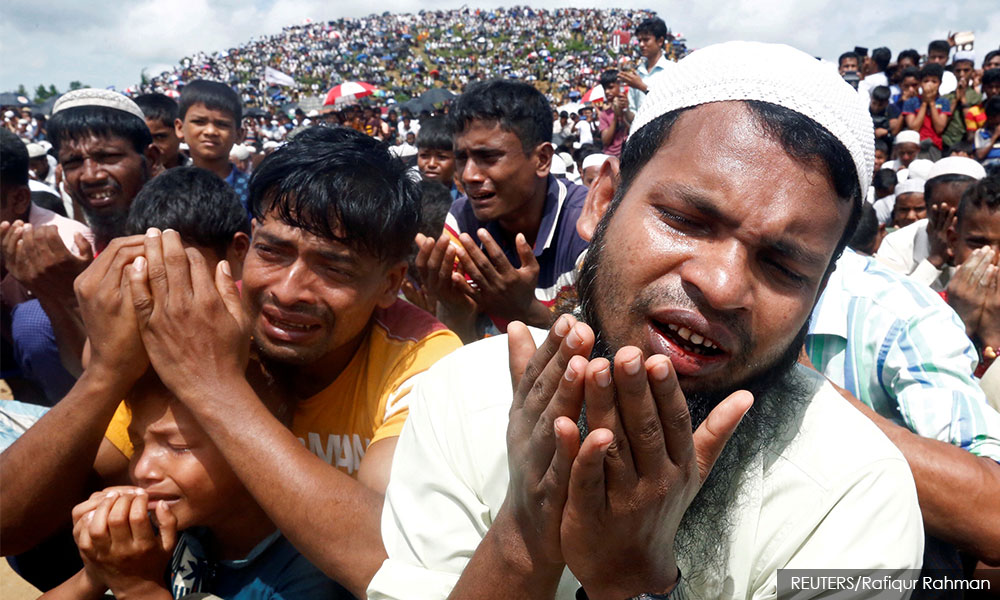
Tens of thousands of Rohingya people have crossed by boats into Malaysian territory and have remained within our borders for refuge. Dr Mahathir confirmed in his speech to the United Nation’s General Assembly on September 25, 2019 that “we are also hosting close to 100,000 registered Rohingya refugees. There are many more unregistered. While this may seem like a small number compared to those in Bangladesh, plenty of resources have been dedicated to allow them a decent life while they await relocation to a third country”.
In other words, if Malaysia ratifies the Rome Statute, there is a solid case to argue that it can refer the matter directly to the Prosecutor under Article 13(a) to trigger a case for the crime of “aggression” by Myanmar against the Rohingya people.
The academics’ view that Malaysia is “tidak terjejas” (not affected) and cannot present a case for the Rohingya people before the ICC is, hence, fundamentally wrong.
The complementarity principle
The second flaw of the alleged academic presentation is when they made this statement: “Di dalam konteks Malaysia, tafsiran “tidak mahu atau tidak mampu” untuk menyiasat atau mendakwa hanyalah berdasarkan keputusan Pendakwa ICC semata-mata” (In the context of Malaysia, the interpretation "unwilling or unable" to investigate or prosecute is solely based on the decision of the ICC's prosecutor).
This is highly problematic from the onset. Article 17 of the Rome Statute clearly provides that it is the ICC – and not the Prosecutor – which decides whether the “unable or unwilling” principle has been fulfilled.
The ICC noted that Myanmar has not raised, thus far, any objections to the admissibility of this case on the complementarity principle, and said that it may receive such objections in the future and will decide accordingly.
The ICC, in its recent judgment, reaffirms that the ICC, not the Prosecutor, is the sole adjudicator on whether the “unable or unwilling” (“tidak mahu atau tidak mampu”) principle is complied with.
The impression given by the academics is that if Malaysia is a State party, it may be at the mercy of a biased Prosecutor who may unilaterally decide on whether our local criminal justice system has been able and willing to prosecute Rome Statute crimes.
But that is not the case at all – that decision lies ultimately with a panel of independent ICC judges who will give parties a right to be heard.
The abovementioned ICC’s recent decision regarding jurisdiction in respect of the crime of “deportation” and the complementarity principle is not novel. They are trite principles in international law – the ICC’s recent decision merely reinforced the same.
In fact, the ICC’s Pre-Trial Chamber I decision dated September 6, 2018 on “Prosecution’s Request for a Ruling on Jurisdiction under Article 19(3) of the Statute” decided on these same issues – many months before the alleged academic presentation dated April 2, 2019.
It is unfortunate and saddening that the abovementioned perspectives were not brought to the attention of the powers-that-be, particularly when ratification of the Rome Statute was such an important foreign policy agenda for Malaysia.
LIM WEI JIET is a constitutional lawyer and the secretary-general of the National Human Rights Society (Hakam).
The views expressed here are those of the author/contributor and do not necessarily represent the views of Malaysiakini.


Report this comment
Are you sure you want to delete this comment?
This action cannot be undone.