




Teens death couldve been prevented: Suhakam
Eighteen-year-old S Hendry, who was found dead in his cell at Johor's Simpang Renggam rehabilitation and detention centre had 'most probably' committed suicide, a Suhakam panel says after conducting an open inquiry into the death.
Eighteen-year-old S Hendry, who was found dead in his cell at Johor's Simpang Renggam rehabilitation and detention centre had 'most probably' committed suicide, a Suhakam panel says after conducting an open inquiry into the death.
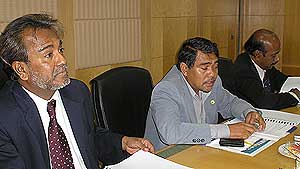
Releasing an 89-page report on the panel's decision this afternoon, commissioner Muhammad Shafee Abdullah told reporters the three-member panel which included him was convinced that there was no foul play in the death of the youth last November.
 The teenager had been detained under the Emergency Ordinance for investigations into alleged motorcycle thefts and murder cases. He died on the Nov 19, 2005, found hanging in his cell just hours after he was transferred from the Kajang police station when he had been held for two and half months.
Shafee, however, noted that Hendry's death could have been avoided if the warders had conducted their patrols as required and if the deceased had not been placed alone in a cell.
"If the rounds had been done properly and every 30 minutes as required, the death could have been avoided because all this (the preparation for a suicide) may have taken sometime," said Shafee, a senior lawyer.
"The suicide was so perfect, the knot was so tight, the place (a corner in the cell) was carefully chosen. A careless warder passing by wouldn't notice (that the detainee had hanged himself)."
Warders negligent
But the commissioner said the panel, which included Hamdan Adnan and N Siva Subramaniam, believed 'the warders did not do their rounds' at the time of Hendry's death and the evidence of four warders called to testify 'cannot be relied upon'.
Shafee revealed that the detention centre's own internal inquiry report released to Suhakam's inquiry panel had found the four warders negligent and in breach of their duties.
 The Suhakam inquiry - held on Feb 17 and 18 - called 27 witnesses, including a Kajang magistrate, forensic experts, prison staff, psychiatrists and Hendry's siblings and father H Sreedhran.
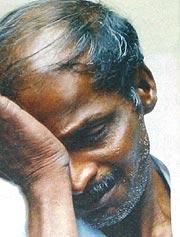
Sreedhran ( pix, right ) had testified that he was unable to accept that his son would take his own life as it was only hours before that the teenager had told his father not to worry about him.
Furthermore, Sreedhran said he had stated in a police report that he saw bruises on the head, face and other parts of son's body when he claimed it. However, the inquiry panel said it was satisfied with a pathologist's explanation that the bruises were burst capillaries due to blood pooling at body's lower part.
Speculating on the reason the teenager had hanged himself, the inquiry panel said it believed it was linked to the fact that he was facing possible renewals of his detention order for a further period of two years.
The panel said it also took into account a psychiatrist's testimony that young persons are more prone to commit 'impulsive suicides' usually done in a disorderly fashion involving minimal planning using whatever available.
Panel's recommendations
In its report, the panel outlined 31 recommendations to be adopted by the detention centres to help prevent the recurrence of such incidents. They include that an initial risk assessment evaluation be done at the registration stage for all detainees, particularly young ones.
'Young detainees should not be placed alone in cells and should always be in shared accommodation with other young detainees unless they display violent behaviour,' said the report.
It also asked the authority to provide new, young detainees with the usual toiletries, reading material, a radio and information on how they can obtain help and advice at anytime to reduce their suicidal behaviour.
 The panel also said detention centre warders and officers lacked training in responding to emergency situations and this should be rectified.
"When they discovered Hendry's body, they left the body hanging there for two, three hours because they didn't know how to deal with it. What if the man who hanged himself was still breathing?" asked Shafee.
The panel also proposed a sensor system with motion detectors placed around isolation blocks to record the number of times a warder patrolled the block and the exact location of each guard.
Shafee said a copy of the panel's report would be forwarded to the Prisons Department and other relevant authorities.


