




So many need help, so few counsellors
While seeking to assist and empower the less fortunate Indian women, consumer and human rights group ERA Consumer Malaysia found itself swamped by demands for legal and psychological advisers far beyond its ability to provide.
While seeking to assist and empower the less fortunate Indian women, consumer and human rights group ERA Consumer Malaysia found itself swamped by demands for legal and psychological advisers far beyond its ability to provide.
The Petaling Jaya-based ERA Consumer had initially aimed to provide legal and psychological counselling to 1,000 women throughout its three-year project involving the set-up of ten community centres in four states.
However, each of the 17 counsellors working at the centres - established in May 2003 with funds from the European Union and the German Friedrich Naumann Foundation - found themselves working round the clock to cater for nearly four times the number.
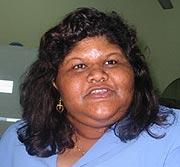 ERA Consumer secretary-general Indrani Thurasingham said by the final stages of the project, they found that 3,878 Indian women had sought legal and psychological counselling.
"It was a tremendous increase from our initial target of 1,000 women, most of whom approached us seeking psychological counselling. A number of them were suicidal, almost all of them claimed to be victims of domestic violence," said Indrani.
She said this when met after presenting the findings of the project entitled 'Community Centres for the Empowerment of Indian Women in Malaysia' in Kuala Lumpur today.
A number of the psychological counsellors had to double up not just by working at more than one centre, but in providing paralegal assistance, such as to those in need of help in acquiring legal documents, said Indrani.
"My staff are working round the clock. Some cannot even switch off their hand-phones at night as emergency calls can come in any time.
"We have the services of ten psychologists that we acquired through the assistance of the LPPKN (National Population and Family Development), but their numbers, especially those who can speak Tamil, are limited. Language is the biggest barrier," said Indrani.
Disappointment
Among the other targets that ERA Consumer and the Friedrich Naumann Foundation had set for the project which had been exceeded were the number of women targeted to benefit generally from the programme.
Indrani said 3,892 women participated in the 193 programmes organised in sub-urban and rural areas, whereas its organisers had only projected 3,000.
Among its disappointments, Era Consumer found that while it had hoped 500 women would increase their household income by at least 20% through business, only 151 realised that hope.
Similarly, while 300 women were hoped to have increased their household income by 10% through employment by the end of the project, only 170 had actually done so.
Indrani related this, however, to a problem that Era Consumer discovered early on in its efforts to empower Indian women - that thousands of Indian women lack basic legal documentation and identification.
"We cannot begin to talk about getting into business or claiming from EPF (Employers' Provident Fund) or Socso (Social Security Organisation) without such basic documents as an IC (identity card)," said Indrani.
While Era Consumer targeted to achieve 300 registrations of marriages, only 164 cases were successful. Sixty applications were rejected, whereas 171 are still pending.
The real barriers
Earlier, ERA Consumer president Marimuthu Nadason said among the obstacles that the organisation had encountered in empowering Indian women were those that had been set up by the Indian community itself.
 "Many women of the Indian community are bound by the chains of oppressive and patriarchal traditional cultural norms that dictate their actions in all facets of their daily lives," said Marimuthu.
"Hence, the initiative of ERA in implementing this project attempts to address these impediments that prevent the advancement of the Indian women's lives."
Tamil Foundation advisor S Ngarajan however disagreed with the impression made that traditional cultural norms served as barriers to the empowerment of Indian women.
"Cases where such norms are the culprit are the exception rather than the rule. The barriers are the legal and bureaucratic structures that impede their advancement", said Nagarajan.
However, he added that while official government policy generally provide for all groups to benefit from certain affirmative action, the racial profile of the civil service had resulted in a different outcome.


Are you sure you want to delete this comment?
This action cannot be undone.