




Get Malaysia’s parliamentary reforms through the door, recommends UK expert
INTERVIEW | Malaysia's path to greater democracy and freedoms will grind to a halt if little progress is made in the area of parliamentary reforms.
Sir David Natzler, a former clerk to the UK House of Commons, said this was because reforms to the legislative arm of government were a necessary step for any further changes in other parts of the administration.
"If you have all the other changes you want to make, but if parliament continues (without reforms), which I don't think anybody wants it to, then other changes you're trying to make will not stick," Natzler told Malaysiakini in a recent interview.
"The government, from whichever party, will risk slipping back into disregarding the other changes," he noted.
“That is why parliamentary reform is so important now. If you don't strike now while the iron is hot, by the next general elections, the opportunity would have been lost. A lot of things may backslide to a more authoritarian style.” he warned...
INTERVIEW | Malaysia's path to greater democracy and freedoms will grind to a halt if little progress is made in the area of parliamentary reforms.
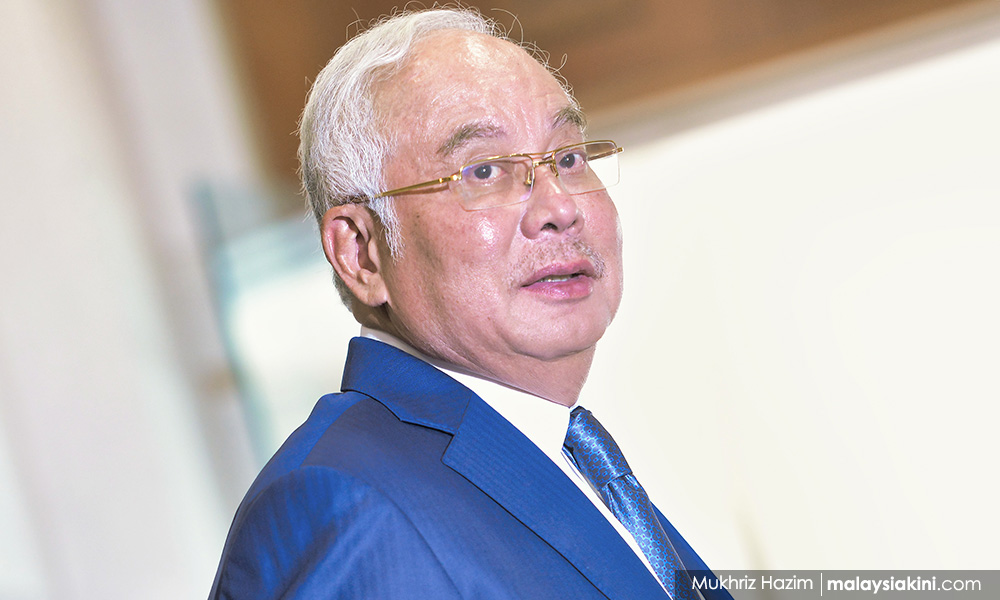
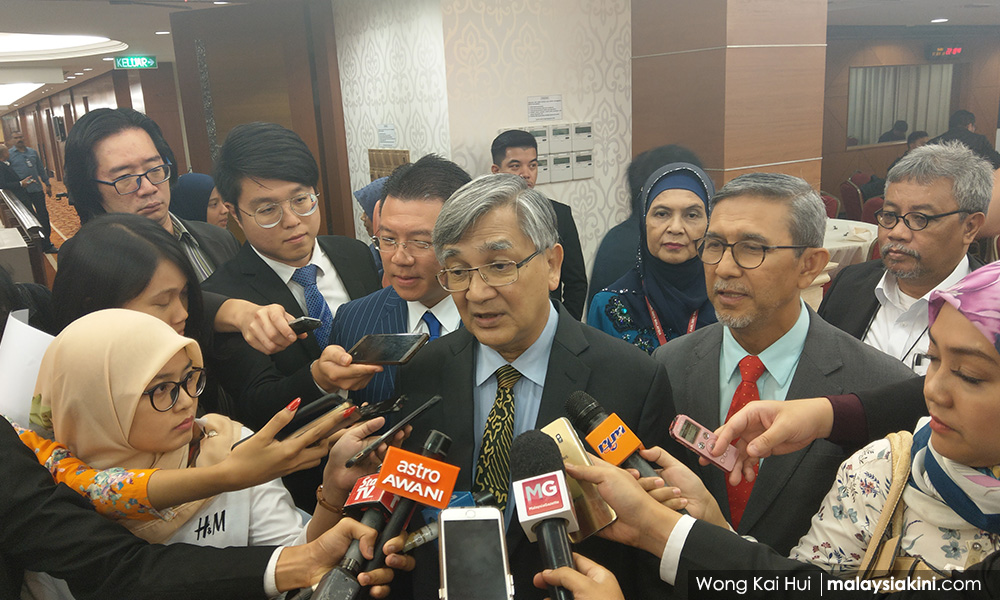
Sir David Natzle (above), a former clerk to the UK House of Commons, said this was because reforms to the legislative arm of government were a necessary step for any further changes in other parts of the administration.
"If you have all the other changes you want to make, but if parliament continues (without reforms), which I don't think anybody wants it to, then other changes you're trying to make will not stick," Natzler told Malaysiakini in a recent interview.
"The government, from whichever party, will risk slipping back into disregarding the other changes," he noted.
“That is why parliamentary reform is so important now. If you don't strike now while the iron is hot, by the next general elections, the opportunity would have been lost. A lot of things may backslide to a more authoritarian style.” he warned.
“Once you reform parliament, my perception is that it will stay reformed,” he emphasised.
With necessary reforms in place, Natzler said the parliament system could be likened to a high performing school, adaptable to various levels of capabilities.
In the context of a parliament, he said the reforms could help to mitigate impact of lawmakers who might at times "struggle" to perform their duties, primarily to debate on laws and serve as a check and balance agent.
"If you have a parliament with a system that is up and running for legislation, executive oversight, policy formation, for debating, chances are much higher that even those who might struggle with some aspects of their role will be able to function," he explained.
"You might not like some of what they are doing or saying, but they will still be able to do it better," he added.
Natzler, 67, served the UK’s House of Commons from 1975 until his retirement this March. He was knighted last year for his service to the nation as its principal constitutional adviser. He was visiting Malaysia to carry out fact-finding and consultation sessions on parliamentary reforms here.
Natzler cited as a positive development the setting-up of permanent parliamentary select committees, a practice put in place by the UK House of Commons since about 40 years ago.
He said the six permanent parliament committees, which served as an oversight for government agencies, has opened up more opportunities for lawmakers to contribute beyond serving as ministers or deputy ministers.
He added that the UK parliament had also introduced since the late 1970s reforms that brought back its fiscal independence, a move which the Dewan Rakyat is trying to push through.
Aside from parliamentary select committees, the UK parliament 10 years ago granted backbenchers the opportunity to propose the subject of debates, a proposal which Natzler noted has yet to gain popularity in Malaysia.
"This (move) led to the first debate on the 'B word' - Brexit... a subject which the front benchers have been eager to avoid," recalled Natzler.
Parliament should be motor of change
At the same time, Natzler conceded that discussions on parliamentary reforms might not be the focus of public attention, which is often sidetracked by other going ons in the country.
Likening the overall process to the running of a machine, Natzler pointed out that one underperforming part could affect the entire system.
"Parliament is part of the motor of how you create change.
"Merely identifying things you would like to happen is whistling in the wind unless you got a parliament that holds the executive’s feet (down) and makes them accountable," he stressed.

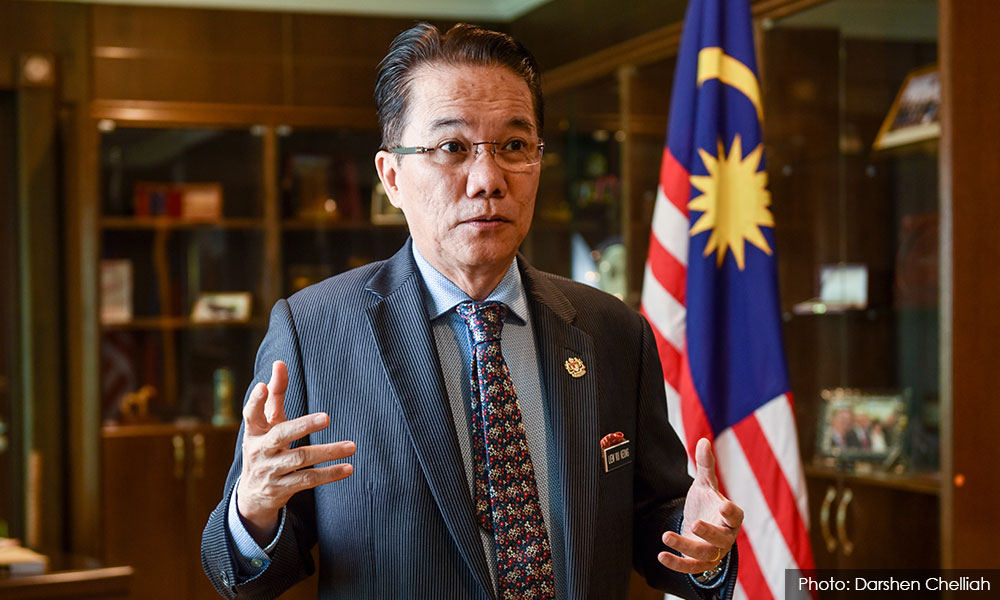
In his one week visit to Malaysia, Natzler said he had the opportunity to meet with Dewan Rakyat Speaker Mohamad Ariff Md Yusof (above), lawmakers from the government and opposition bench, as well as other stakeholders.
Throughout his engagement, Natzler said he gathered that there was an overall commitment to implement the reforms, matched with a general sense of impatience by the public.
As such, he said there should be an active drive to push for the changes, before it is too late.
Natzler referenced his time in Mongolia and observations as that country moved from single party dictatorship to multi-party democracy.
“I think every country can learn from other countries about how parliament works... often the best people to convey that learning are people who have worked in other parliaments.
“In Mongolia which is a real parliament democracy, nobody knew very much about it (when they first began). They never had many professional visitors before unlike Malaysia.”
“I spent time there and they were very open. They also have prime minister's questions on a Friday afternoon, which in my experience is unique.”
“Everyone in Mongolia stops work at 3.30 on Friday afternoon and they go to cafes, they watch the prime minister's questions. I said to myself - 'Wow, they have really got it!' I wish we could have that!”
Absentee MPs not the real issue
Quizzed on the issue of absent lawmakers, Natzler instead provided a counter-argument, once again referencing reforms to the UK parliament that removed the need for a quorum before the House can proceed with its agenda.
"There can be reforms to raise the quorum. but then that just means that parliament can't sit.
"I think the question you really want to ask is, why do we have a quorum?," said Natzler.
"If you go to a public meeting, there is a full transcript taken so anyone who wants to know what is being said can read it later," he said.
When pointed out that MPs are paid an allowance to attend the sittings, Natzler described the argument as being "too simplistic."
He also insisted the media has a role to play in reporting matters discussed in parliament, rather than just focusing on the number of lawmakers present or absent.
"Of course, some of them might be wasting their time [...] but this game of one party asking the others 'Why are your members not here?' should stop.
"You have to assume they are doing representative work which is more than just sitting in the chambers and listening to debates," he said.
"But I accept that it is an unpopular message. People are still saying, 'Send them in there'," he conceded.


Are you sure you want to delete this comment?
This action cannot be undone.