




Wheel has come full circle for Tajem
 The decision of Daniel Tajem to contest in the 9th state elections under the Sarawak National Party ticket (Snap) in a way means the wheel has come full circle for the 69-year-old former deputy chief minister.
 The decision of Daniel Tajem to contest in the 9th state elections under the Sarawak National Party ticket (Snap) in a way means the wheel has come full circle for the 69-year-old former deputy chief minister.
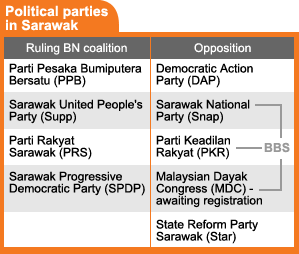
Tajem is presently adviser to the opposition Barisan Bersatu Sarawak (BBS) which groups three parties Parti Keadilan Rakyat, Snap and the yet-to-be registered Malaysian Dayak Congress (MDC). Nomination day for the May 20 election is tomorrow.
 Tajem, a lawyer, was first elected to the Dewan Undangan Negeri (DUN) on a Snap ticket in 1974 from the constituency of Lingga Sebuyu.
He beat Tawi Sli, who had replaced Snap's Stephen Kalong Ningkan as chief minister in 1966 in what was the newly merged with Malaysia state's first major political turbulence. The reverberations from that episode are felt to this day.
Political convulsions revolving around the chief minister's post in Sarawak occur periodically. Tajem was at the centre, or close to its vortex, in the later editions of these crises.
 In 1982, Tajem, then a deputy chief minister, was sacked from Snap for allegedly campaigning for independent Edwin Tangkun in the parliamentary elections of that year. Tangkun, the incumbent, beat Snap's Wellington Rufus Nanang in Simmangang.
That year, two other Snap candidates lost to independents - Patrick Uren in Bau and Edmund Langgu in Saratok. The latter two, like Tangkun, were incumbents who had run afoul of Snap strongman James Wong and were dropped from the Snap line-up for the parliamentary elections.
Tajem's sacking followed close on secretary-general Leo Moggie's defeat by Wong for the presidency of Snap in 1981, such that the stage was set for the formation in 1983 of a splinter party, Parti Bansa Dayak Sarawak, composed of Snap rebels.
This was a regressive move as Snap, although a bastion for the majority Dayak community, was the earliest multi-racial party in Sarawak, drawing votes from across the Dayak-Malay-Chinese fault lines.
Divided Dayaks
The formation of PBDS in 1983 directly led to the plethora of splinter parties - Sarawak Progressive Democratic (SPDP) and Parti Rakyat Sarawak (PRS), both of which are part of the ruling Barisan Nasional, and the yet-to-registered opposition MDC - dotting the Sarawak political landscape today.
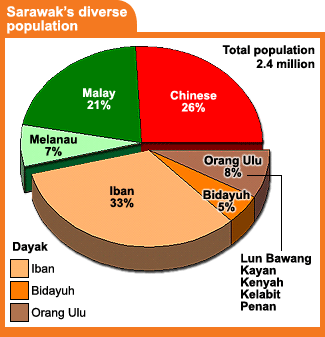 The splinters' effect has been to further fragment the Dayak vote, composed of the Iban, Bidayuh and Orang Ulu that in combination make up something like 46 per cent of the state's 2.4 population.
Looking back on the fragmentation of the Dayak vote consequent to the mushrooming of parties to represent them, Tajem, arguably the most credible Dayak leader, defensively avers, "I was sacked from Snap, I did not leave."
Tomorrow, he will file his nomination papers in Sri Aman for the Bukit Begunan state seat, the name given to it after Lingga Sebuyu was re-delineated in constituency redrawing exercises in the decades after the 1970s.
For the Dayaks, the main issue in the elections is not that the chief minister's post should be occupied by one of them but land, native customary rights land, to be sure.
The effect of two amendments to the state constitution on land matters, one in May 2000 and another two years later, has issued in deep anxiety in the community, especially among the Iban. Tajem's decision to contest is driven by its dynamics.


Are you sure you want to delete this comment?
This action cannot be undone.