




Why more bite force is needed to fight wildlife cybercrimes
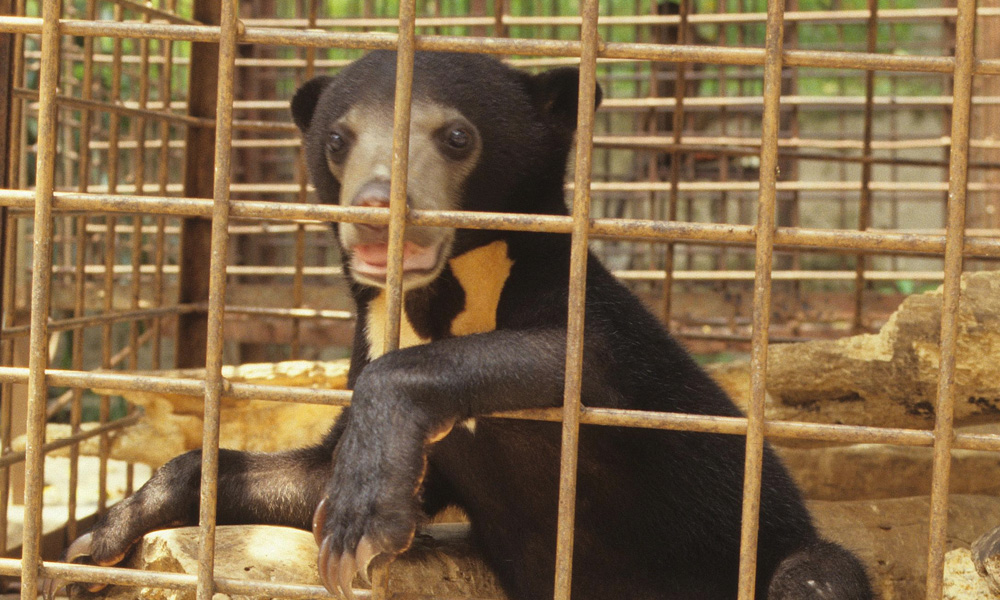
SPECIAL REPORT | You’re online and the large round eyes of a sun bear cub look back at you. It’s adorable, and you think "if I could reach into my smartphone, I could just scoop this little fella up".
But read the caption below and you realise, while you can’t reach into the screen, you can most certainly text the number listed, pay several thousand ringgit and the cub is yours. You wouldn’t even need to fly all the way to Borneo. Just one problem, the sun bear is a protected species.
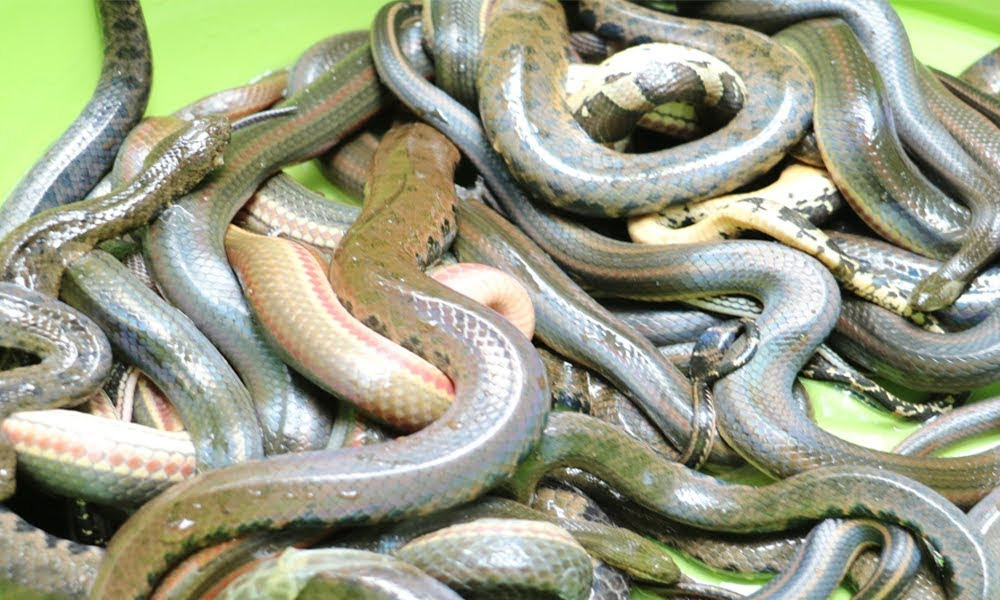
Enter the world of illegal online wildlife trading, where protected and often endangered wildlife, or their parts, are available at your fingertips, almost as fast as your internet speed would allow.
It’s a lucrative business. While the exact value of illicit wildlife trade on the internet is hard to track, the United Nations Office on Drugs and Crime (UNODC) estimates the global wildlife trafficking industry, online and off, to be worth up to US$23 billion (RM93.6 billion) annually...SPECIAL REPORT | You’re online and the large round eyes of a sun bear cub look back at you. It’s adorable, and you think "if I could reach into my smartphone, I could just scoop this little fella up".
But read the caption below and you realise, while you can’t reach into the screen, you can most certainly text the number listed, pay several thousand ringgit and the cub is yours. You wouldn’t even need to fly all the way to Borneo. Just one problem, the sun bear is a protected species.
Enter the world of illegal online wildlife trading, where protected and often endangered wildlife, or their parts, are available at your fingertips, almost as fast as your internet speed would allow.
It’s a lucrative business. While the exact value of illicit wildlife trade on the internet is hard to track, the United Nations Office on Drugs and Crime (UNODC) estimates the global wildlife trafficking industry, online and off, to be worth up to US$23 billion (RM93.6 billion) annually.
It is among “the largest transnational organised criminal activities” after narcotics and the trafficking of human beings and arms.
“The billions of dollars generated by this illegal business are being used to further nefarious ends. In some cases, money goes to financing terrorism and... is also closely interlinked with money-laundering, corruption, murder and extreme violence,” said the UNODC.
Malaysia’s location between other Asean countries rich in biodiversity is strategic for wildlife smuggling - the region hosts up to 18 percent of the world’s biodiversity, despite possessing just three percent of the land area.
Meanwhile, our own mega-biodiversity makes Malaysia ripe for the picking for poachers and traffickers. Coupled with the high penetration of social media use in the country, it is not surprising that black market traders opt to take their businesses online.
The rise of Internet technologies, social media platforms and online marketplaces have only served to fuel the problematic industry further.
Gaps in the law
In Malaysia, online traders have long been exploiting a loophole in local wildlife laws to escape prosecution.
While Peninsular Malaysia and Labuan’s Wildlife Conservation Act (WCA) 2010 is a fairly strong law, the Act, along with similar legislation in Sabah, nonetheless say nothing about advertising the sale of protected species, their parts or products.
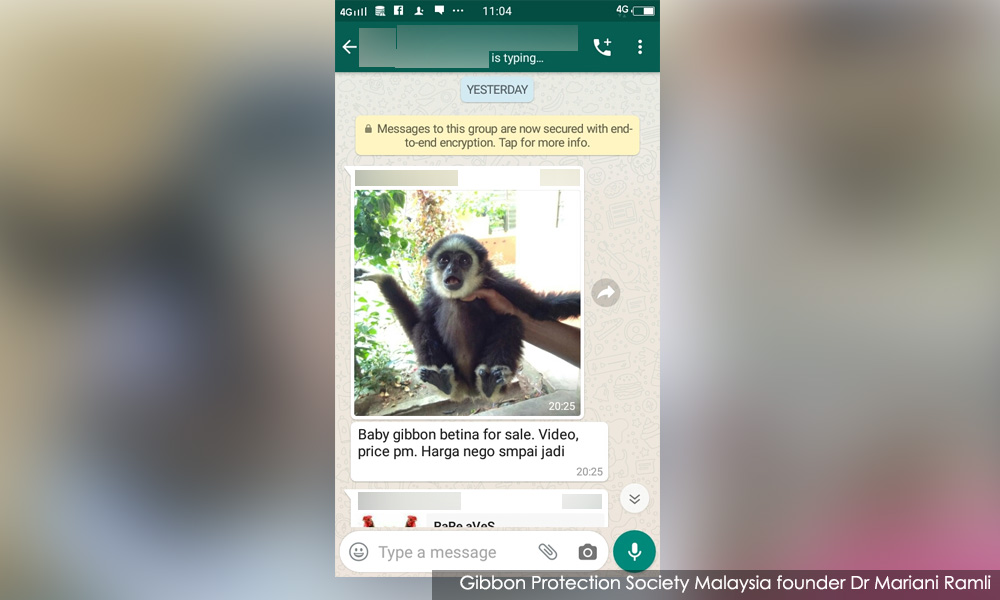
This means it is not entirely an offence to advertise or offer the sale of protected species unless you get caught in possession of the said animals. As such, traders often brazenly offer wildlife for sale on online platforms such as Facebook and WhatsApp, the nature of the apps making them difficult to trace.
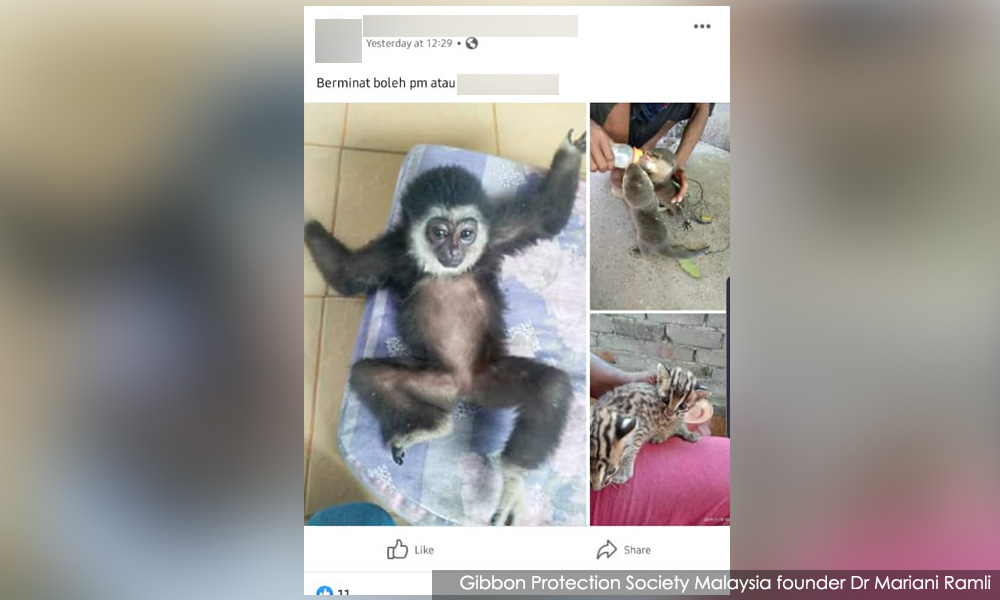
However, the Sarawak Wildlife Protection Ordinance 1998 states that any person who sells, offers for sale or claims to be offering for sale, import and export any protected animal shall be liable to imprisonment for one year and a fine of RM10,000.
Not surprisingly, conservation groups and wildlife activists want tougher laws and heightened response to address this gap.
Wildlife conservation group Monitor Conservation Research Society (Monitor) executive director Chris R Shepherd is calling on the police force to play a larger role, especially in placing the war against wildlife cybercrimes “high on the agenda”.
After all, the police are already working with wildlife authorities across the country, including Perhilitan, Sabah Wildlife Department and Sarawak Forestry Corporation, to crack down on poaching in a joint operation codenamed Ops Bersepadu Khazanah (OBK).
Since being launched by Inspector-General of Police Abdul Hamid Bador last September, more than 100 arrests have been made, with investigations even covering alleged money laundering activities.
Bukit Aman Internal Security and Public Order Department (KDNKA) deemed it a “momentous milestone in the history of our country’s biodiversity conservation efforts”.
Although Shepherd commended the success shown with OBK, he warned that local wildlife is still under threat.
“Malaysia is still losing its wildlife at an alarming rate,” Shepherd told Malaysiakini.
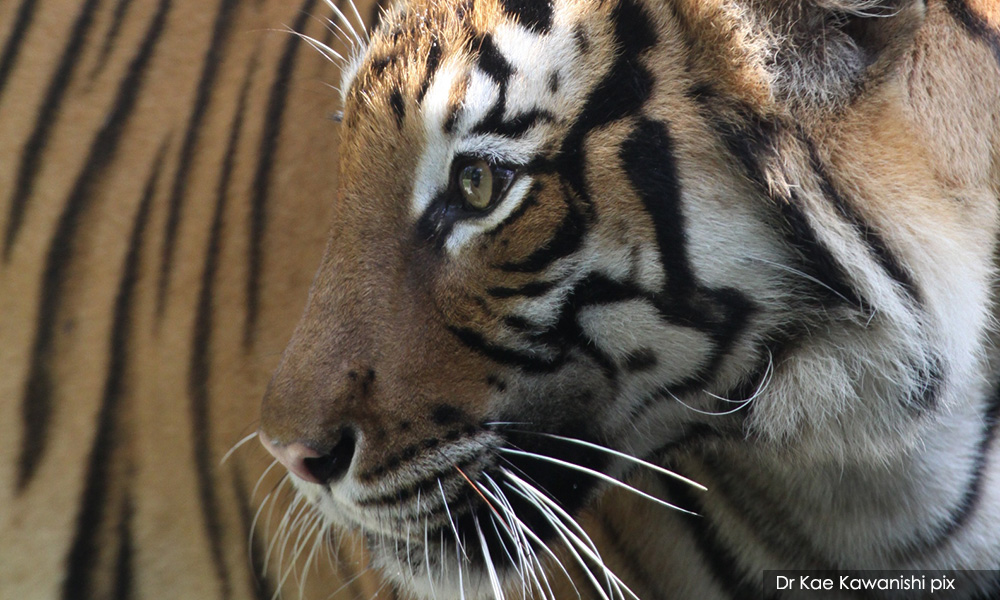
“Malayan tigers, for example, are being poached towards extinction and… poachers like these need to be behind bars if tigers and other threatened wildlife in Malaysia are to be saved.”
He further pointed out that police can easily work with their counterparts in other countries by utilising channels, such as Interpol, to tackle international trafficking syndicates.
“Police are trained to investigate crimes and to take down criminal organisations. They are trained to deal with the criminals themselves and have the power and resources necessary to take on structured crime syndicates,” Shepherd said.
He also pointed to non-uniform protection being applied to threatened and endangered species in West and East Malaysia.
One example is the sun bear, which is not listed as a totally protected species in Sarawak. This makes it the only place in Asia where the bear, wrongly hunted for use in traditional medicine or its cubs as pets, is not fully protected.

Another is the sale and consumption of turtle eggs, which are banned in Sabah and Sarawak but not throughout Peninsular Malaysia.
What about Act 686?
In a 2016 report on the use of Facebook for wildlife trade in Peninsular Malaysia, global wildlife trade monitoring network Traffic noted 380 wild animals for sale by over 100 sellers. Sixty percent of the 80 species recorded during monitoring were native to Malaysia. Worse, close to half the recorded species were totally protected from hunting, trade or sale.
Most were live animals primarily to meet local demands for pets, collectors and breeding.
“Previously not documented at such a scale, this demand for native wild animals as pets is perhaps the most worrying finding of this assessment. Historically, opportunistic illegal wildlife trade posed less of a threat in Peninsular Malaysia due to the absence of physical markets.
“These virtual markets on social media now appear to facilitate the live animal trade in similar ways as open physical markets do, and are likely to offer a greater variety of species than their traditional counterparts,” Traffic said in its report.
It noted, however, that upon being presented with this report, Facebook began working with it to prevent abuse of its platform in Malaysia. The Department of Wildlife and National Parks (Perhilitan), meanwhile, reportedly launched several “successful operations” against wildlife traders operating on the site.
But there is little sign the global virtual marketplace is tapering off.
According to Gibbon Protection Society Malaysia founder Mariani "Bam" Ramli, the "illegal online trade is growing day by day".
As long as they are not caught, Mariani said, there is nothing to stop illicit traders who have temporarily closed shop to evade enforcement from opening new accounts.
A former Perhilitan ranger who has been rescuing gibbons and calling out online traders for over seven years, Mariani cites one notorious illegal wildlife trader, Kejora Pets, who is known to authorities and activists for years due to his blatant use of social media to sell protected species.
“Kejora is one of the big players here in the peninsula. Even though he has had to stop for now, as long as he is still free out there, it's not impossible for him to start again soon and may use a different account.
“Because he knows the suppliers and he still has his gang out there,” she said via text when contacted by Malaysiakini.
Noting the gap in WCA, she said police could utilise the International Trade in Endangered Species Act 2008 (Act 686) to take down unscrupulous online traders.
The act was ratified by Parliament to implement the Convention on International Trade in Endangered Species of Wild Fauna and Flora (Cites), signed by Malaysia in 1977.
The Act disallows a person from selling, offering or advertising for sale a scheduled species from the sea as well as a captive-bred or artificially propagated protected species, without authority.
Individuals convicted are liable to a fine of up to RM100,000 for each animal or part, not exceeding an aggregate of RM1 million in total, while corporate bodies are liable to a fine up to RM200,000 for each animal or part while not exceeding RM2 million.
Checks revealed that Kejora has closed its known Facebook accounts. Even so, Malaysiakini sighted posts by other traders on Facebook and various platforms offering protected animals for sale, some as recently as a few days ago.
“If authorities show their seriousness in tackling this guy (Kejora), then other traders will think 100 times about continuing selling, or even before they start selling (protected species),” said Mariani.
Other parties such as the Malaysia Communications and Multimedia Commission (MCMC) and banks can also play a role.
The former, Mariani said, can investigate online posting pertaining to the sale of protected and endangered animals while banks could freeze the said traders’ accounts.
“They (traders) can't continue doing online business if they can't get paid.”
Enter police
Acknowledging gaps in the law, Perhilitan director-general Abdul Kadir Abu Hassan pointed out that amendments are being drafted to the WCA to address it.
The amendments, slated to be tabled in the Dewan Rakyat this year, concern three sections involving the promoting and advertising of wildlife for sale, making them convictable offences.
Even so, Kadir said his department was able to identify up to 126 individuals active in wildlife cybercrimes last year.
Through operations such as the OBK, the people are more aware of such illegal activities and the effect on depleting Malaysia’s wildlife, he added.
Perhilitan has received up to 587 public reports on wildlife crimes on the internet from 2016 to Nov 2019, averaging over 140 complaints a year.
“The sharing of assets, knowledge and expertise have contributed to the success of OBK and have saved the lives of wildlife which are at risk of extinction,” he said in a texted response.
Malaysiakini has also contacted the Sarawak Forest Department and Federal Ministry of Water, Land and Natural Resources for comment. We were also directed by the Sabah Wildlife Department to the state’s Tourism, Culture and Environment Ministry and are awaiting a response.
When contacted, the KDNKA, led by director Acryl Sani Abdullah Sani, agreed police can play a major role in combating online crimes involving wildlife.
The department joined the call for tougher penalties such as whipping, stating this could discourage poachers.
It was reported last year that whipping will be among recommendations by police to the Legal Affairs Division to tackle wildlife trafficking and poaching.
KDNKA further informed Malaysiakini that police are working with relevant partners to develop a common standard operating procedure (SOP) and “new ways of investigation” to tackle wildlife crimes, including offences online.
“Aseanapol (Asean multinational police force) and Interpol, too, will be involved in preparing officers in online investigations of wildlife trading in the near future.”
The department also suggested Bukit Aman’s cybercrime unit tackle cases of websites involved in wildlife trafficking that have gone dark and could better monitor online activities.
IGP: New SOPs to be completed ‘immediately’
In fact, according to IGP Hamid, the cybercrime unit has already begun investigating online wildlife trading and trafficking activities.
“They have surfaced a few websites, (on) WhatsApp, they have done that. We are following up the investigation to identify who are those behind them (online activities),” Hamid said when approached by Malaysiakini following a press conference on OBK held earlier last month.
On the new SOP, the police chief confirmed three sets of SOPs which will cover three levels - raid and arrest; investigation; and Anti-Money Laundering Act 2001 (Amla) - are currently being drawn up by his secretariat.
“Two have been completed, one more is in the final stage... pertaining to investigation, prosecution and the storage of exhibits.”
The SOPs for Amla as well as on raids and arrests are completed.
“Where Amla plays a role in combating this (wildlife crimes)... the SOP will go right to the ground. They (police) will follow those steps so that the chances of our cases being prosecuted in court, to get a conviction, will be very high.
“On serbuan dan tangkapan (raid and arrest)... the SOP has been completed on how we (the police) are going to (carry out) raids and arrests so that evidence will be there for court.
“The SOP on investigation, prosecution and handling of evidence is in the final stage,” Hamid explained.
On when he expected this to be completed, he merely replied “immediately”.
Facebook doing enough?
As for social media platforms itself, one of the largest - Facebook - come under heavy scrutiny for its role in inadvertently facilitating the industry.
Critics often feel the company, which also owns WhatsApp and Instagram - all popular tools in the wildlife trafficking game - should and can do more.
This, despite increased efforts by the company to track problematic groups and postings. In 2017, Facebook announced it was enforcing commerce policy that listings cannot promote the buying or selling of animals, and last year announced a ban on peer-to-peer sales of animals, in an effort to crack down on illicit animal trade.
In 2018, it, together with technology companies such as Google and eBay, joined international efforts to fight wildlife crimes.
Yet, such sales persist and there have been calls for social media companies to be regulated over the use of its platform for such activities.
In response, Facebook said it has since removed content selling protected species pointed out by Malaysiakini. Checks by Malaysiakini find that the pages are no longer available on the platform.
“We have reviewed and removed all the violating content you shared, and we’re grateful to Malaysiakini for bringing this to our attention.
“Under Facebook’s regulated goods policy, we do not allow any private individual to buy or sell any live animals on the platform. We also prohibit any content that depicts, supports or coordinates the sale of any endangered species.
“We take this seriously and remove any of this content as soon as we become aware of it. Every single piece of content on Facebook can be reported and we encourage our community to let us know if they see content they think breaks our rules,” said a Facebook spokesperson in a statement.
While it did not respond directly to calls for regulation, Facebook insisted it remained committed to working with Traffic and law enforcement authorities to help tackle the illegal online trade of endangered wildlife in Malaysia and the trafficking of ivory and rhino horns.
The spokesperson said: “We receive, process and respond to government and law enforcement requests related to these abuses via our Law Enforcement Online Request System in accordance with all applicable laws and statutes and our terms of service.”
Meanwhile, those with information on suspected illegal wildlife sale can contact Perhilitan hotline at 1800-88-5151, online with e-aduan through its website, or the Malaysian Conservation Alliance for Tigers’ (MyCAT) wildlife crime hotline at 019-3564194.
In the end, it boils down to strict and strong enforcement by all parties concerned.
As Shepherd of Monitor told Malaysiakini: “Malaysia has amazing biodiversity, and still has a lot of habitat for wildlife.
“But poachers with their snares, traps and guns are emptying these areas of this incredible array of wildlife, and strong enforcement is key to keeping poachers out of the forest.”
And keeping them offline.
Additional reporting by Geraldine Tong.



Report this comment
Are you sure you want to delete this comment?
This action cannot be undone.