


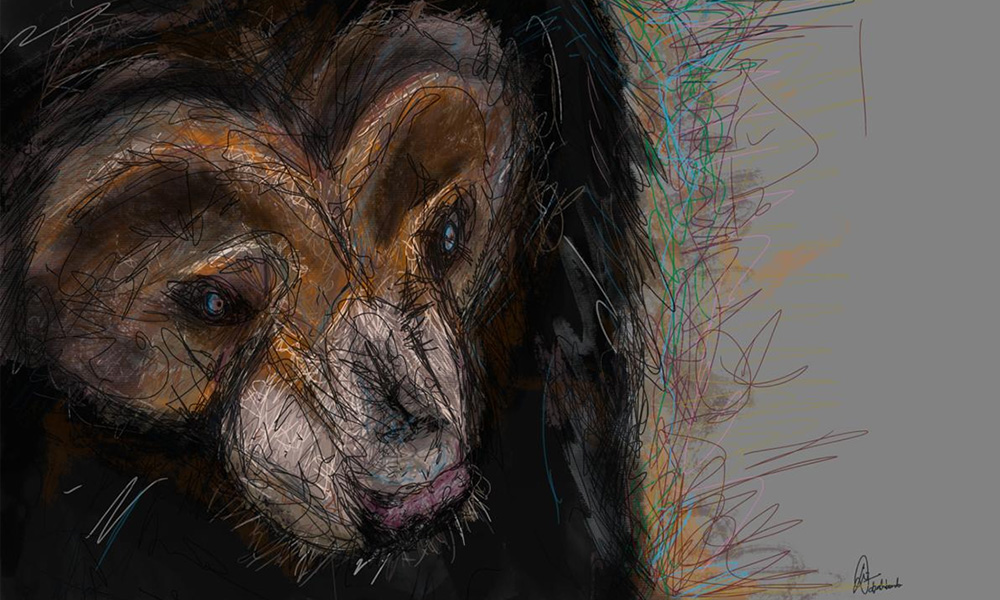

Pleading the case of Malaysia's sun bears
SPECIAL REPORT | “I used to believe in forever, but forever's too good to be true.”
So said Winnie-the-Pooh, the popular talking bear created by English author AA Milne in the 1920s. Although Pooh Bear "lives" in a fictional forest in England, its tiny size, adorable features and penchant for honey have at times led to comparison to be drawn to a very rare bear in the tropical rainforests of Malaysia - the beruang madu, or sun bear.
However, unlike the beloved fictional yellow bear in the red shirt which can live on in children’s books and movies till the end of time, dark-furred sun bears are very much real. And they - both the Malayan and Bornean subspecies - do not have forever.
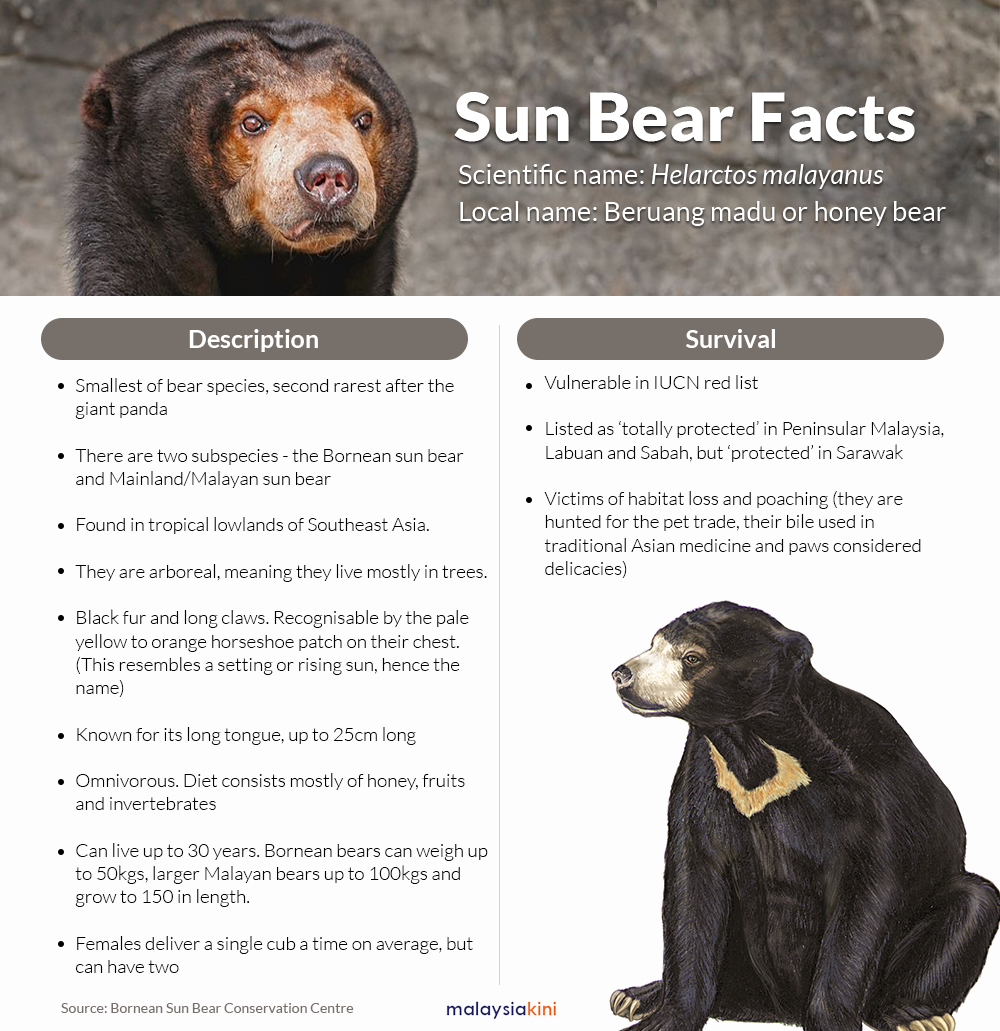
Conservationists warn that habitat loss and the illegal wildlife trade are fast chipping away at the sun bear population. The smallest and least studied of the world’s eight bear species, it is listed as vulnerable in the International Union for Conservation of Nature’s (IUCN) Red List, the world’s most comprehensive inventory of threatened species.
Although there is no solid estimation of the remaining sun bear population in Malaysia, its global population is estimated to have declined by over 30 percent in just the past three decades...
SPECIAL REPORT | “I used to believe in forever, but forever's too good to be true.”
So said Winnie-the-Pooh, the popular talking bear created by English author AA Milne in the 1920s. Although Pooh Bear "lives" in a fictional forest in England, its tiny size, adorable features and penchant for honey have at times led to comparison to be drawn to a very rare bear in the tropical rainforests of Malaysia - the beruang madu, or sun bear.
However, unlike the beloved fictional yellow bear in the red shirt which can live on in children’s books and movies till the end of time, dark-furred sun bears are very much real. And they - both the Malayan and Bornean subspecies - do not have forever.
Conservationists warn that habitat loss and the illegal wildlife trade are fast chipping away at the sun bear population. The smallest and least studied of the world’s eight bear species, it is listed as vulnerable in the International Union for Conservation of Nature’s (IUCN) Red List, the world’s most comprehensive inventory of threatened species.
Although there is no solid estimation of the remaining sun bear population in Malaysia, its global population is estimated to have declined by over 30 percent in just the past three decades.
“According to Perhilitan (Peninsular Malaysia and Labuan’s Department of Wildlife and National Parks), there are 300-500 sun bears left in West Malaysia. There are no studies or estimations in Sabah or Sarawak.
“From my experience, the density of sun bears in Sabah is 10 times less than the orangutan population.
“The orangutan is a critically endangered species. Sun bears (numbers) are much less than that, so you can imagine how rare they are,” Wong Siew Te, one of the foremost experts on the species, told Malaysiakini.
Wong, who is the founder and chief executive officer of the Bornean Sun Bear Conservation Centre (BSBCC) in Sandakan, Sabah, said unless measures are taken, the species cannot survive human-caused mortality.
What’s picking off the bears?
Wong attributed this to deforestation for logging and agriculture as well as poaching for the medicine, souvenir, bush meat and the pet trade.
These, coupled with the slow production rate of the sows - as female bears are called - make the species particularly vulnerable.
“They (sun bears) are not like wild pigs, which have a very high reproduction output. A female pig can probably give birth to 50 piglets or more in her lifetime; whereas sun bears (give birth) to three to four cubs in a female sun bear’s lifetime,” he explained.
An October 2019 report by global wildlife trade monitoring network Traffic revealed there is still a market for bear bile products in Peninsular Malaysia.
During a year-long period from 2017 to 2018, 69.5 percent of traditional Chinese medicine (TCM) shops surveyed were found to be selling, or potentially selling, bear bile products. This, compared to 48 percent in a 2012 survey which also included Sabah and Sarawak.
“This revealed that the illegal trade in bears persists in violation of national laws and international regulations, despite numerous initiatives taken to disrupt it,” the report noted.
The sun bear is a protected species in Malaysia. Disturbingly, the report noted that more retailers surveyed were well aware that trading in bears is strictly prohibited, but they proceeded anyway.
“I think the results from these findings are worrying... It also shows that consumers have little idea about the protected status of bears and that their buying and using behaviour is actually breaking the law,” Wong (photo) said.

The rich-poor divide exacerbates this problem. The rich are willing to pay big money to purchase sun bear cubs as cute, little exotic pets; bear paws for the cooking pot; decorated claws to hang around their necks, or gallbladders in the belief that bile cures everything from cancer to hangovers.
This willingness on the part of consumers to part with money incentivises low-income poachers to take big risks in breaking the law - so, the black market flourishes.
Middlemen such as notorious illegal online wildlife trader Kejora Amsyar or Kejora Pets took advantage of this divide to run extensive poaching and trafficking businesses, Wong said.
Just earlier last month, a local singer was fined RM27,000 by the Kuala Lumpur Sessions Court for keeping and confining a sun bear cub last year.
READ MORE: Why more bite force is needed to fight wildlife cybercrimes
Totally protected vs protected
However, heightened efforts by authorities such as the joint Ops Bersepadu Khazanah comprising police and wildlife authorities in Peninsular Malaysia, Sabah and Sarawak, have caused players such as Kejora to go underground since it was launched in September last year.
But Wong warns: “The bad guys always find ways to escape being monitored or caught, so the authorities must be smarter and work harder than the bad people to catch every single one of them. There is no room to let them escape.”
Yet, gaps and non-uniformity in wildlife protection laws in East and West Malaysia pose a problem for sun bear conservation.
“Sarawak has yet to provide full protection to the sun bear, which means the authorities do not have the most powerful legislation at their disposal to tackle the illegal trade,” Monitor Conservation Research Society (Monitor) executive director Chris R Shepherd told Malaysiakini.
The species is listed as "Totally Protected" in Peninsular Malaysia, Labuan, and Sabah, but not in Sarawak. This means Sarawak allows the elusive sun bear to be imported or exported under licence.
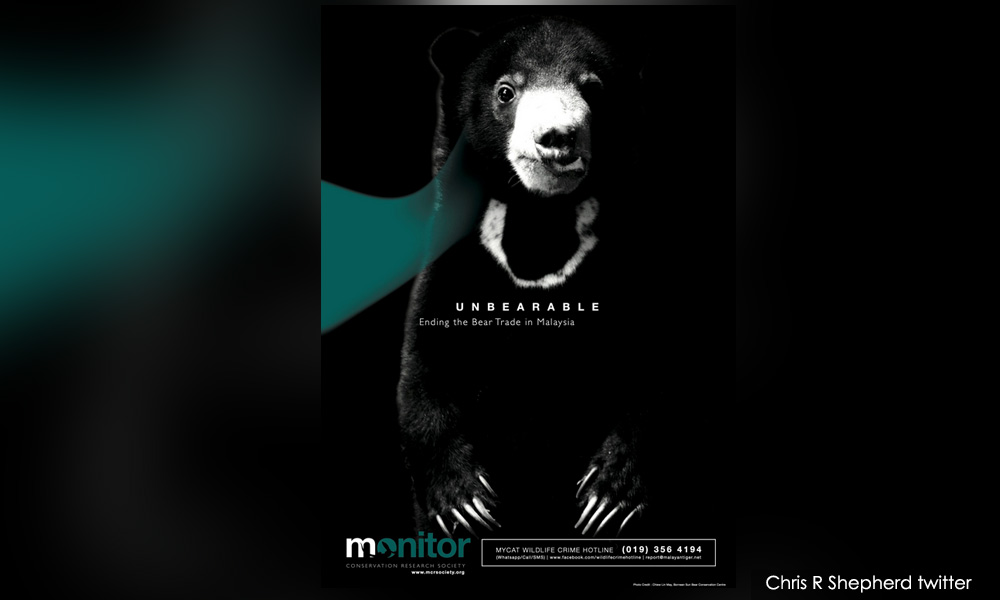
Shepherd, whose organisation just launched its #unbearable campaign to bring awareness to the illicit sun bear trade, pointed out that this made Sarawak one of the last few places in all of Asia where the sun bear is not fully protected.
Wong said those found violating the Sarawak Wild Life Protection Ordinance 1998 only face a “light penalty” of up to one year in jail and an RM10,000 fine - making it seem “like the life of a sun bear is less valuable in Sarawak compared to the other two places”.
Compare this with the penalties of up to RM300,000 fine and 10 years jail in Peninsular Malaysia and up to RM50,000 fine and five years jail in Sabah.
Yet, where Sarawak lacks in elevating the protection status of Malaysia’s only bear species, it makes up elsewhere.
Illicit traders have long exploited the loophole in the laws of Sabah and Peninsular Malaysia that have yet to outlaw advertising the sale of protected species, and their parts or products.
Not so in Sarawak which imposes penalties of up to RM10,000 and a year's jail for such advertising.
Even so, according to Perhilitan director-general Abdul Kadir Abu Hassan, amendments are being drafted to the Wildlife Conservation Act 2010 (WCA) to address this gap.
The amendments, slated to be tabled in the Dewan Rakyat this year, concern three sections involving promoting and advertising of wildlife for sale, making them convictable offences. Yet this only covers Peninsular Malaysia and Labuan.
What’s more, the WCA is being amended to include stiffer penalties for poachers, which could include up to 10 years in prison and RM5 million in fines.
Water, Land and Natural Resources Minister Dr Xavier Jayakumar even urged the governments in Sabah and Sarawak to follow suit to beef up their respective laws so as to better protect Malaysian wildlife.
Malaysiakini has contacted Sabah’s Tourism, Culture and Environment Ministry and the Sarawak Forest Department and is awaiting their responses.
So what will help?
So what will help the good fight? According to Wong, streamlining the laws on wildlife protection and enforcing tougher penalties across the country are necessary.
He opined that possession of a protected animal or their parts should be considered a serious crime, with poaching and killing of wildlife treated as seriously as murdering a person.
“We should treat all wildlife crimes as human crimes, and wildlife poaching cases should be treated as human homicide cases, with investigations carried out at the maximum level.
Wong also suggested that penalties should be meted out in accordance with the number of animals trafficked or killed.
“For example, if the maximum fine to poach a protected species is RM100,000 and if a poacher is found guilty of poaching five protected species, the fine should be 5 x RM100,000 = RM500,000. The same with the jail term.”
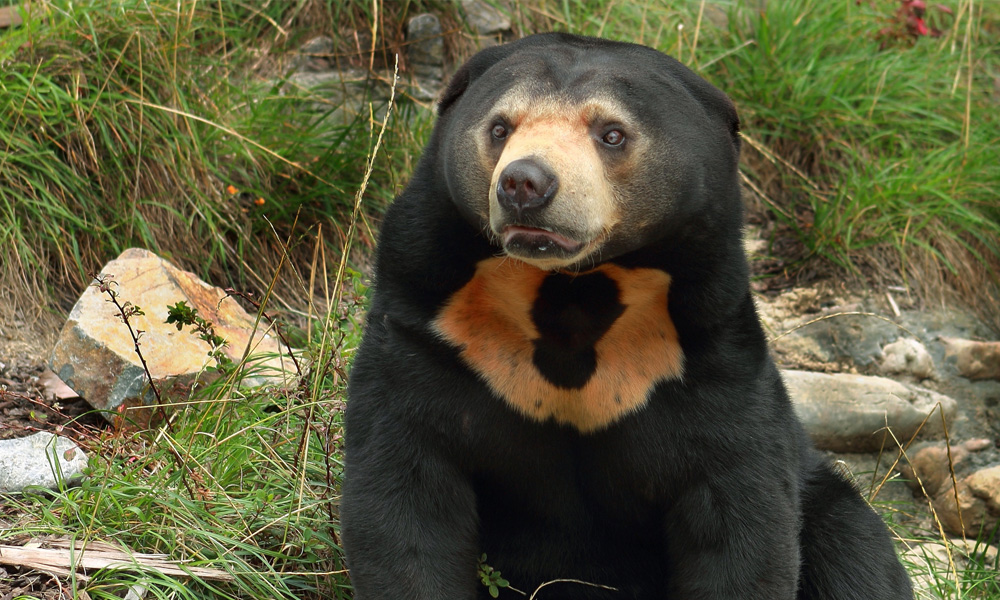
Coronavirus warning
The authorities should also regulate the wild meat industry, Wong said, especially in light of the new coronavirus outbreak across the globe.
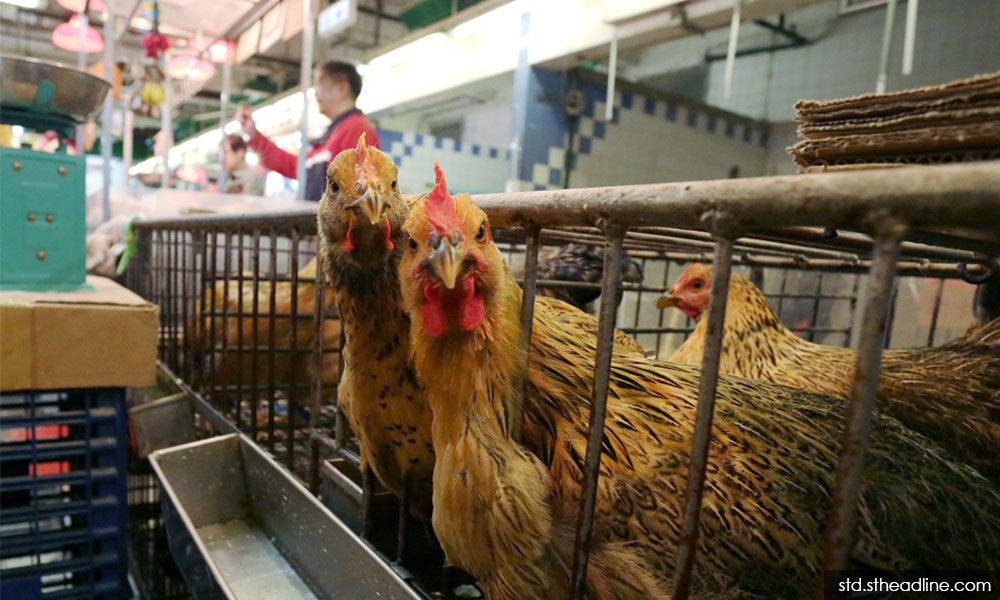
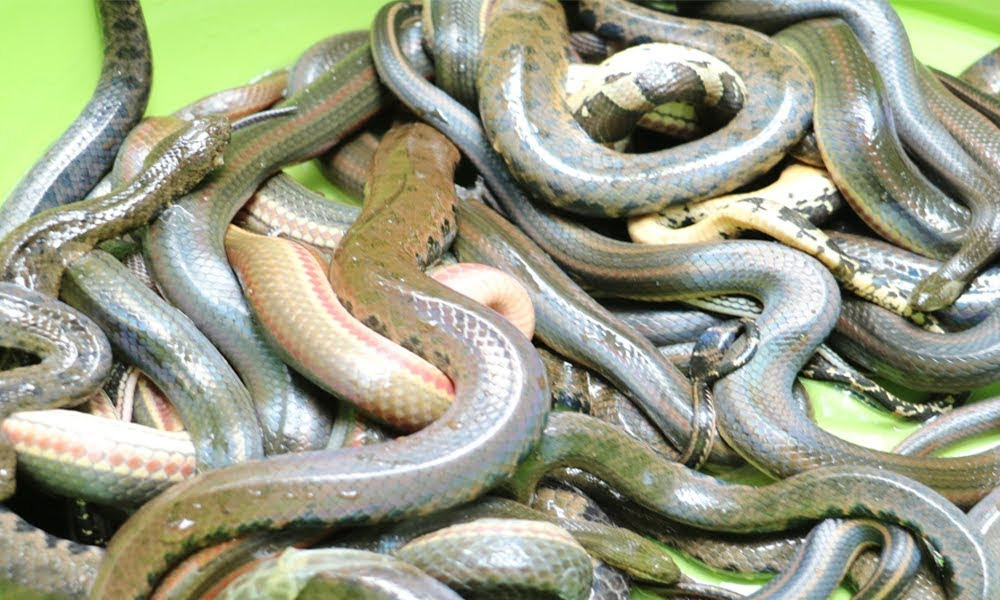
The outbreak, which has so far infected over 19,000 people and killed more than 400, is largely suspected to have originated from wildlife, possibly bats or snakes, brought to a seafood and meat market in Wuhan, China, via bushmeats slaughtered for consumption.
READ MORE - New coronavirus outbreak: Here’s what we know so far
“Any form of wildlife exploitation - poaching, slaughtering, eating, using and keeping - and close contact (with wildlife) all pose potential threats of zoonotic diseases jumping from its animal host to humans, causing serious damage to human life, public safety and the world economy.
“We have to keep wildlife wild in the forest so that they can perform their important ecological roles to keep our forest healthy and ecosystems in balance.”
“If we do not change our human behaviour toward wildlife, or treat them as an important part of our world, we will all be doomed one day,” Wong said.
In the words of the immortal Winnie-the-Pooh: “Some people talk to animals. Not many listen though. That's the problem.”



Report this comment
Are you sure you want to delete this comment?
This action cannot be undone.