




Good ethics - the secret to success
If good corporate ethics is the 'secret weapon' behind the proven success of multi-national corporations (MNCs) in Malaysia, why haven't local businesses especially government-linked companies (GLCs) armed themselves with the code?
If good corporate ethics is the 'secret weapon' behind the proven success of multi-national corporations (MNCs) in Malaysia, why haven't local businesses especially government-linked companies (GLCs) armed themselves with the code?
Business Ethics Institute of Malaysia (BEIM) chairperson Dr Zainal Abidin Abdul Majid, speaking from 29 solid years with an MNC, pins the blame on the prevailing business culture of taking 'short-cuts'.
 "The culture of giving and taking gifts for smooth operations is prevalent. It is in fact seen as necessary for business growth, which is why self-regulation is not favoured," he said in a recent interview.
"The absence of a common or internal code of ethics further compounds the situation."
He said the various chambers of commerce, representing the private sector, preferred market forces than to ruffle members' feathers.
"They look at it as control (or restrictions). In Malaysia, the (business) culture is where bribery is something that has to be done to get the business going."
He implied that the mindset of GLCs and MNCs on investments for corporate training were polar opposites.
"MNCs invest in a big way in training including sales, marketing, production, human resources... basically anything that will enhance their overall performance. MNCs willingly take the risk.
"But in our own local setting, training means a cost. The lack of commitment also comes through clearly with concerns over replacement of staff who have gone for training or the fear of losing trained staff. This is the local mentality."
Mutual commitment
Conceding that self-regulation has always been a futile discussion, Zainal said it was also not a viable option without the commitment of all private sector players.
"A more effective approach would be for the authorities to help support and advise the private sector in formulating a common code.
"(Such) a marriage will enable both parties to understand each other's duties and liabilities, and creates a culture of good business behaviour which is currently absent."
To explain control, he related a conversation with a chamber of commerce leader during a 2004 BEIM survey on whether giving gifts is bribery.
"He told me that we should continue giving gifts because it was our culture, a Malaysian business culture. Giving gifts was a way of doing business and stopping it would impede the growth of business.
"A senior government leader had once told me that a code of ethics will curtail the growth of business in any organisation."
Zainal said no one observed a ruling by the late Justice Harun Hashim that any gift to a civil servant is tantamount to bribery.
"Why isn't anyone respecting that? They still want to give and this facilitates their doing business, getting approvals and favours just to have your files on top of the pile."
Asset, not liability
He said there was nothing to fear in dropping such a culture because MNCs showed that the code of ethics helped them facilitate growth and sustainability.
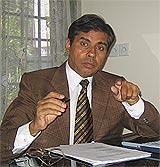 "It's simple enough to understand that when a country and company display integrity, there is trust by investors and the productivity level of staff increases because everything is fair, honest and transparent."
Last month, BEIM released a local survey which ranked business leaders just one spot above politicians who came in last out of 15 occupational groups sampled for public trustworthiness.
Zainal explained this as being due to "prevailing memory of undergoing some nasty experience at one time or another".
Drawing from almost three decades in the pharmaceutical industry with then world giant GlaxoWellcome based in Malaysia, he said good corporate ethics was vital to success.
'This industry is a fine example for businesses in general to emulate the code of ethics which is strictly governed at the international, group, regional and country level.
"There was firm emphasis to implement the code of ethics religiously. In fact, MNCs use the code of ethics as an asset and not as something detrimental to their business."
He said MNCs cast the code as a pillar of their mission and a measure of success, central to their vision and charter which in turn sustained their business.
"Any code of ethics must address in total the needs of the stakeholders including employees, shareholders, suppliers, vendors and the government."
Decisive action
He lauded the US government's swift response to a slew of corporate scandals including Enron by enacting the Sarbanes-Oxley Act 2002 requiring greater accountability of top management and the board in financial reporting.
"Besides ensuring that a company's code of ethics is publicly available, it protects both the company and the interest of stakeholders."
He said Enron was a man-made corporate disaster where the rot began at the CEO level.
"CEOs at all levels of the corporate hierarchy play a vital role in driving the engine of ethical business practices.
"This is what we need to see in Malaysia in the local companies, and especially so, the GLCs," he said, noting that many companies did not have a code of ethics.
Referring to the National Integrity Plan, Malaysia's anti-corruption master plan, he said a chapter was dedicated to strengthening of the business ethics culture.
"This (agenda) needs to be politically-driven. It's time the GLCs started looking at these values and let my strong advise to them is to learn from the MNCs.
"Malaysians are so accustomed to the saying that we do things according to our own acuan (mould). The problem is, we don't even have an acuan, and that is dangerous."
Zainal urged the government to drop the rhetoric and "get on with the action" and not waste time "re-inventing the wheel".
"There must be an agenda right away for the (23 public-listed) GLCs to have a code of ethics."
He said there were many parties who were willing to help formulate a code of ethics because GLCs were of special interest to the rakyat by virtue of being public-listed companies.


Are you sure you want to delete this comment?
This action cannot be undone.