




Use UN seat for internal change: AI
Rather than seeking change elsewhere in the world, Malaysia should take the opportunity of being elected member of the United Nation's new Human Rights Council to improve its human rights situation, said Amnesty International Malaysia (AIM).
Rather than seeking change elsewhere in the world, Malaysia should take the opportunity of being elected member of the United Nation's new Human Rights Council to improve its human rights situation, said Amnesty International Malaysia (AIM).
While Malaysia, chosen along with 46 other countries to sit on the Council, could seek to influence other countries, it should first improve its own practice and record of human rights, said AIM executive director Josef Roy Benedict
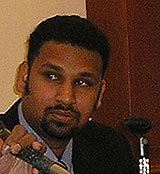 "I think it's important that we need to use this opportunity, being on the human rights council, not to call for human rights reforms elsewhere in the world, but to change ourselves," he told reporters at the launch of Amnesty International's Annual Report 2006 in Petaling Jaya today.
According to Benedict ( pix ), many quarters had hopes that there would be reforms in areas that had long been a blight on Malaysia's human rights record.
Citing the release of the Royal Police Commission's report and its 125 recommendations last year which he said "were very, very good," Benedict said many believed change vis-a-vis the police would soon become a reality.
"Unfortunately, until the end of 2005, the timing of the implementation process of the recommendations it is still unclear," he said adding the implementation should be immediate.
Close Kamunting
Benedict said the government should start looking at the ratification and implementation of international human rights treaties in Malaysia as soon as possible such as the various UN covenants on civil, political, economic, social, and cultural rights.
"Why can't we ratify the (UN) Convention against Torture (and Other Cruel, Inhuman or Degrading Treatment or Punishment)? What message are we sending out?" he questioned.
Benedict highlighted the call by Prime Minister Abdullah Ahmad Badawi to the US to close down its Guantanamo prison in which hundreds remain incarcerated without access to counsel or courts of law.
 The same rationale, he said, should be implemented in Malaysia where hundreds of people are currently being detained without trial in prisons at Kamunting in Perak and Simpang Renggam in Negeri Sembilan.
"We also call for the closure of these detention centres and either the charging in a court of law or the release of all those detained without trial," said Benedict.
He noted that 71 alleged Islamic militants were being detained under the Internal Security Act (ISA) at the end of last year for alleged links with Al-Qaeda and the Jemaah Islamiyah or the Malaysian Mujahidin Group.
There were also 105 minors between the ages 14 and 21 among 700 suspected criminals being detained under the Emergency Ordinance and Dangerous Drugs Act which also allow for detention without trial.
Growing intolerance
He also cited the mass arrests and deportation last year of undocumented asylum-seekers and migrant workers. "There were reports of abuses and the authorities failed to provide adequate medical care, food and clean water in some detention centres," said Benedict.
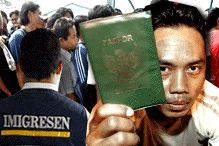 Even documented workers, said Benedict, were subject to human rights violations citing the case of Nepali Mangal Bahadur Gurung who was imprisoned and canned despite having a valid work permit.
"Caning is cruel, inhumane and degrading. Amnesty calls for the use of caning to be stopped," said Benedict of the punishment specified for offences under the Immigration Act.
Touching on Islamic religious authorities, Benedict said they have been responsible for the growing intolerance of the country's religious minorities.
"To bring about change in 2006, we need to end the doublespeak. We need to end the deception. We need a clear plan for a change in human rights status both globally and locally," said Benedict.


Are you sure you want to delete this comment?
This action cannot be undone.