




Rules are extensive to prevent tragedies
Long before the Hulu Klang tragedy last Wednesday, a long list of guidelines and regulations on development projects had been imposed at all levels of authority, says a land planning expert. Where are the documents proving they have been fulfilled?
Long before the Hulu Klang tragedy last Wednesday, a long list of guidelines and regulations on development projects had been imposed at all levels of authority, says a land planning expert. Where are the documents proving they have been fulfilled?
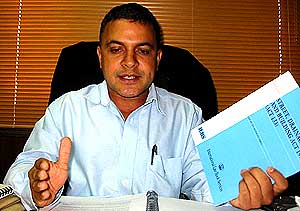 Derek J Fernandez, a legal advisor to many residents associations, said extensive regulations exist at the federal, state, and local levels involving many units, departments and ministries to minimize the occurrence such as that of last Wednesday.
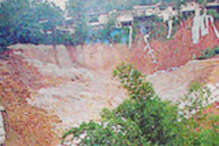
At least four people died in the 4:40 pm incident when a wall retaining tons of rain-swollen earth came crashing down on more than 46 houses, located in a hilly area marked as high-risk.
"This tragedy is likely to continue over and over again unless there are some radical changes in the way things are done," said Fernandez when met at his office in Petaling Jaya.
At the outset, said Fernandez, two basic guidelines govern whether a development project can even be considered by local authorities.
Firstly, any development involving land over 35 degrees, irrespective of who owns the land, is completely prohibited.
Secondly, any area of land with a gradient between 26 and 35 degrees may only be considered after having taken into account findings of an environmental impact assessment (EIA) report.
"The important words here are 'boleh ditimbangkan' - it may be considered. It does not say you can build," he said.
More specifically, he added, five specific requirements have to be fulfilled before the development order (DO) can be issued to a developer by the local authority.
Mitigate risks outlined
Firstly, the developer must comply with Ministry of Science, Technology and Environment 2001 EIA guidelines. Geology and geo-technical reports also have to be submitted.
"Obviously, these must be signed by licensed professionals who are willing to bear the responsibility and the duty of care in their work and in their opinion," he added.
 Thirdly, the developer must submit an erosion-risk map outlining the possible risks of erosion as a result of that development based not only the existing conditions but also on the anticipated change in conditions, said Fernandez.
A proposal must then be given - and the local authority must approve - the steps to be taken to mitigate the risks outlined, including steps to enhance hill stability, and address erosion, and sedimentation.
Lastly, said Fernandez, a detailed EIA - in addition to compliance with the EIA - has to be submitted if, in addition to any part of the land concerned has a gradient of between 26 and 35 degrees, more than 50 percent is between 26 and 35 degrees.
If the land gradient is less than 25 degrees, the project would still have to comply with the Housing and Local Government Ministry's planning guidelines as well as the Department of Environment's guidelines on highland development.
It doesn't stop there, however, as the local authority must then verify that in addition to proof that all the above regulations have been complied with, the development project also complies with the Town and Country Planning Act of 1976.
The act contains additional requirements and policies that have to be taken into consideration before the town or municipal council agrees to issue a DO, he said.
Detailed report
Among such requirements is in Section 21A of the act, which compels the developer planning a hillside project to submit a development impact proposal report prepared by professionals in the field.
That report contains the development concept, its justification, a location map and site plan of the land, particulars of land ownership, and a description of the land, its physical environment, its topography, and its landscape.
 The report also has to specify the land's geology, its contours, its drainage, its water bodies, its natural features, a complete survey of all forms of trees and vegetation, as well as particulars of the building or buildings planned.
On top of this, the development impact proposal report also has to detail how the project would affect the other surrounding land, its geology, its contours, and its trees.
Even after the DO has been issued, the local council's building and planning department would coordinate to evaluate the building plans to ensure they come under the Street, Building and Drainage Act of 1974.
"The question is in this case of Hulu Klang, have all these guidelines been complied with to the letter and to their intent?" asked Fernandez.
"These are legal requirements. It must be done. It's time to put professionals back into the process and let a very good control process evolve. Or else it's going to happen again, a time-bomb ready to go off," he warned.


Are you sure you want to delete this comment?
This action cannot be undone.