




Civil action for press freedom
Eleven days after MCA took over Nanyang Siang Pau on May 28, 2001, a number of columnists banded together to form the Writers' Alliance for Media Independence (Wami). Its work is far from over.
Eleven days after MCA took over Nanyang Siang Pau on May 28, 2001, a number of columnists banded together to form the Writers' Alliance for Media Independence (Wami). Its work is far from over.
On May 3 - World Press Freedom Day - it initiated a five-point memorandum that expressed the main frustrations of advocates and proposed a road-map to press freedom in Malaysia.
 Committee member Por Heong Hong knows that this could be a road-map to nowhere if the public does not support the lobby.
In an interview with malaysiakini trainees, she said that public consensus is vital to the creation of a civil society.
"Individualistic values should not be practiced in a civil society. People should not be concerned about the issues of a particular race, for example...they should defend the public interest," Por said..
Pointing out that press freedom is universally recognised, she said the public should protest any attempt to curb the media.
Wami, she added, has been doing its part by organising and mobilising writers, compiling reports and issuing statements on current issues, and conducting awareness-raising campaigns.
It is also a founder-member of API-Media, a coalition of civil society groups that is lobbying against political interference in the media.
Part of a mission
Malaysia Youth and Students Democratic Movement (Dema) is another group indirectly involved in press freedom issues - taking up the cause in line with its mission to promote and defend democracy.
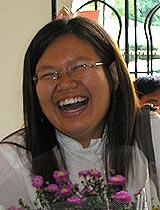 Administrative secretary Soh Sook Hwa (right) said the press faces restrictions because of the poor state of democracy in Malaysia.
"To change the system where the laws restrict the press, it is important to raise awareness of human rights and democracy among the public. This is a long-term process, but it will lead to press freedom if successful. This is Dema's main priority," she said..
Dema itself was associated with a key press freedom issue in June 2001, when it formed the Students Alliance for Media Independence (Sami) following the Nanyang takeover.
With an objective to promote media independence, Sami took its fight into university campuses. It encouraged students to wear the Yellow Ribbon (adopted by Nanyang journalists as a symbol of protest); issued press statements and conducted a signature campaign.
Although that battle was lost, Dema today continues to support NGOs pushing for press freedom. It was among the 37 groups (and 92 individuals) who signed the Wami-initiated memorandum to the internal security ministry.
Accumulated victories
Similar support is provided by the Kuala Lumpur-based Selangor Chinese Assembly Hall (KLSCAH), although it does not get involved directly in press freedom campaigns.
Ser Choon Ing, chairperson of the civil rights committee, recalled the actions taken in the Nanyang case.
"KLSCAH led the Chinese community in protesting the takeover because this was seen to further tighten the screws on the media," he said.
"Meetings and discussions were held and a boycott of Nanyang was initiated. There were even suggestions to form a civil society group to take over the paper so that it would remain in the hands of the public rather a political party."
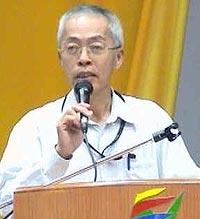 The accumulated small victories along the process should never be denied, he said, even if efforts of civil society groups over the years has not been completely effective in achieving legal reforms.
"Public awareness is essential because the people can act as a counter-weight to achieving balance," he said.
On May 3, as the world observed Press Freedom Day, Chinese education movement Dong Zong (United Chinese School Committees' Association of Malaysia) did not join in.
Explained CEO Bock Tai Hee (photo), "No, we went about everything like usual. The media should be our daily concern."
Based on this, Dong Zong organises discussions, submits memorandum and issues statements.


