


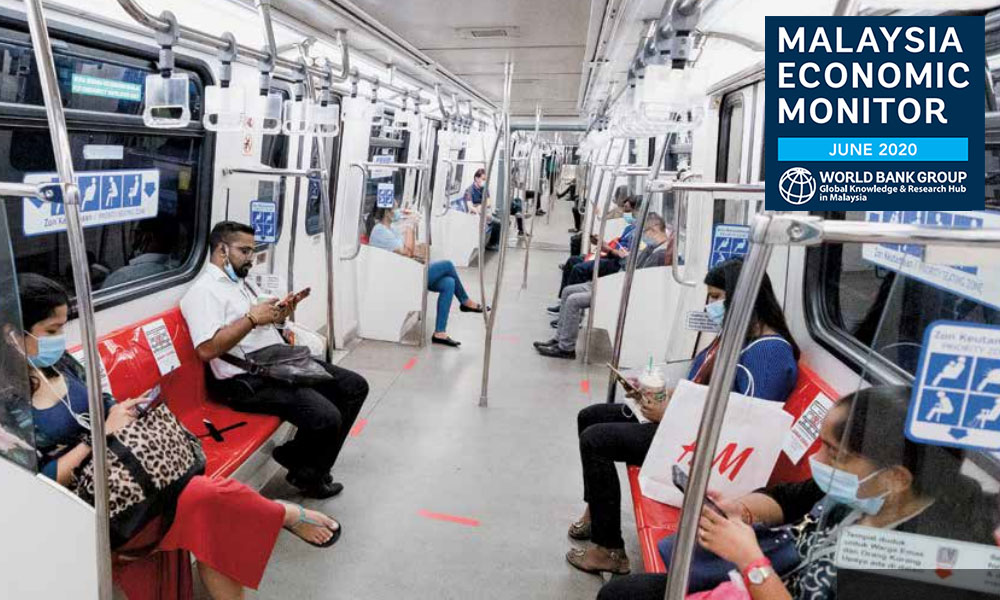

World Bank: Govt may need to spend more on Prihatin, Penjana
Putrajaya may need to spend more on social aid and economic stimulus to protect vulnerable households and ensure SMEs are sustainable, said the World Bank.
It also highlighted several issues in both packages which the government can improve to help those in need.
Putrajaya may need to spend more on social aid and economic stimulus to protect vulnerable households and ensure small and medium enterprises (SMEs) are sustainable, said the World Bank.
It also highlighted several issues in both packages which the government can improve to help those in need.
In a Malaysian Economic Monitor report today, the World Bank said the Prihatin and Penjana packages announced by the government do cushion the impact and lessen short-term disruptions.
However, it said this is based on the assumption that the crisis will pass in a few months.
"Given that it could take at least another one to two years for the economy to return to pre-Covid-19 conditions, additional financial assistance may be needed to protect the welfare of vulnerable households and to ensure the sustainability of SMEs," it added.
Prihatin is an economic stimulus plan totalling RM260 billion in benefits while Penjana is an RM35 billion short-term economic recovery plan.
The government's total cash injection for both packages is said to be about RM45 billion.
For Prihatin, the World Bank said there was "growing public expectations" that the amount of assistance would be increased due to the high level of uncertainty regarding the pandemic's impact.
The institution also highlighted some weaknesses such as implementation issues which hampered the disbursement of the Bantuan Prihatin Nasional (BPN) cash assistance.
Previously, it was reported there were issues regarding individuals entitled to the aid being disqualified either for being part-time students or having a registered company.
The Finance Ministry did provide avenues for those who were disqualified to appeal.
The World Bank said another issue was the SMEs' reluctance to take up the wage subsidy programme because of a clause that would require them to retain employees for at least six months, of which only three months are covered by the subsidy.
On Penjana, the World Bank said there was a lack of attention towards vulnerable households, including cash aid which was proven effective in helping the B40.
"In addition, a number of the measures, such as the various exemptions on stamp duty, real property gains tax (RPGT) and vehicles sales tax favour the higher income groups, in addition to being costly in terms of foregone revenue.
"There is also a risk that untargeted tax incentives may result in further revenue loss without substantial gains in terms of job creation," it said.
It added that implementing 40 separate initiatives could be challenging to do in a short time.
The World Bank, however, noted that additional spending for fiscal measures would be tough as government revenue drops, with the fiscal deficit expected to widen up to seven percent of GDP.
In order to limit the fiscal deficit increase, it said the government has two immediate options, the first is to recalibrate its operating budget - which would have limited savings.
The second is to explore non-tax revenue options such as higher dividends from GLCs such as Petronas or by selling select government assets.
The World Bank, however, warned that increasing reliance on GLCs might harm the companies' financial standings.




Are you sure you want to delete this comment?
This action cannot be undone.