




Spotlight on Al Jazeera’s ‘filming licence’ may open a Pandora’s Box
Investigations against international news organisation Al Jazeera are intensifying with a rarely enforced law on filming permissions now being invoked.
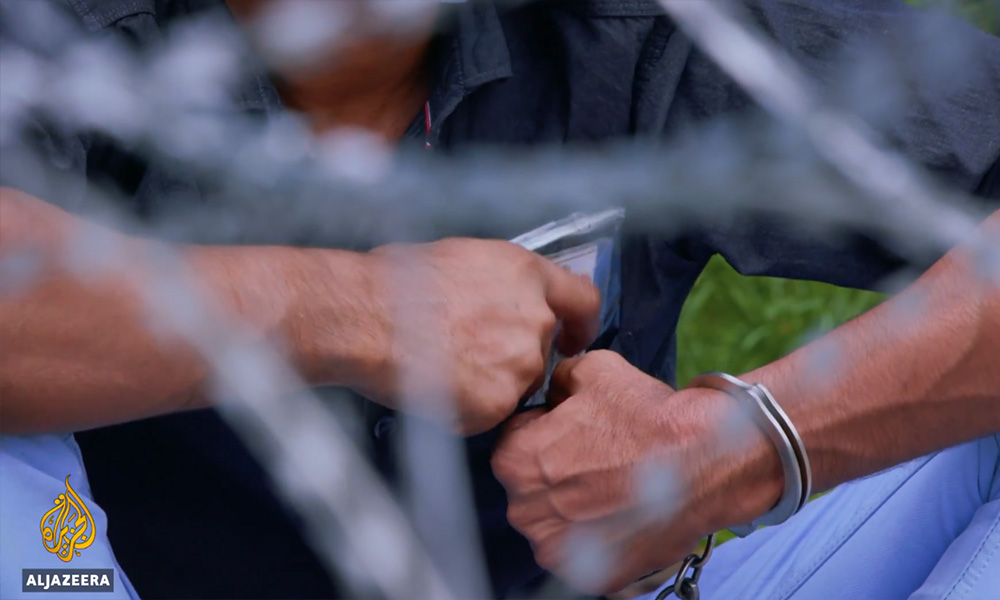
Yesterday, the National Film Development Corporation (Finas) announced that Al Jazeera’s documentary titled "Locked Up in Malaysia's Lockdown" did not have the necessary paperwork and was being investigated.
Under Section 22(1) of the Perbadanan Kemajuan Filem Nasional Malaysia Act 1981, producing, exhibiting or distributing a film required a licence from Finas. The subsequent subsection states that a licence can be denied without any reason given.
A violation of this law may result in a maximum two years imprisonment, a maximum RM50,000 fine or both.
Should prosecutors eventually apply this law against Al Jazeera, it may have a far-reaching impact on the media industry and perhaps even on individuals.
Several experts told Malaysiakini that the law has a very broad definition, covering virtually every type of video recording at a time when the ubiquity of smartphones and other gadgets makes it possible for anyone to record and broadcast videos.
The definition set out in Section 2 of the act stated: “‘Films’ include feature films, short films, short subject films, trailers, documentaries, advertising filmlets and any recording on material of any kind, including videotapes and video discs, and moving images, accompanied or unaccompanied by sound, for viewing by the public or any class of the public”.
"Yes, the definition in the act means that the licensing requirement also covers videos that are uploaded onto social media sites like TikTok and Instagram stories," said lawyer Aizul Rohan Anuar, who has worked extensively with filmmakers.
Aizul was of the opinion that even film students technically need a licence to produce a film for their school projects. However, according to Aizul, the actual enforcement of the law has been rare.

"If they want to enforce it, they can. It's like the by-laws that prohibit the public from wearing the Malaysian military camouflage uniform. The law is there but many still wear it.
"But if a time comes when the (authorities) want to enforce it, those who violate the law can be charged," he said.
Aizul believed that Section 22(1) had only been applied in court once in 1989 when a man was charged at the Johor Magistrates Court for distributing a film without a valid licence from Finas.
However, Aizul said there has been no precedent where a person or entity was charged for actual filming without a licence.
Not enforced on individuals
Finas chairperson Zakaria Abdul Hamid, when contacted, confirmed that all forms of video recording must seek a licence from his agency because their job was to ensure that the material produced did not incite unrest or cause a public nuisance.
"Whatever type of filming, any film, drama or documentary, including short films,” he said.
Zakaria stressed that Finas would only enforce the law against companies for now and might only be enforced on individuals on a case-by-case basis.
He advised those who were unsure to seek Finas’ advice before filming.
"Usually, we are not that strict," he added when asked if the law applied to ordinary citizens who might upload their videos.
“If there are cases (where a video) incites (people to cause) trouble, then we will seek the explanation (of the producer).”
Asked if any news agency had been penalised for violating Section 22(1) before, Zakaria said he was uncertain.
As for Al Jazeera’s documentary, Zakaria said a firm response was necessary.
"We have to be strict as now this thing has become an issue. They have filmed it and they cannot simply apologise (and get away with it).”
The Al Jazeera documentary provided a critical look at the detention of undocumented migrants during the movement control order period.

Critics had argued that the documentary had painted Malaysia in a bad light with its suggestion that the detentions were a result of racism and that the detainees were treated poorly.
Producers of the documentary have been subject to police investigations.
Law ought to be 'reviewed'
Filmmaker Al Jafree Md Yusop told Malaysiakini that it was time for the Cold War-era law to be reviewed.
“I think it's about time somebody or the person in charge of the act look again, not only at the licensing part but the entire act.
"I think when they made this act, there were many things that they had overlooked," said Jafree, who produced films such as Dukun (2017) and Mencari Rahmat (2018).
Anna Har, executive director of Freedom Film Network, said the use of act against Al Jazeera was uncalled for as the correct response should be based on facts.
Har said Al Jazeera appeared to be the subject of a “media witch hunt”.
"Investigative documentaries play an important part in helping Malaysian stay informed. (Journalists) should be allowed to function without the control of political influence.
"If the government has an issue with the content that Al-Jazeera presented, they should challenge them on the content and facts.
"Don't use licensing or regulatory controls," she said.
Finas, said Har, was established to regulate the commercial filming industry and not the press.
"Today, many of the big media companies are based in Singapore. It means that the job opportunities and experience brought by them go to the industry people in Singapore.
"So if we push them out further, guess who will be at the losing end?"





Report this comment
Are you sure you want to delete this comment?
This action cannot be undone.