



MPs: Do content creators, online classes, religious services need Finas licence too?
PARLIAMENT | Opposition MPs have questioned Communications and Multimedia Minister Saifuddin Abdullah whether young content creators, educators, and houses of worship will need a filming licence from the National Film Development Corporation (Finas).
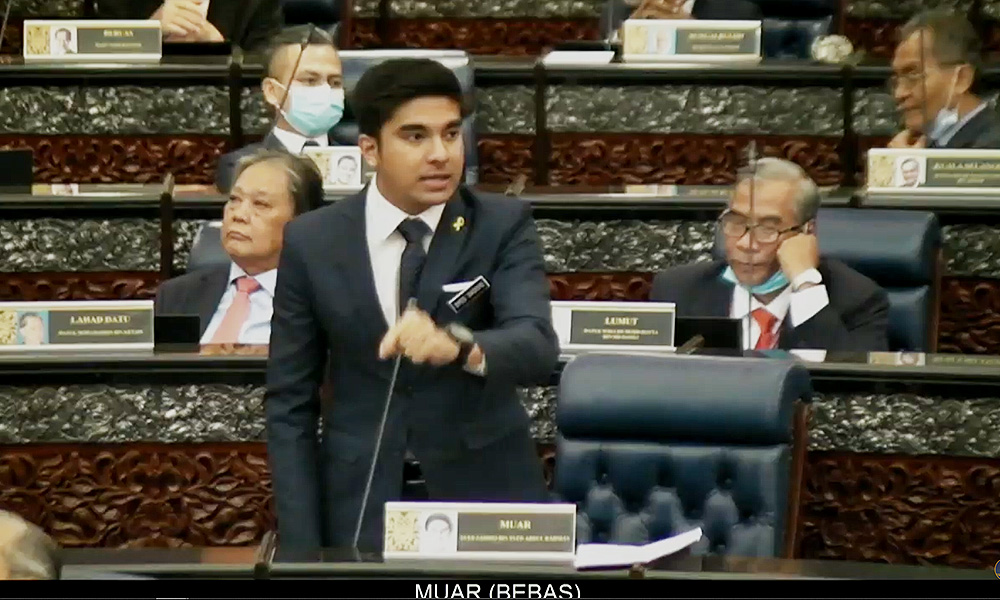
During his turn to debate the royal address, Syed Saddiq Syed Abdul Rahman (IND-Muar) raised concerns that the requirement would “kill” online content creators, many of whom were youths.
“I demand and urge...
PARLIAMENT | Opposition MPs have questioned Communications and Multimedia Minister Saifuddin Abdullah whether young content creators, educators, and houses of worship will need a filming licence from the National Film Development Corporation (Finas).
During his turn to debate the royal address in the Dewan Rakyat, Syed Saddiq Syed Abdul Rahman (IND-Muar) raised concerns that the requirement would “kill” online content creators, many of whom were youths.
“I demand and urge the minister to retract his statement to ensure that there is consistency so that his explanation will not bind youths across Malaysia,” said Syed Saddiq (photo, above) who is the former youth and sports minister.
Interjecting, Maszlee Malik (IND-Simpang Renggam) questioned if school teachers would also need a Finas licence to conduct online lessons.
“University lecturers similarly continue to do so (hold online lessons) since many students have yet to return to their campuses. They have to create video content and share it on public platforms like YouTube and Instagram,” he said.
“When it comes to the question of applying for a Finas licence, they (teachers) say this is an impossible and burdensome task. They need to teach and deliver, how long will it take for their licence applications to be approved?” asked Maszlee, who is the former education minister.
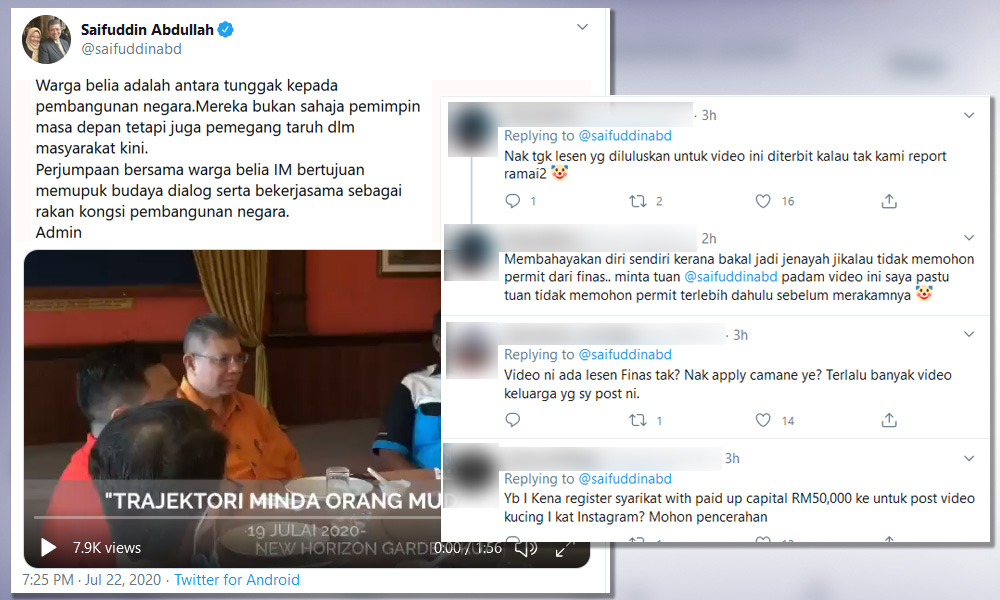
Meanwhile, Segambut MP Hannah Yeoh tagged Saifuddin in a tweet asking if places of worship will need a Finas licence for online worship services.
“Don't you know that the threat of Covid-19 has caused many places of worship to go online and have praise and worship services and sermons via videos?
“You expect places of worship to apply for (a) permit from Finas too?” she questioned.
Amend outdated law
Earlier this morning, Saifuddin had told the Dewan Rakyat that both “mainstream and personal” media will need a license to publish their work.
"It is mandatory for film producers to apply for a film production licence and filming certification letter regardless of whether they are mainstream media or personal media that publish their films on social media or traditional channels," he had said.
The Finas Act 1981 defines films as recordings on any material, including feature films, short films, short subject films, trailers, documentaries and advertising filmlets.
According to the Finas website, one must have a registered private limited company with RM50,000 in paid-up capital to qualify for a film or video production licence.
The minister has since come under intense criticism from both lawmakers as well as Malaysian social media users.
In a statement following Saifuddin’s explanation, Wong Shu Qi (Harapan-Kluang) urged him to amend the “outdated” law.
“It was enacted during those years when filming activities were only confined to the film industry, news agencies and commercial use.
“However, we are now in an era where everyone can film. Social media users with smartphones upload millions of videos to Youtube, TikTok, Facebook and Instagram every day,” she said.
Former prime minister and Pekan MP Najib Abdul Razak similarly disagreed with compelling all social media users to apply for a Finas license.
He defended Saifuddin for basing his explanation on what was stipulated in the Finas Act but cautioned against misusing the law against netizens.
“The minister’s official answer in Parliament was what is in the present act. This does not mean the act can be misused by the Perikatan Nasional government to threaten social media users.
“PN is not like the Pakatan Harapan government that misused the law to persecute the rakyat and its opponents,” he said in a Facebook post.
In a separate statement, PKR President Anwar Ibrahim also expressed concern over Saifuddin's explanation and questioned if this was a way to penalise content that was "unfavourable" to the government.
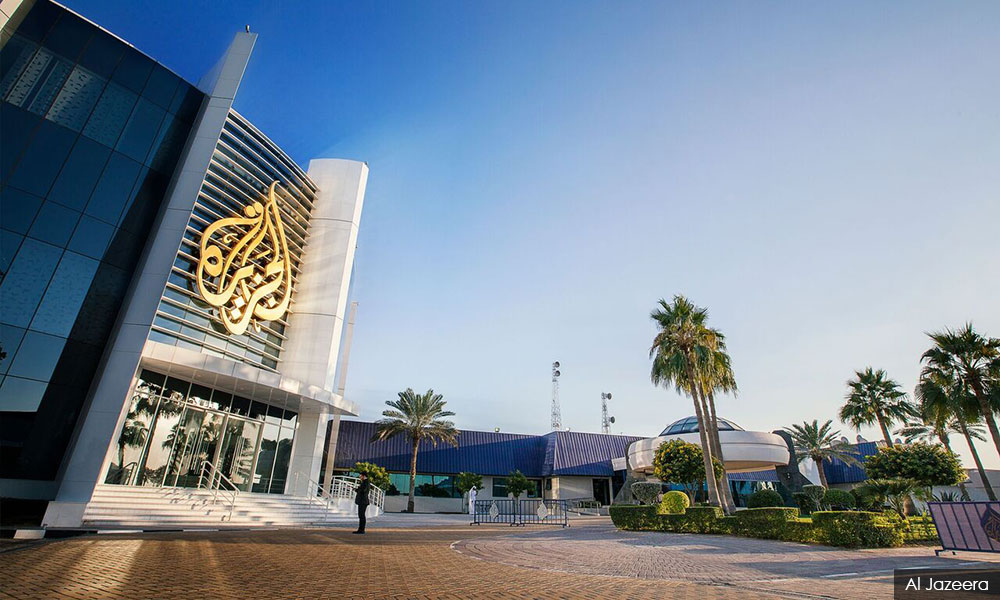
Finas licences came into public consciousness after Saifuddin’s ministry decided to probe whether international broadcaster Al Jazeera was licensed to produce documentaries.
This was after it aired "Locked Up in Malaysia's Lockdown", a news documentary critical of how the government had treated migrants during the Covid-19 pandemic.


Report this comment
Are you sure you want to delete this comment?
This action cannot be undone.