


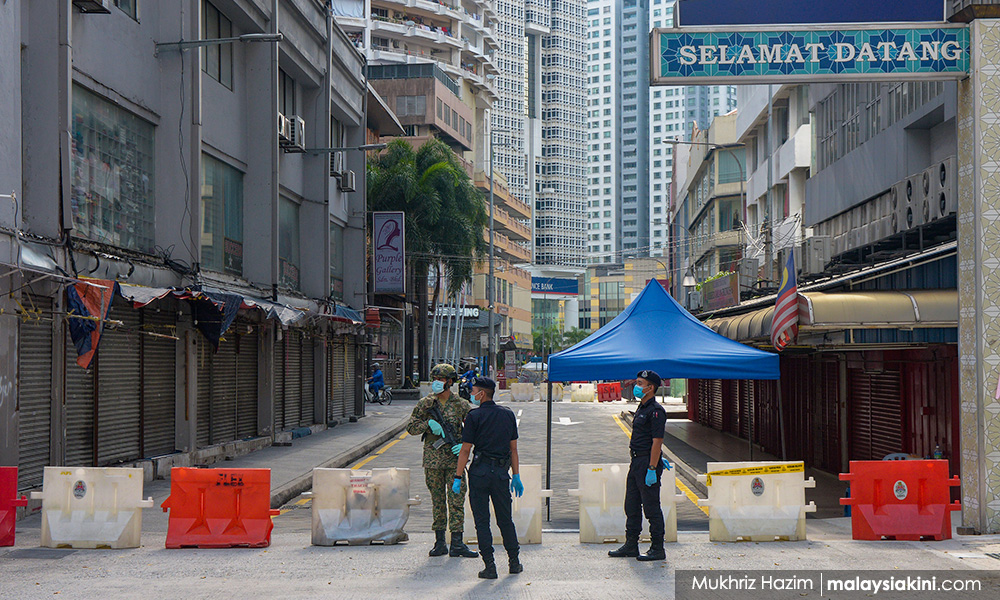

'Out of bullets' - Battered SMEs may not survive another full MCO
CORONAVIRUS | The recent rise in Covid-19 cases has prompted the government to tighten the standard operating procedures (SOP) to break the transmission of the disease.
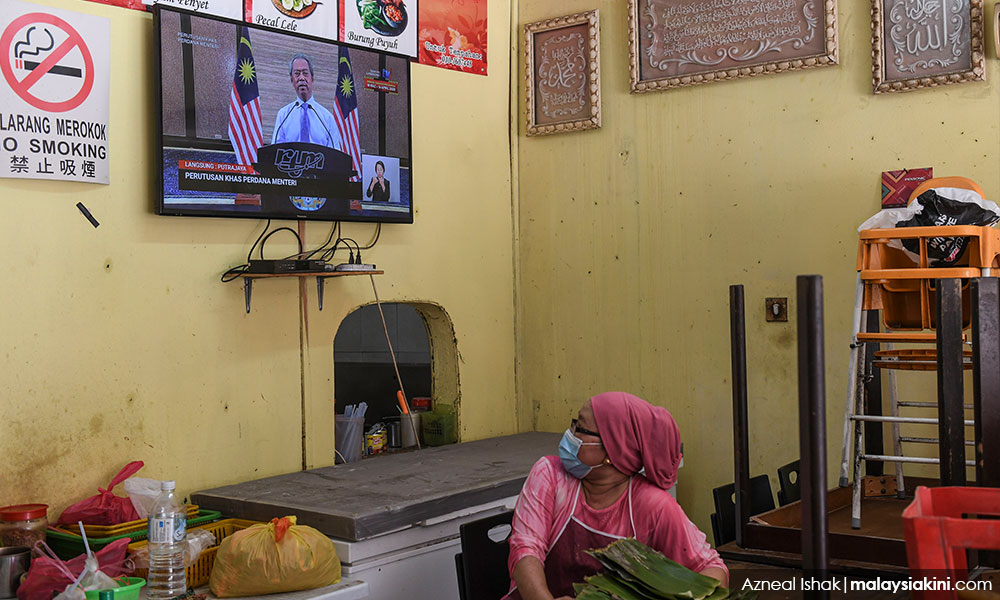
Defence Minister Ismail Sabri Yaakob had also said this afternoon that the government may be forced to impose the movement control order (MCO) again and shut down all movement if the daily Covid-19 cases reach three-digit figures again...
CORONAVIRUS | The recent rise in Covid-19 cases has prompted the government to tighten the standard operating procedures (SOP) to break the transmission of the disease.
Defence Minister Ismail Sabri Yaakob had also said this afternoon that the government may be forced to impose the movement control order (MCO) again and shut down all movement if the daily Covid-19 cases reach three-digit figures again.
If that comes to pass, Universiti Malaysia Sarawak economist Shazali Abu Mansor said the small and medium enterprises (SMEs) will be the most affected.
“Because these SMEs have been hit for (almost) three months that time, they are already on their last legs. If they are hit again for a month or two, that is what we are worried about.
“The impact of this second time, if it happens, will be worse. Because back then, they (SMEs) had some savings. Now, all their ‘bullets’ and savings are gone… they have all been used up,” he said when contacted by Malaysiakini today.
The MCO, which was first implemented on March 18, saw all economic sectors ordered to shut down aside from essential services, which caused many businesses to lose their source of income.
After the government loosened restrictions under the conditional MCO starting May 4, most businesses resumed their operations though subject to strict SOP.
The SOPs were further loosened following the recovery MCO which started on June 10.
Shazali said in order to avoid a shutdown of the economy again, SMEs have to ensure the SOP is complied with, especially by customers because the businesses will be the ones to suffer if the MCO restrictions are tightened.
He added that most business premises are not complying fully with the SOP, based on his own personal observations.
However, Shazali said, even if the MCO restrictions are to be tightened, it may only be done in selected areas such as those categorised as red zones.
The government can also strategise better to help businesses in these areas if they were forced to shut down, compared to the first phase of the MCO which saw a national shutdown of the economy.
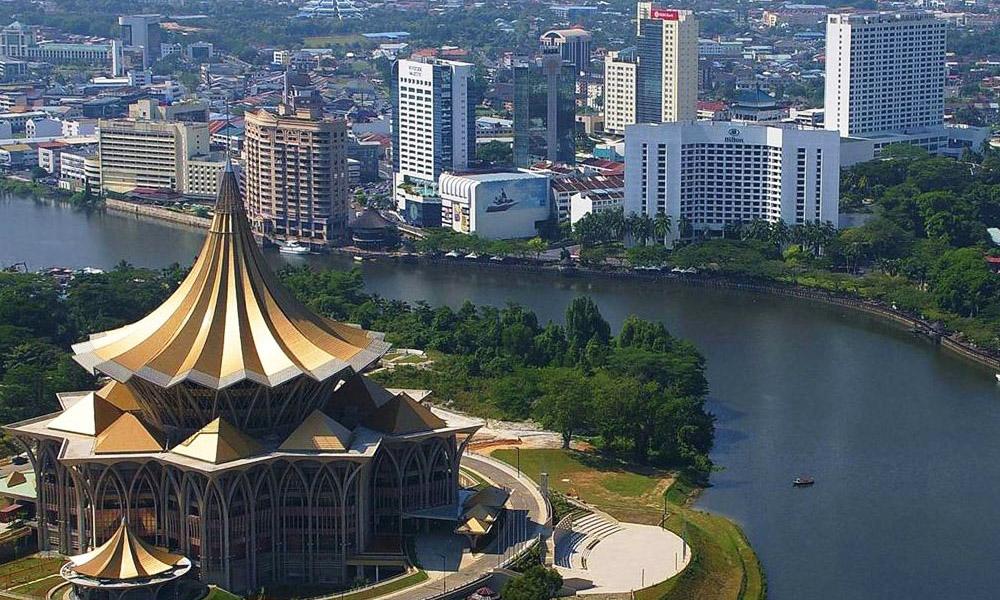
“If it’s selective, for example in Kuching, there aren’t as many SMEs in Kuching as in entire Malaysia. If (the government) were to help, they have the resources to do so.
“But lives cannot be gambled away. If they should close, (then they should comply and) close,” he said.
For the record, Kuching was declared as a red zone yesterday.
Universiti Putra Malaysia lecturer Ahmed Razman Abdul Latiff said the government does not need to close down the economic sectors which have just reopened.
Instead, they need to ensure that the businesses are complying with the set SOP.
“The effect of closing down the sectors again will cause the economy to be damaged even worse and it could drag on till next year,” he told Malaysiakini today.
For the time being, Razman said the country’s GDP is expected to be around -3 to -2 percent though it is expected to recover next year.
However, if the economic sectors are closed again, Malaysia may undergo a technical recession, which is when a country records negative GDP growth for two quarters consecutively.
“This could happen in the second and third quarter this year and could drag on till the fourth quarter if the sectors were to remain closed past September.
“If this happens, the government’s target to achieve positive GDP growth of around 7.5 percent next year may not happen.
“It may still be positive but at a much lower rate,” he added.
Both Razman and Shazali said the mandatory usage of face masks in public transports and “crowded” public places starting Aug 1 is a good move in breaking the transmission of the disease.
It could also prevent the economy from being shut down again, they said.
The recovery MCO which started on June 10 is expected to end on Aug 31 and is supposed to be replaced by a normalisation phase until a vaccine for Covid-19 is discovered.



Report this comment
Are you sure you want to delete this comment?
This action cannot be undone.