


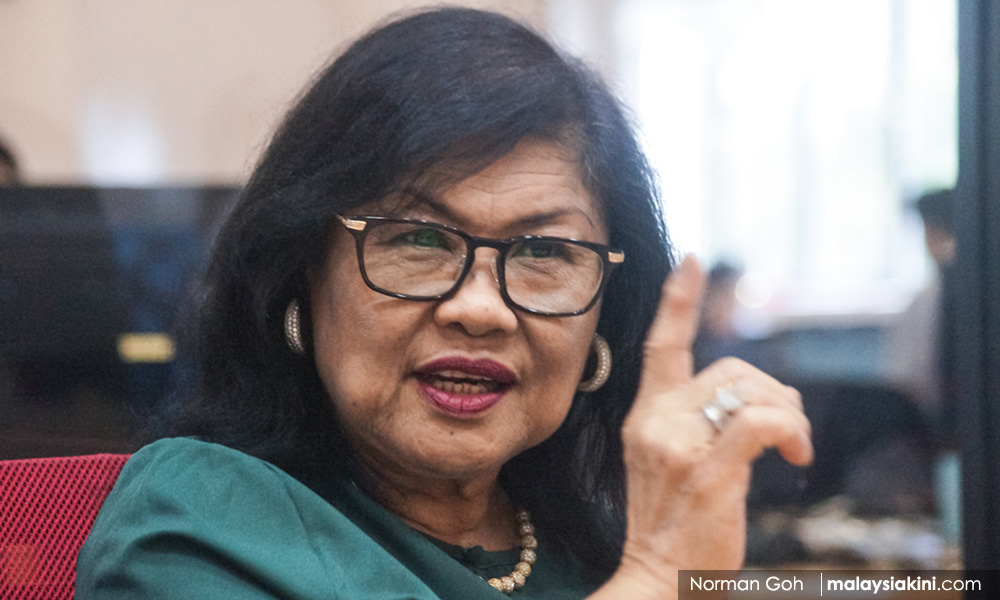

'Leadership not determined by age' - Rafidah on Syed Saddiq's plan
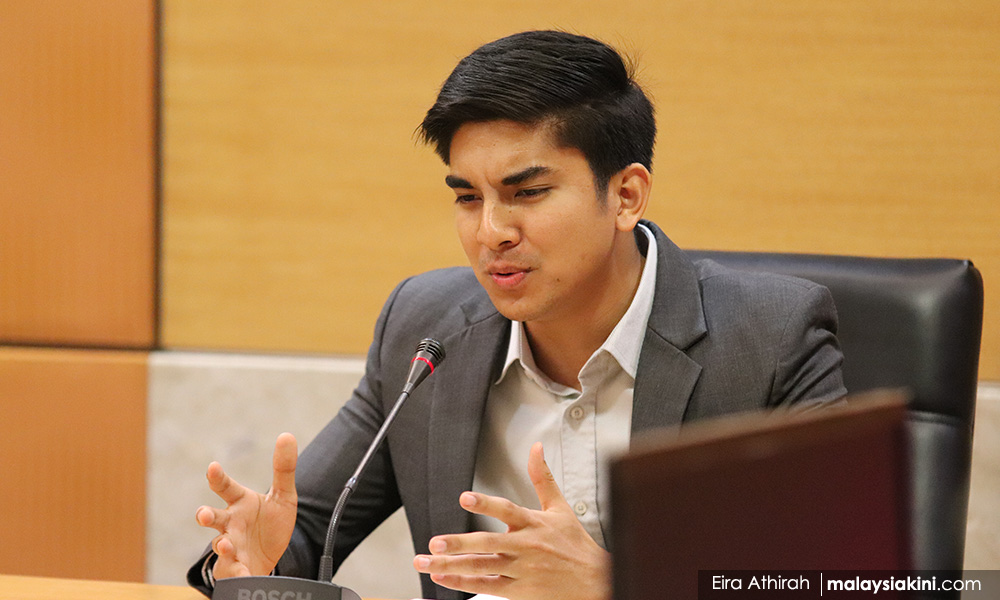
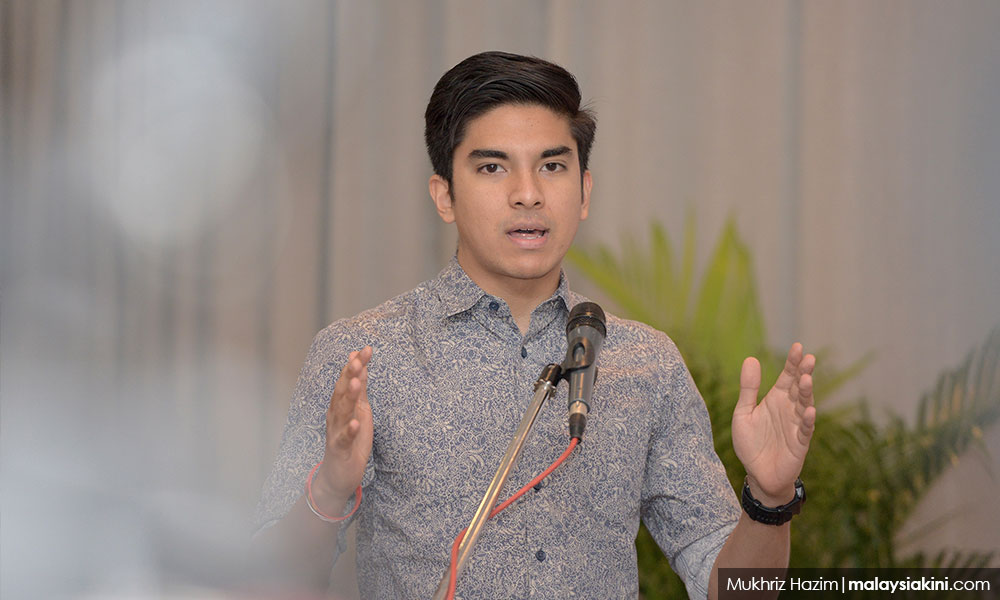
UPDATED 6.20PM| Former minister Rafidah Aziz has shared her views on Syed Saddiq Syed Abdul Rahman's plan to break the dominance of veteran politicians.
Known as the Iron Lady of Malaysian politics during her time, she said the nation should move away from politics that focuses on particular cohorts such as youth, race, religion and gender.
Editor's note: This article has been amended to better reflect Rafidah's views on the matter.
Former minister Rafidah Aziz has shared her views on Syed Saddiq Syed Abdul Rahman's plan to break the dominance of veteran politicians.
Known as the Iron Lady of Malaysian politics during her time, she said the nation should move away from politics that focuses on particular cohorts such as youth, race, religion and gender.
“Our destinies are common and intertwined as Malaysians. We should address issues which are crosscutting, with no discrimination or favouritism or undue bias,” she told Malaysiakini.
According to Rafidah, politics is about levelling-up across the board whether in the context of economic opportunities, education or socio-economic wellbeing.
“We are already facing divisiveness and fractiousness, in our society, festered and exacerbated by narrowly focussed politicking.
“Now there is that additional chasm based on age.
“Leadership resides in individuals regardless of age, creed, faith, gender or heritage. Because a leader leads everyone, not just a select group,” she added.
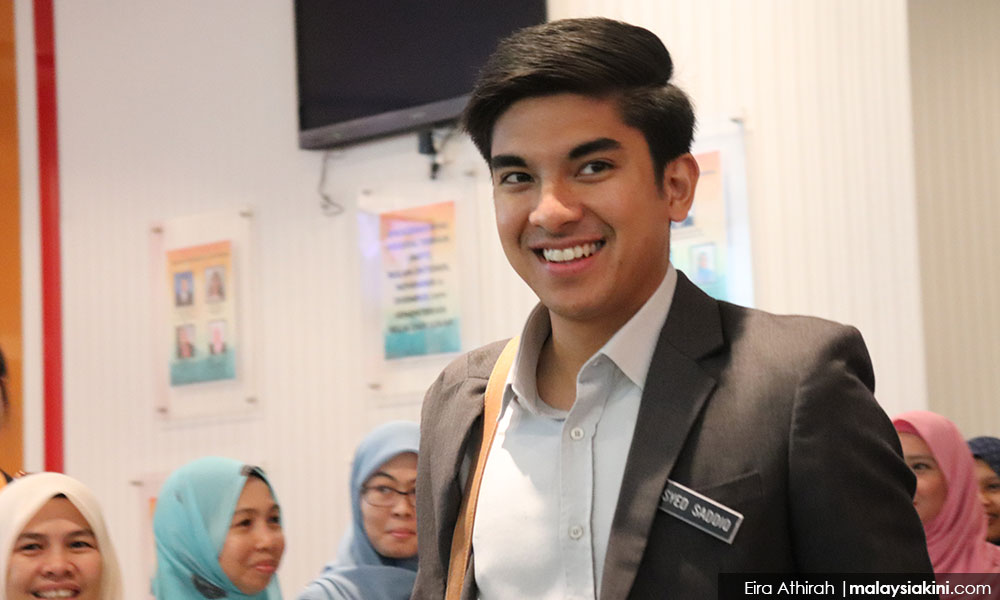
Syed Saddiq raised eyebrows when he did not join Dr Mahathir Mohamad's new Malay-based party, Pejuang, despite being a staunch supporter of the nonagenarian.
The former youth and sports minister later revealed that he is working on a movement for young people, citing the examples of Thailand's Future Forward and France's En Marche.
“I think it is timely in Malaysia, to start a movement of young people - young technocrats, professionals - young politicians from different backgrounds to come together to ensure the youth's voice will dominate in and outside of Parliament,” Syed Saddiq said.
However, political analysts offered mixed views on whether the venture would gain traction in a nation where race and religion dominate the political landscape.
Political science professor Muhamad Nadzri Noor was optimistic, pointing out that the 28-year-old lawmaker's initiative could upend the present "elitist and hierarchical" political culture.

He said based on Syed Saddiq's ministerial experience and immense popularity online, the latter is well-positioned to galvanise the 7.8 million youth voters expected by 2023.
This new voter segment is the result of the "Undi18" constitutional amendment that lowered the voting age to 18, which Syed Saddiq had pushed for when in government.
On a more pessimistic note, IIUM political science department assistant professor Tunku Mohar Tunku Mohd Mokhtar questioned if the new party would be able to appeal to rural and especially Malay youth given his "urbane" image.
He also cast aspersions on whether the movement would be able to compete with the more established youth wings of Umno and PAS.


Are you sure you want to delete this comment?
This action cannot be undone.