




Poll reforms: Let chief justice run caretaker gov't
Complaints of abuse of official machinery during a general election can be eliminated if the caretaker government were headed by the chief justice, said the Malaysian election watchdog.
Complaints of abuse of official machinery during a general election can be eliminated if the caretaker government were headed by the chief justice, said the Malaysian election watchdog.
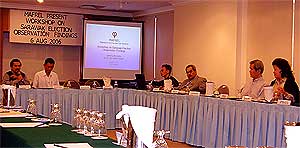
Malaysians for Free and Fair Elections (Mafrel) presented and discussed its observations of the 9th Sarawak election, at a workshop held in Kuala Lumpur yesterday for academicians, members of NGOs and politicians.
 It revealed incidents of human rights violations, corrupt practice, intimidation, biased media coverage, voter impersonation, polling offences and procedural inadequacies during the election held on May 20.
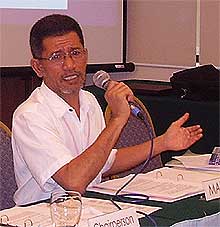
Chairperson Abdul Malek Hussin claimed that the group had evidence of abuse of public resources as well as electoral irregularities, excesses and flaws.
"We have photographic evidence of misuse of government machinery and personnel to benefit a certain political party in the constituency of Santok during the campaign period," he claimed.
He cited India as a model for the impartiality of its caretaker government, saying that former premier Indira Gandhi was "relieved both of her post and her parliamentary constituency when she was found to have used a government helicopter during her election campaign".
Dr Wan Abdul Rahman Wan Abdul Latif of the PAS Serdang division said Malaysia could also look towards such countries as Pakistan where "the head of state is its chief justice" upon dissolution of Parliament.
Irregularities exposed
Considerable time was spent examining irregularities in the electoral rolls in relation to the identity of voters and their addresses.
"Mafrel's findings revealed an unusually high percentage of voters without addresses - Bawang Assan in Sibu recorded 71.4 percent of voters without addresses at all," Abdul Malek said.
"There were numerous single addresses with an unusually large number of registered voters in each - one had 94 voters," Abdul Malek said.
The electoral rolls were still contaminated with large number of untraceable voters, unrecognised voters and even deceased voters, he said, urging the Election Commission to update its records.
 He further claimed there were flaws in postal voting. One policeman had approached Mafrel with two postal ballots addressed to him to vote in Padungan and Simunjan.
"This same policeman had, in a previous Sarawak election exercise, received 18 postal ballots and voted on all of them," said Abdul Malek.
Participants agreed on several recommendations at the end of the workshop, calling on:
- Parliament to review laws on voter registration and the electoral rolls to ensure that only qualified citizens register and vote in the place of permanent residence; and to provide the EC with power to prevent dubious or fraudulent registration;
They further suggested that the election campaign enforcement unit - as provided for in the Election Offences Act 1954 - should be reintroduced and include the ACA.
The media should comply with an election code that clarifies the difference between campaigning for a candidate and covering a candidate's activities for the purposes of informing the public during elections, they said.


