


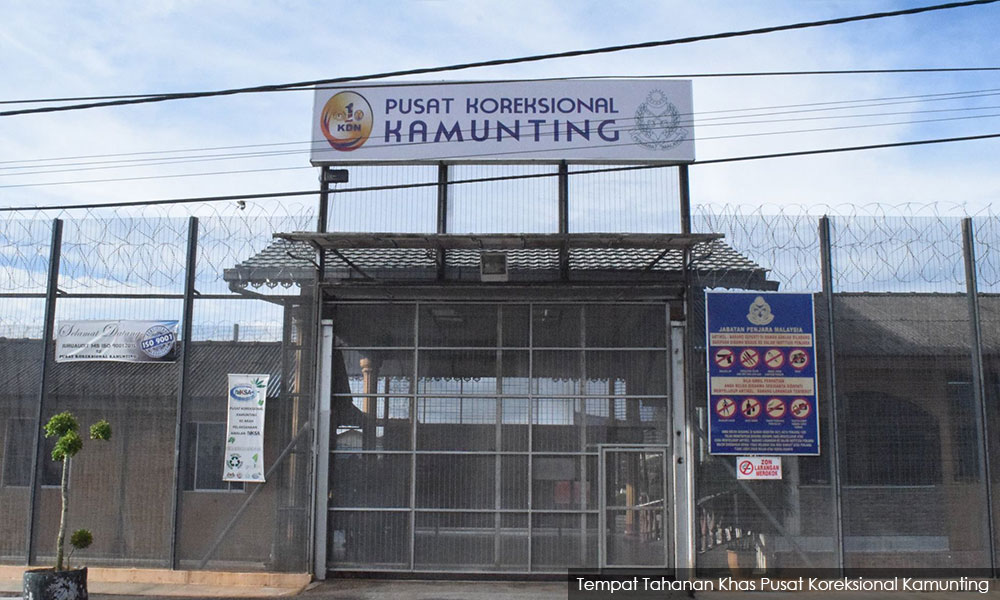

COMMENT | Closer bonds forged while behind bars in Kamunting
COMMENT | Professor Donald Horowitz, who has been visiting and observing Malaysia since the late 1960s, characterised Malaysia’s oppositions in 'Ethnic Groups in Conflict' as ‘flank’ groups attacking the ruling parties from the sides as PAS competed with Umno in terms of Islamic and Malay credentials while DAP and MCA/Gerakan/MIC competed on legitimacy among the non-Malays.
BN would continue to rule for as long as PAS and DAP find it impossible to form a joint frontal attack. The collective adversity suffered by DAP, PAS and civil society leaders in 1987 ironically planted the seed of opposition unity. In retrospect, Dr Mahathir Mohamad’s mass detention camp of 1987 had ‘united’ BN’s opponents and gave them a steely resolve to oppose like never before.
Lim Guan Eng, Mohamad Sabu and many others were young activists at a time when opposition parties and movements were fighting against BN for very different and often contradictory causes. But in Kamunting, whatever their causes, they were all behind bars with a common identity as Malaysians.
Being detained together for an extended period of time, they came to realise that BN benefited from mobilising racial and religious tensions to strike a blow against its political foes. The once elusive dream of forming a credible opposition coalition would finally come true after so many attempts.
The Socialist Front coalition fell apart by the mid-1960s amidst government crackdown and arrests. Internal crises also emerged when the Labour Party’s move to the extreme left at the prodding of their grassroots was escalated by the dispute between the two major parties over the issues of language and cultural identities. The Malaysian Solidarity Convention mooted by Lee Kuan Yew in 1965 was short-lived, disappearing from the political radar together with Singapore’s expulsion in the same year.
The opposition parties, particularly Gerakan, DAP and PPP reached a ...
COMMENT | Professor Donald Horowitz, who has been visiting and observing Malaysia since the late 1960s, characterised Malaysia’s oppositions in 'Ethnic Groups in Conflict' as ‘flank’ groups attacking the ruling parties from the sides as PAS competed with Umno in terms of Islamic and Malay credentials while DAP and MCA/Gerakan/MIC competed on legitimacy among the non-Malays.
BN would continue to rule for as long as PAS and DAP find it impossible to form a joint frontal attack. The collective adversity suffered by DAP, PAS and civil society leaders in 1987 ironically planted the seed of opposition unity. In retrospect, Dr Mahathir Mohamad’s mass detention camp of 1987 had ‘united’ BN’s opponents and gave them a steely resolve to oppose like never before.
Lim Guan Eng, Mohamad Sabu and many others were young activists at a time when opposition parties and movements were fighting against BN for very different and often contradictory causes. But in Kamunting, whatever their causes, they were all behind bars with a common identity as Malaysians.
Being detained together for an extended period of time, they came to realise that BN benefited from mobilising racial and religious tensions to strike a blow against its political foes. The once elusive dream of forming a credible opposition coalition would finally come true after so many attempts.
The Socialist Front coalition fell apart by the mid-1960s amidst government crackdown and arrests. Internal crises also emerged when the Labour Party’s move to the extreme left at the prodding of their grassroots was escalated by the dispute between the two major parties over the issues of language and cultural identities. The Malaysian Solidarity Convention mooted by Lee Kuan Yew in 1965 was short-lived, disappearing from the political radar together with Singapore’s expulsion in the same year.
The opposition parties, particularly Gerakan, DAP and PPP, reached a non-aggression pact after the defeat in the Serdang by-election in December 1968 due to a three-corner fight. But no further collaboration among the opposition parties was made after the suspension of parliamentary democracy as a consequence of the May 13 incident.
Discussions of opposition collaborations in 1978 and 1982 did not go far. Later in 1986, PAS attempted to forge an alliance through Harakah Keadilan Rakyat (HAK) with several minor parties but the plan did not get anywhere as PAS itself only mustered a single parliamentary seat in the election. When PAS and other smaller opposition parties such as PSRM, Parti Nasionalis Malaysia (Nasma) and SDP came up with a draft for a joint declaration, the DAP was sceptical about it.
After studying the draft, DAP realised that it would lead to recognising PAS’ aim of turning Malaysia into an Islamic state. “If these references to an Islamic state in the declaration of understanding cannot be deleted, then the DAP will not be a party to the pact and will be alone in the next election.”
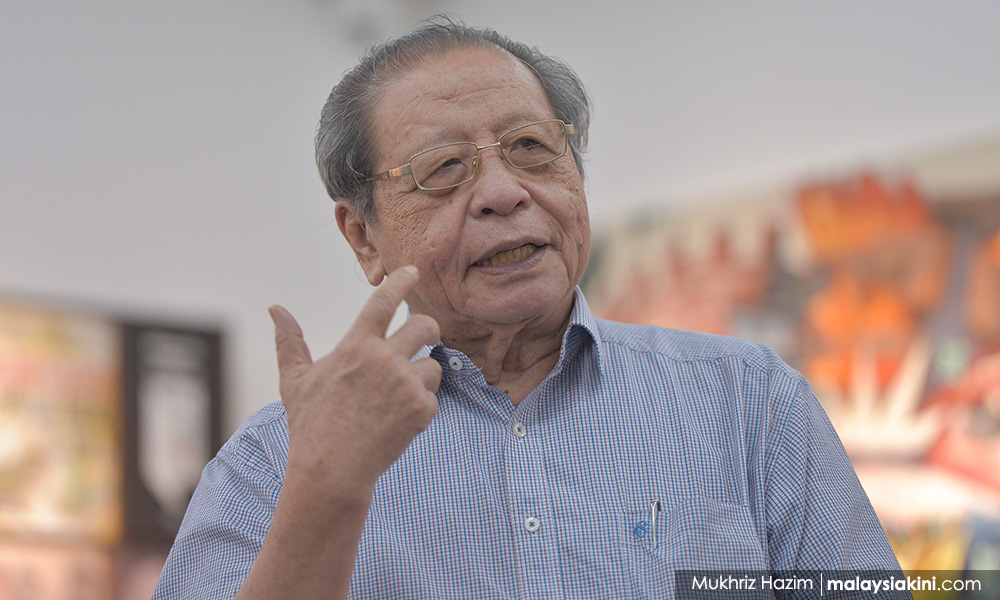
At the Kamunting detention camp, despite being detained with his son, Kit (Lim Kit Siang) could only meet Guan Eng once a week as they were kept in separate sections of the camp. His son was in the same section with young PAS leaders Mohamad Sabu, Mahfuz Omar and Khalid Samad, as well as Chinese educationist Sim Mow Yu and party leader Karpal Singh.
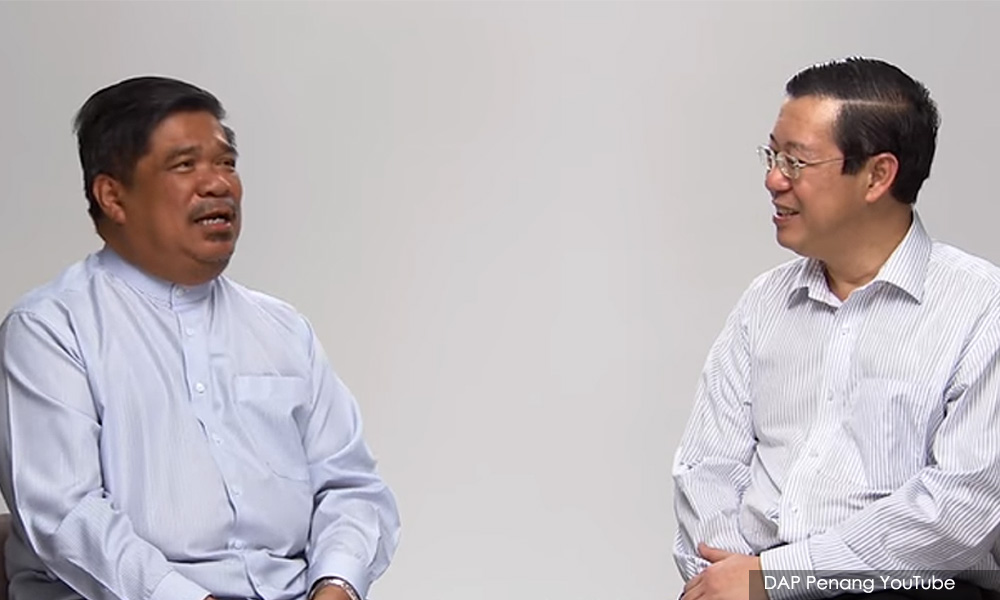
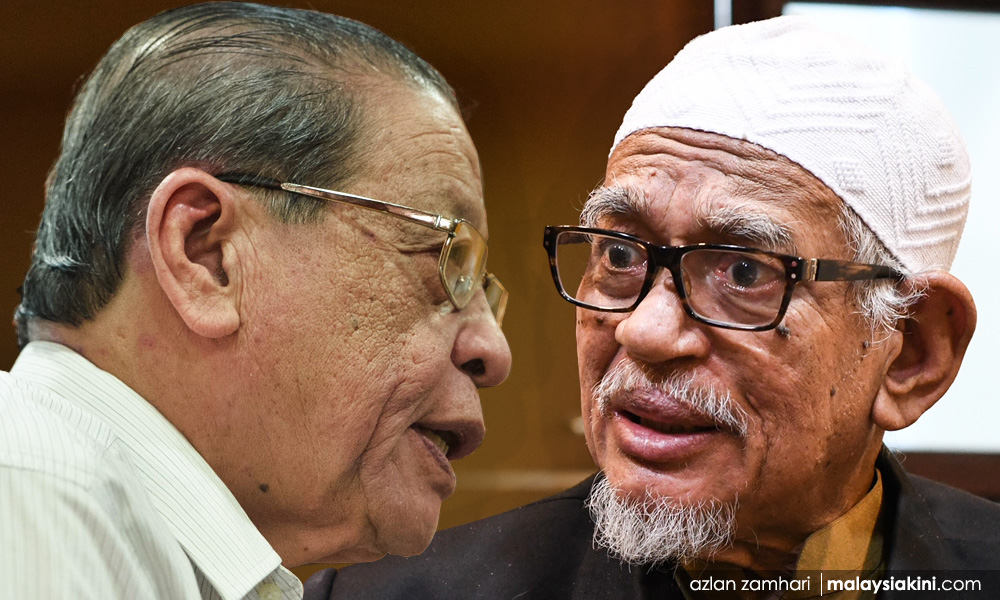
Guan Eng told me that it was PAS firebrand ceramah speaker Mohamad Sabu, or 'Abang Mat' as many fondly called him, that held everyone together with his unbreakable spirit, determination and humour. It was also the first time leaders of the two ideological opposites - DAP and PAS - met intimately, literally.
'Most principled'
Mohamad Sabu was the designated cook for the camp - he was once the student of a food technology course at ITM during the 1970s although he never completed his studies. “It was the ISA detention camp that put us together, enabling us to know each other,” he said.
This was the seed that bloomed into much larger cooperation and relationship that finally created history in the 2018 general election. He recalled that he spent time getting to know Guan Eng although the young politician was only 27 at the time. As for Kit Siang, he was seen as a very serious and quiet person. “Most of the time, when I saw Kit Siang, he was always reading a book,” said Mohamad Sabu, praising him as one of the most principled men he has ever met.
Kit Siang meanwhile stayed with, among others, P Patto. Only after many of the detainees were released, Kit Siang was put together with his son in the same section for a few months before their eventual release from the ISA detention.
“I had discussions with Kit daily on many political issues such as the Umno crisis which led to the banning of the party in 1988, and on how to win the next general election. We talked about all these things although we were not confident of being released at all,” Guan Eng said.
The detention also put Guan Eng closer to Karpal. He said, Karpal looked after him as both a father and an elder brother figure.
They were bonded by hardship and common struggle. “He believed passionately in what we fought for, he believed passionately in Kit, and we also believed passionately in him. There was this comradeship that could not be broken. Karpal was always the first to defend Kit and vice versa. Both families remain tight-knit,” Guan Eng added.
On April 17, 2014, when Kit Siang was in Sabah, he received the news of Karpal’s fatal road accident. He was devastated and rushed back to Penang for the funeral. It was a sad tragedy that had a strong impact on his life. Their deep bonds were separated by the tragic accident that took his friend’s life.
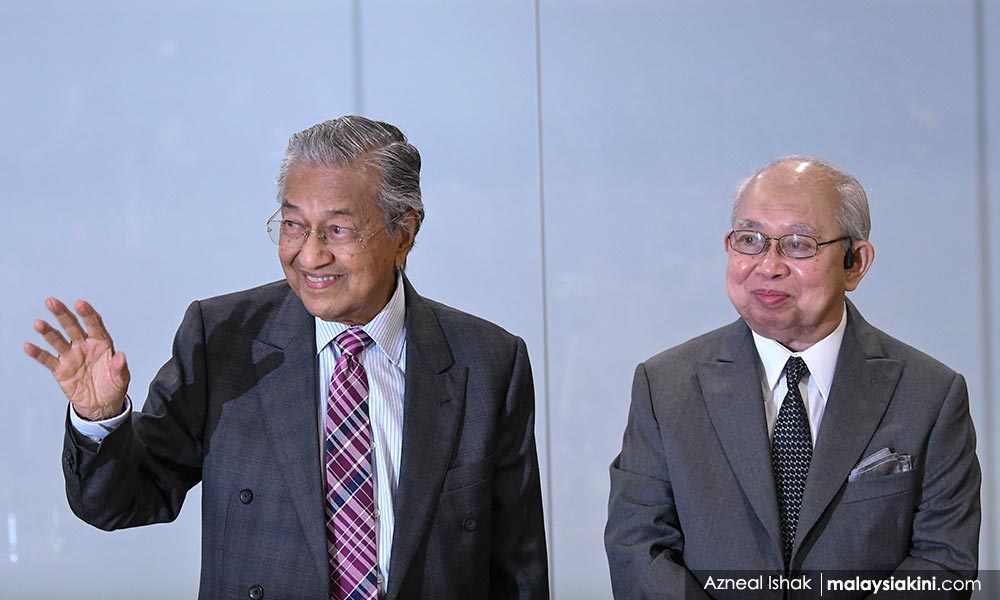
In February 1988, the Federal Court decided that Umno was illegal and the party was therefore disbanded. Mahathir moved quickly and formed Umno Baru for loyalists only, excluding Tengku Razaleigh Hamzah’s faction.
Hwang In-Won pieced together the incidents and argued that "In sum, Umno (Baru) was entirely formed around Mahathir’s personality. Indeed, the formation of a new party provided a long-awaited opportunity for Mahathir to eliminate all his political rivals from the ruling party’s mainstream."
The dissident leaders in the old Umno were ‘forced to become opposition’. The Umno case actually led to Malaysia’s worst judicial crisis when six supreme court judges including then lord president Salleh Abas, whose views were considered independent, were suspended and three of them dismissed in a doubtful and controversial manner.
After the Johor Bahru by-election on Aug 25, 1988 which saw incumbent Shahrir Samad, who resigned to create this by-election and then contested as an independent, winning a whopping 64.6 percent of votes with overwhelming non-Malay support and substantial Malay support, providing a formula for victory against BN, Mahathir changed his tactic and started to co-opt some dissidents into Umno Baru, including Shahrir himself.
Eventually, Razaleigh formed the Semangat 46 party and aligned with DAP and PAS in two separate coalitions - Gagasan Rakyat with DAP and some other parties, and Angkatan Perpaduan Ummah (APU) with PAS and other smaller Muslim-based parties - to contest in the 1990 general election.
This was the first-ever political coalition DAP entered, planting the seed for future coalitions.
Tomorrow: May 13, 1969 - arrest and detention under the ISA
LIEW CHIN TONG is the author of the book Lim Kit Siang: Patriot. Leader. Fighter. from which the above excerpt is taken from.
The views expressed here are those of the author/contributor and do not necessarily represent the views of Malaysiakini.


Report this comment
Are you sure you want to delete this comment?
This action cannot be undone.