




Ink gender discrimination treaty, gov't told
The government should ratify the Optional Protocol to the Cedaw treaty which will allow gender discrimination cases to be brought directly to the United Nations.
The government should ratify the Optional Protocol to the Cedaw treaty which will allow gender discrimination cases to be brought directly to the United Nations.
Malaysia has thus far ratified the Convention on the Elimination of All Forms of Discrimination Against Women (Cedaw) treaty, but women's groups said the additional Optional Protocol can be more effective in fighting discrimination.
It allows individuals or groups to bring cases of gender discrimination to the 23-member UN Cedaw committee of experts on women's rights.
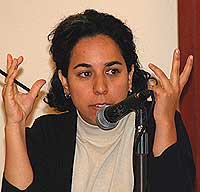 "It is very much like filing a case, but to the Cedaw committee," said Janine Moussa, programme officer for International Women's Rights Action Watch Asia Pacific (IWRAW).
Moussa was speaking at the 'Towards Full Implementation of Cedaw' forum in Kuala Lumpur yesterday.
She cited the Beatrice Fernandez case as an example.
Fernandez, a stewardess with Malaysia airlines, lost a 14-year legal battle when the Federal Court rejected a petition to review employment terms that were deemed discriminatory against female employees.
Moussa said any case of gender discrimination must first be brought to the highest court in Malaysia and all legal remedies must be exhausted before the case can be brought to the UN committee.
"Even if you lose the case, it must be brought to a Malaysian court first. We have to be fair to the government. Then only under the procedure, can the committee take on the case," she added.
Not binding
She said the committee's findings might be different from the courts but they were not legally binding.
Moussa said that it would be up to the countries concerned whether to accept the Cedaw committee's recommendations.
"Cedaw committee findings and recommendations have been used by some judges in their rulings," she explained.
The Optional Protocol also allows women rights groups to bring cases of systematic abuses, such as trafficking of women and denying refugees asylum, to the commission.
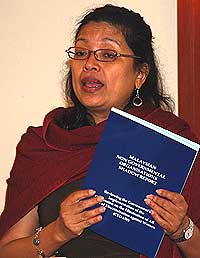 Asked if the government would ratify the Optional Protocol for an international body to review discrimination cases, Ivy Josiah of Women's Aid Organisation said:
"If indeed a person has lost a discrimination case in the highest court, let it (the ruling) be reviewed in an international committee or even a court."
"This is a mature government. I think they're ready to accept the Optional Protocols," she said.
Josiah said the civil society and media must work together to pressure the government to ratify the Optional Protocol.


