


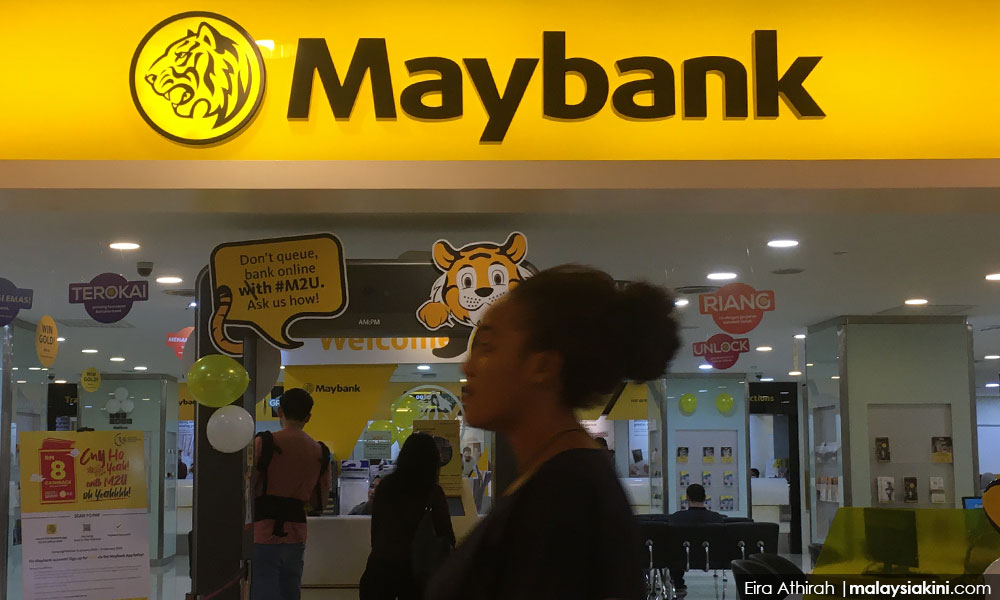

Maybank disputes claim it loaned RM30b to 'forest-risk' firms
Malayan Banking Berhad (Maybank) has called into question a claim that it provided US$7.504 billion (RM30.830 billion) in loans to companies that threaten the environment with deforestation.
Online initiative Forests and Finance previously made the claim and ranked the Malaysian bank the seventh biggest creditor of what it deemed “forest-risk companies”.
Between 2016 and 2020, the website alleged that the bank’s top clients...
Malayan Banking Berhad (Maybank) has called into question a claim that it provided US$7.504 billion (RM30.830 billion) in loans to companies that threaten the environment with deforestation.
Online initiative Forests and Finance previously made the claim and ranked the Malaysian bank the seventh biggest creditor of what it deemed “forest-risk companies”.
Between 2016 and 2020, the website alleged that the bank’s top clients in this category were Albukhary Group, Sinar Mas Group, Batu Kawan Group, Sime Darby Plantations and Triputra Group.
It also claimed that the bank made substantial investments into forest-risk firms.
In a statement to Malaysiakini yesterday, Maybank said the Forests and Finance claims were “significantly” different from its own records.
“The bank would like to state that the figures published by Forests and Finance differ significantly from our records and include companies where we do not have any financing exposure,” it said.
Asked to clarify the accurate loan amount and to specify which firms it does not finance, the bank declined, citing secrecy concerns.
“Maybank would like to clarify that in line with banking secrecy laws, we are unable to confirm or discuss any banking relationships we may or may not have, or have had, including exposures to any specific organisation,” it replied.
The Forests and Finance ranking system is based on a list of 300 forest-risk companies, identified as such for their impact on forests due to operations in palm oil, rubber, timber, soy, beef and/or palm and paper.
The latest publicly available data was used to trace the financing received by these companies.
The initiative is a collaboration between environmental groups around the world, including Sahabat Alam Malaysia, the Rainforest Action Network, TuK Indonesia, Profundo and Amazon Watch.
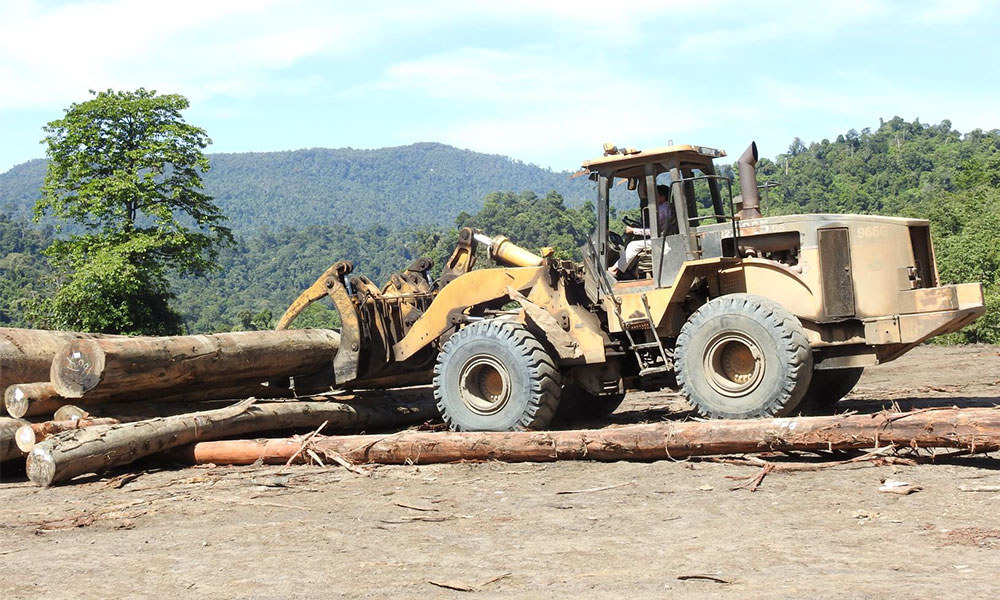
No deforestation policy
Elaborating, Maybank said it requires clients operating in palm oil, forestry and logging to either obtain sustainable practice certifications or prove that they intend to.
“If our clients do not have the necessary certifications or fulfil the relevant criteria, they are to provide commitments to obtain the certifications or implement sustainable practices within specific timelines,” it added.
The bank said it has adopted a “no deforestation, no new peat, no exploitation” policy since January 2020 and was committed to stop financing new coal activities.
Maybank said it has also integrated its Environmental, Social and Governance (ESG) Policy into its direct lending, debt, equity and advisory services.
“Our ESG Policy encompasses, amongst others, Risk Assessment Criteria (RAC) which form part of the credit risk assessment and decision-making process for businesses that fall under high ESG risk sectors, including forestry and logging as well as palm oil.
“ESG considerations such as climate-related risks, deforestation risk, health and safety risks, labour exploitation, transparency and business ethics are incorporated into the RAC,” it added.
For clients that are unable to meet its ESG Policy, Maybank said it would “reconsider” such business relationships.
“Maybank is committed to playing our role in helping countries and companies to progress, and to grow the economy in a sustainable manner, whilst remaining responsible to local communities and the environment.
“We will be pragmatic in our approach, ensuring a proper transition, but remain steadfast in our long term objective of creating a sustainable future for all,” it said.



Are you sure you want to delete this comment?
This action cannot be undone.