


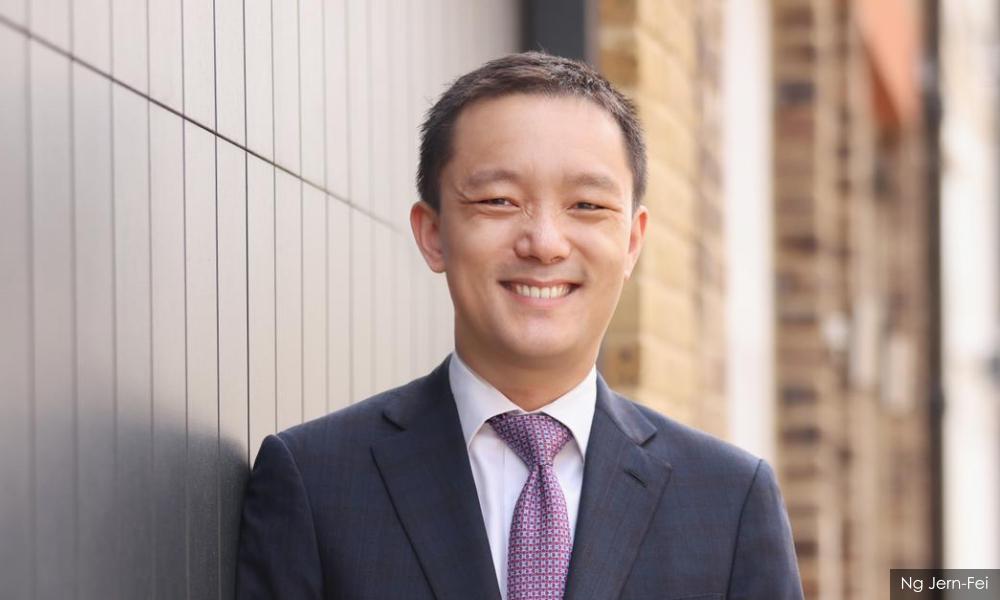

A chirpy chat with the Queen’s Counsel
MALAYSIANSKINI | In February 2018, Ng Jern-Fei was appointed a Queen’s Counsel, placing him among the elite top 10 percent of Britain’s 17,000 barristers. Already making waves as one of the youngest-ever to attain that status, the La Salle PJ old boy has since gone from strength to strength establishing himself in the field of international arbitration.
It’s not criminal law, and thus not headline-grabbing, but Ng, 42, is clearly setting benchmarks in his profession.
Earlier this month, he told Malaysiakini about the trials (literally) and tribulations he has been facing as he adapts his work to the post-Covid-19 world.
This is his story – in his own words:
I am the first on both sides of my extended family to attend university and I was fortunate enough to be offered a place at and also to have been granted scholarship and bursaries to attend Trinity College at the University of Cambridge, whereby I read law before going on to qualifying as a barrister.
I grew up in section five in PJ, just around the corner from University Malaya and I went to school in La Salle PJ. I went on to do my A-levels in the United Kingdom, I would say that I come from a background that is very typical for most ordinary Malaysians.
My maternal grandmother was a rural refugee from...
MALAYSIANSKINI | In February 2018, Ng Jern-Fei was appointed a Queen’s Counsel (QC), placing him among the elite top 10 percent of Britain’s 17,000 barristers. Already making waves as one of the youngest-ever to attain that status, the La Salle PJ old boy has since gone from strength to strength establishing himself in the field of international arbitration.
It’s not criminal law, and thus not headline-grabbing, but Ng, 42, is clearly setting benchmarks in his profession.
Earlier this month, he told Malaysiakini about the trials (literally) and tribulations he has been facing as he adapts his work to the post-Covid-19 world.
This is his story – in his own words:
I am the first on both sides of my extended family to attend university and I was fortunate enough to be offered a place at and also to have been granted scholarship and bursaries to attend Trinity College at the University of Cambridge, whereby I read law before going on to qualifying as a barrister.
I grew up in section five in PJ, just around the corner from Universiti Malaya and I went to school in La Salle PJ. I went on to do my A-levels in the United Kingdom, I would say that I come from a background that is very typical for most ordinary Malaysians.
My maternal grandmother was a rural refugee from Guangzhou who fled China during the Second World War when the Japanese army invaded. My paternal grandfather was a lorry driver.
What that has meant for me is that it is a reaffirmation that you can come from the most modest of backgrounds, but it is still possible to dream big dreams. It has dispelled the notion that Malaysians are incapable of doing big and great things on the world stage.
Quite the contrary - it is a reaffirmation that Malaysia really boleh and we can dream the best and compete against the world’s best irrespective of what our backgrounds are.
A lot of what I do is in the field of international arbitration which is a private alternative method of dispute and resolution, in the sense that its proceedings are alternative to court-based litigation, mostly used to resolve commercial disputes as well as disputes between investors and states, and therefore the proceedings are confidential and not typically reported in the public domain.
Over the course of some 18 years in practice as a barrister in England and latterly in the last three and a half years as a Queen’s Counsel, I have been instructed in some 350 cases as an advocate as well as arbitrator.
If I were to pick three of the most high profile cases I have worked on during the course of my career as a barrister, I think the first would be one I did fairly early on where as a relatively young junior barrister, I was instructed to appear on behalf of the Royal Bank of Scotland (RBS) in proceedings which were brought in the European Court of Justice (ECJ) in Luxembourg, in which I was representing RBS.
I successfully argued in favour of RBS' position on particularly complicated points of tax law before the ECJ, defeating representatives from around half a dozen European Union member states who were opposing RBS' position in the process, including the United Kingdom.
Some four years later, I was instructed to a very high-profile case for approximately six months, which was tried in the Commercial Court in England. The Commercial Court is a part of the High Court in England.
The trial did not go on continuously, there were gaps in between, but from the start of the trial to finish it took up to six months.
The case has spawned series of reported decisions in the law reports, and this has been commonly referred to as Fiona Trust vs Privalov and involves complicated questions of commercial fraud, breach of contract, breach of officiary duty and circumstances, where I had the opportunity and privilege to work with a large team. I learnt a lot from that experience being instructed in this long-running case about the intricacies of civil litigation in the English courts.
The third high-profile case is more recent after I had taken 'silk' as we would colloquially call someone who’s appointed a QC because we wear silk robes. It was an arbitration conducted on behalf of a client in Hong Kong in which we succeeded in persuading the arbitration tribunal to award damages of some US$180 million (that’s around RM750 million) in support of a counterclaim, which my side had brought in relation to a dispute arising out of a joint venture agreement.
It was a great success both in monetary terms and obviously in the outcome for the client.
These three cases from different timeframes in my career highlight how the practice has evolved and the breadth or the spectrum of the work I do, in the field of commercial disputes.
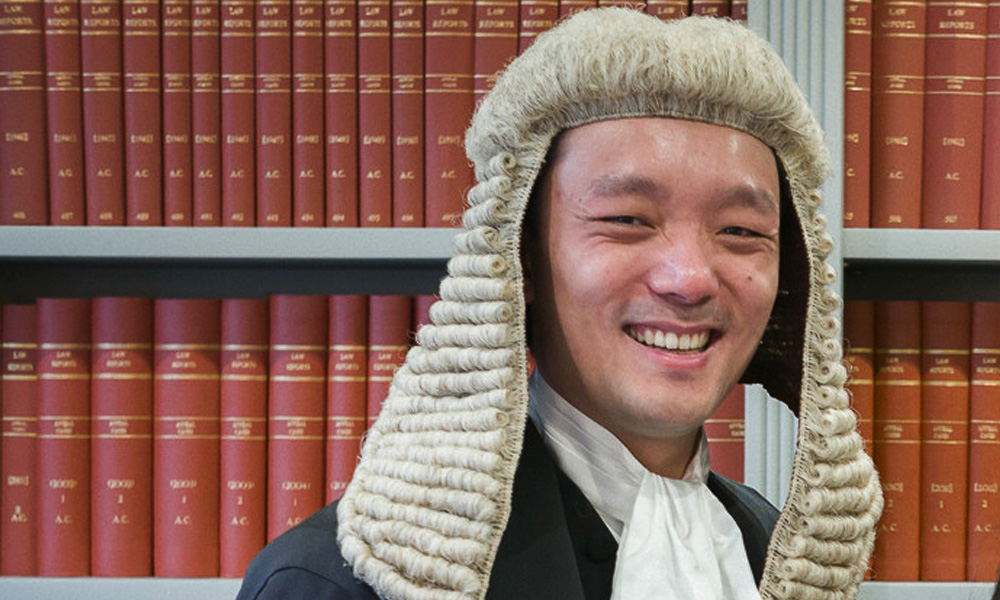
You might find it ironic, but I’m not a very ambitious person. I am very content doing what I do at present.
I really cherish every day in which I am a practising lawyer, and I very much enjoy the business of taking a case I have been given - facts materials, evidence, and articulating, advocating my client’s position to the best of my abilities. Of course, the height of achievement is in persuading the judge if I’m in court, or arbitration tribunal if I’m in arbitration, of the merits of my client’s case.
This is even sweeter when at the outset of any hearing, it may be that the judge or the tribunal might not be initially predisposed towards my client, it’s the ability to be able to change people’s minds that fills me with vigour every day I do this job. And I’ve done it for close to 18 years, enjoying every day of it and I can’t see as things currently stand, doing anything different for years to come.
The Covid-19 pandemic has been challenging. However, on the whole, it has not disrupted my practice in any material way. And the reason is that a lot of the hearings I do at present are conducted virtually, via Zoom for instance, and what this has meant is that it has enabled the work to continue particularly in the field I practise, which is mostly focused on commercial disputes.
Technology has enabled participants in the hearings irrespective of where the tribunal, advocates, witnesses and experts are across the world to congregate on a common platform such as Zoom, supplemented perhaps with other types of technology including real-time transcription service, electronic sharing of documents using bespoke software or apps in order to do so, and it has enabled us to continue business as usual.
For example in 2020, I did close to a dozen hearings on Zoom of varying lengths including two trials of a fortnight’s duration each. So I had two two-week trials which were conducted on Zoom, I cross-examined witnesses both factual and experts also delivered submissions by Zoom. In that sense, the fact that I have been working from home since March 2020 has, in over the span of the entire period, not really materially affected my practice; save that obviously I don’t earn as much air miles!
I’m used to the system now and one of the best bits of working from home is I get to see my kids more often, do school runs more frequently as well as be around when they come back from school at the end of the day. I get to do more than spend half an hour with them which I did typically, if at all, before the pandemic when I would rush back from work just to see them for half an hour before they go to bed.
My daughter is seven and my son is four, turning five this year.
I have a group of friends from Malaysia whom I’ve known for over 25 years, we’ve got this WhatsApp group going and they make me laugh on a daily basis. This also helps me to stay in touch. Some of us have gone abroad to work in different industries but many are still in Malaysia and it allows us to connect, to discuss things in general, what’s going on in Malaysia and in the world.
They have helped to keep it real for me and help me plant my feet firmly in the ground, to never forget my roots. They are people I trust to give me honest and unvarnished advice about things.
It is of real comfort to know that whatever it is you’re going through in life, the highlights, trials, tribulations and challenges, you’ve got friends from way back when who are willing to stand by you, support you and when necessary, offer you their pearls of wisdom and advice. You know you can trust them because the advice comes from a good place and with your best interests at heart.
I feel that the work I do both in my capacity as a barrister practising in England and also as a cross-border dispute lawyer who works with lawyers from different jurisdictions, has a positive impact on society in the sense that it conveys the message of the strength of diversity in the legal profession.
It never crossed my mind to even think of practising at the English Bar because I didn’t think that someone with my kind of background would be considered for pupillage at the English Bar. You have to remember that this was some 20 years ago where the world was very different, the makeup of the legal profession in England was different.
I still recall the most cutting piece of advice I received from someone who I think meant well when I was flirting with the idea of possibly applying for pupillage at the English bar, he sat with me and said: “You shouldn’t because despite what a lot of barristers chambers say and promote in the art literature and marketing material about championing diversity, the proof of the pudding is in the eating.
“How many people do you know at the English Bar who look like you, who sounds like you, and come from your sort of background?”
But when I started my Bar Vocational Course, I looked around and I saw many of my peers, people with whom I had spent years with at Cambridge, and I couldn’t help and think to myself, you know what, I don’t think that I am necessarily substantially worse off in terms of my abilities, my skills as a lawyer, and why should I not have a shot at applying for pupillage at the English Bar?
One of the virtues inculcated in me growing up in Malaysia is that resilience is a key theme and I was not one to surrender - I applied and much to my surprise I received several offers of pupillage which gave me the ability to choose where I wanted to go.
Even when in pupillage, I was convinced that I wouldn’t be offered a permanent position to practise at the English Bar and again, I was pleasantly surprised. Some 14 or 15 years later I was appointed one of the youngest QCs at the time.
I hope that my life experiences serve as a role model to others who come from broadly similar, maybe not even similar but non-traditional backgrounds. If someone like him who comes from the most modest of backgrounds can succeed in what is arguably the most competitive dispute market in the world despite not having grown up in the United Kingdom, so can I.
One of the things that we have here in England is the ability to appoint deputy High Court judges from amongst the practising bar. You have to apply for it and there is an evaluation and assessment and those who are successful get appointed as deputy High Court judges, and what this means is that they continue to become practitioners but on a part-time basis for a set period in each calendar year, sits as a judge.
This allows a greater pool of resources from which the legal system can tap in terms of judicial resources. And it also helps solve the problem of encouraging people who might otherwise be reluctant to apply for judicial office in order to serve. It’s certainly an aspect which I have seen here in England work very well because it means you get some absolutely brilliant practitioners who are interested in serving but still continue to enjoy their work as an advocate.
I sit a fair bit as an arbitrator and I think sitting as an arbitrator in the judicial or quasi-judicial capacity I should say, has helped me to become a better advocate because I see firsthand what it’s like being on the other side of a case. I think all of that helps me to become a better advocate and a better counsel for my clients.
If you were to ask me to name one person who served as an inspiration, I would say it’s my former pupil master - Vernon Flynn QC. Now let me tell you why I named him as opposed to perhaps some well-known public figure in the law whether in Malaysia or in England.
He believed in me and gave me an opportunity. He is one of the most accomplished, knowledgeable and kind lawyers that I know, and certainly at a time when I was but a mere pupil barrister, he was incredibly kind to me and taught me so much that I now know about the practice.
He inspired me to want to be better and to remain calm under fire even when things get rough, to remain focus and to try and find a way out rather than losing my head in a difficult situation.
I regard him as an inspiration because he impacted my professional life and my development as a lawyer more significantly than many others did.
I actually have a passion for art. I was inspired by a pair of Malaysian brothers who are my good friends. These art aficionados were the ones who opened my eyes to the versatility of the world of art and I started to begin to understand and appreciate works of art.
I have, over the years collected works of art of different genres. Hanging behind me is a piece by a well-known Chinese modern painter called Wu Guanzhong. I’ve also got pieces by a Parisian artist who lives in Los Angeles called Mr Brainwash.
And I also have another piece of a pumpkin by a Japanese artist called Yayoi Kusama amongst others. As you can tell, the sort of genre of artwork in which I am interested is quite diverse because I like learning about new things.
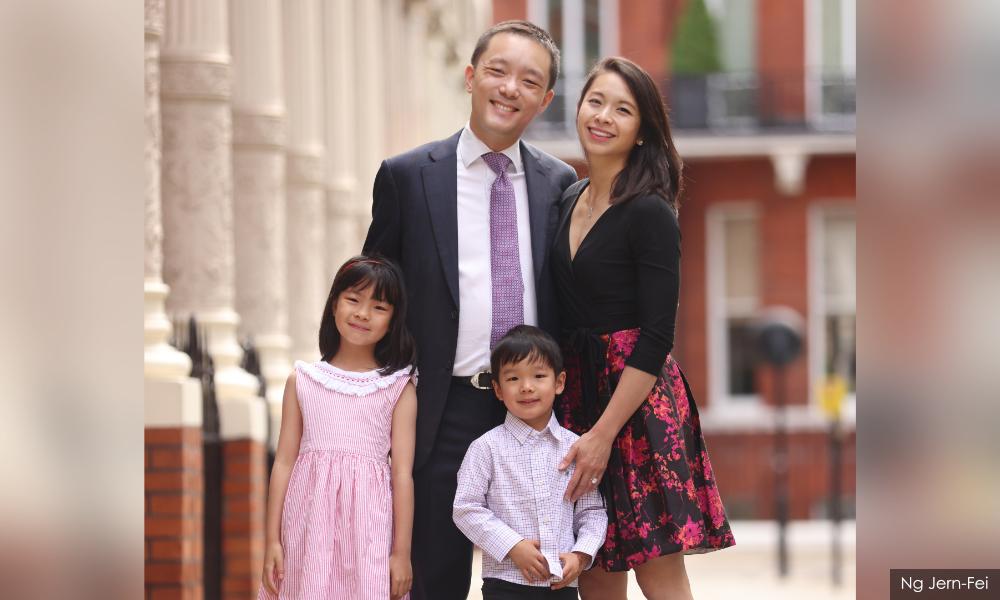
The other thing I enjoy doing is being bossed around by my kids. And I think it’s maybe somewhat therapeutic that most of the time in the course of my work, I advise others what to do, but as far as home is concerned, I get instructed by my kids.
It's a joy to see them trying to articulate themselves and trying to explain why I should do certain things, such as take them to the movies or buy them slushies and things like that.
We are Malaysians. I grew up in an English speaking environment in Malaysia and I also spoke Cantonese at home to my maternal grandmother. In England, I speak Mandarin to my kids, and we don’t actually use English at home despite living in England. My kids also speak French and so we are a multilingual family.
My wife Soong Mei Jean is Malaysian-born but she grew up in Melbourne, Australia. We met at a wedding in Penang and over the course of time, she moved to the UK to work, and so this is where we have remained. But we are all still Malaysians.
MALAYSIANSKINI is a series on Malaysians you should know.
Previously featured:
The gift that keeps on giving – how the Iskul community school pays it forward
Douglas Lim – from teenage singer-songwriter to cutting edge king of parody
Jasmine King wants to empower adults against body and sexual shame
He just got started and Parit Coran’s already a world champion speaker
How Elise Arya Chen turned childhood abuse into advocacy for Myanmar refugees
Disabled professor fights to give OKU students chance for success
Dancing a fine line to keep Mak Yong alive
The burning passion behind Time Magazine’s fiery cover
Meet Nicole Fong - an activist researcher hoping to bring people together
Mak Wan's 'dark past' inspires her to serve Chow Kit homeless


Report this comment
Are you sure you want to delete this comment?
This action cannot be undone.