




Refugee treatment: A big, fat F for M'sia
Malaysia on the whole was accorded an unflattering 'F' this year for its treatment of undocumented migrants and refugees by the annual World Refugee Survey.
Malaysia on the whole was accorded an unflattering 'F' this year for its treatment of undocumented migrants and refugees by the annual World Refugee Survey.
In terms of 'freedom of movement and residence' for refugees, however, Malaysia (together with Serbia and Montenegro) improved over their 2005 performance.
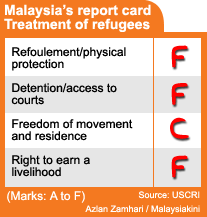 All three got a 'C' (average) for 2006 in this category as compared to 2005 when Malaysia was listed among the 'worst' nations.
"Refugees and asylum-seekers recognised by the UNHCR (United Nations' High Commissioner for Refugees) enjoyed some freedom of movement, although government harassment, extortion, and detention still occurred," noted the US Committee for Refugees and Immigrants (USCRI) which conducts the survey.
In other categories, however, Malaysia's position worsened from last year earning it more 'Fs' and placing it among the 'worst countries'. Among them were:
- for its practice of refoulement (deportation of refugees and asylum-seekers to home countries) and thereby the denial of physical protection from parties from which refugees and asylum-seekers may suffer violence; and
Ransomed, smuggled
USCRI noted, for example, Malaysia's deportation to Burma of more than 20 Rohingya refugees in 2005 and, in April of this year, of 31 Chin refugees.
 There were other refugees who were victims of 'constructive deportation' where they 'accepted' deportation to their home countries, it added.
Some of the deportees, said USCRI further, were '... handed to agents of traffickers and smugglers' at Malaysia's border with Thailand who then either ransomed them for RM500 - RM650 or smuggled them back into Malaysia for RM1,400 to RM1,800.
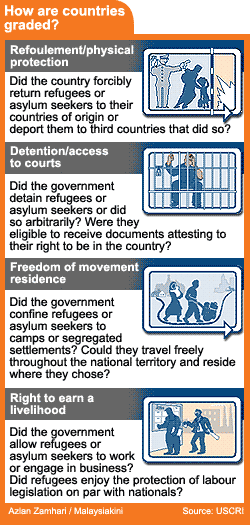 The report also said that at the end of 2005, there were 800 refugees and asylum-seekers in Malaysia's immigration detention centres, 'including 120 women and children'.
USCRI noted that the Attorney-General's Chambers, however, had in Sept 2005 issued orders not to initiate any new prosecutions of those in detention for immigration violations.
In the category of 'according the right to earn a livelihood', Malaysia (together with Algeria) maintained its previous position among 'worst countries' in that in prohibited refugees and asylum seekers from working. This, too, earned Malaysia an 'F' for 2006.
Police surveillance
Aside from the exceptions granted to Filipino Muslims, Acehnese, and Rohingya refugees, said USCRI, Malaysia did not accord other refugees such as the Burmese Christian Chins, permission to work.
On public relief and education (which countries were not rated) USCRI said Malaysia does not provide free education or health services to most refugee children or asylum seekers.
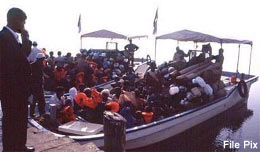 "The Malaysian Ministry of Health declared that government hospitals would charge refugees with UNHCR cards half the standard rate for foreigners, but this was still higher than the rate for nationals. It, however, had not fully implemented the policy by year's end," it said.
The committee also noted that though non-governmental organisations were allowed to continue their work helping asylum-seekers and refugees, they were subject to surveillance by the police.
The USCRI survey involved 68 countries.


