




Nation doing its utmost to combat human trafficking
Two prominent Malaysian personalities have refuted the charge by US ambassador John R Miller that Malaysia has not done enough to combat human trafficking and needs to set up legislation and procedures to address this problem.
Two prominent Malaysian personalities have refuted the charge by US ambassador John R Miller that Malaysia has not done enough to combat human trafficking and needs to set up legislation and procedures to address this problem.
Human Rights Commission (Suhakam) Dr Raj Karim and MCA's most well-known social worker Michael Chong stepped up to Malaysia's defence on the matter, saying that Miller's opinions were flawed.
Reacting to Miller's allegations carried by The Sun yesterday, Raj described the US ambassador's statement as "unfair".
"Suhakam has been monitoring the problem and we are paying serious attention to it. In fact, we have been discussing with the relevant ministries as well as NGOs on the issue," she said when contacted by malaysiakini.
 Raj (
left
) highlighted a draft plan of action mooted by Suhakam which will be discussed with the Internal Security and Home Affairs ministries before year end.
Raj (
left
) highlighted a draft plan of action mooted by Suhakam which will be discussed with the Internal Security and Home Affairs ministries before year end.
However, she pointed out that as Suhakam is not an enforcement body, its role is reduced to suggesting ways and means on how to combat human trafficking effectively.
"The Malaysian government is aware of the seriousness of human trafficking that has taken place in the country and continuous efforts are being made to nip the problem in the bud," the commissioner added.
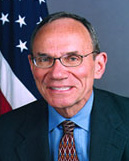 On a visit to Kuala Lumpur early this month, Miller - who is director of the US State Department's Office to Monitor and Combat Trafficking in Persons - expressed his disappointment at the lack of effort to meet the challenge of combatting human trafficking in Malaysia.
He said a country like Malaysia which he noted had reached a high level of human development had the responsibility to employ its growing resources to address the problem.
"Malaysia may be in the big league economically but it is not in the big league in the worldwide fight against slavery," Miller added.
No fair
Commenting on the ambassador's statement, MCA Public Complaints Bureau chief Michael Chong said that it is not true that human trafficking has worsened in the country, referring to Miller's office move to downgrade Malaysia, implying in effect that conditions in Malaysia were getting worst.
Chong explained that from the number of complaints received by his department, human trafficking of Chinese nationals has dropped when comparing the 2005 and 2006 statistics.
"Last year, there were a total of 239 cases (January to November 2005) recorded, while this year (January to November), they were only 172 cases referred to us," he noted.
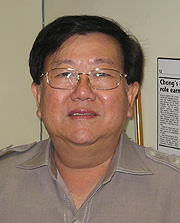 This showed that human trafficking could have dropped drastically in Malaysia, he said.
However, Chong conceded that there could be other cases which were not reported to the authorities.
"Still, it is not correct to say that Malaysia has not done enough to combat human trafficking.
"To my knowledge, there has always been efforts made by the authorities and others towards that direction," he added.
The office Miller heads coordinates the US government's activities in global efforts to fight against human trafficking, which is seen as a form of modern-day slavery.
This can range from forced labour to sexual exploitation, and is estimated to affect some 800,000 women, children and men worldwide every year.


