



Flood victims resort to paying for waste disposal, lack clean water
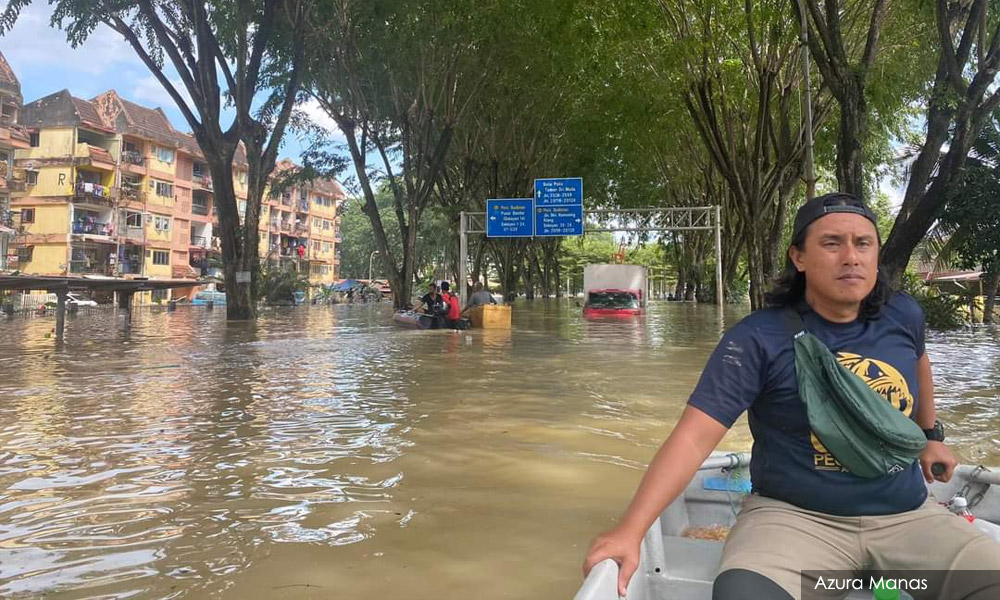
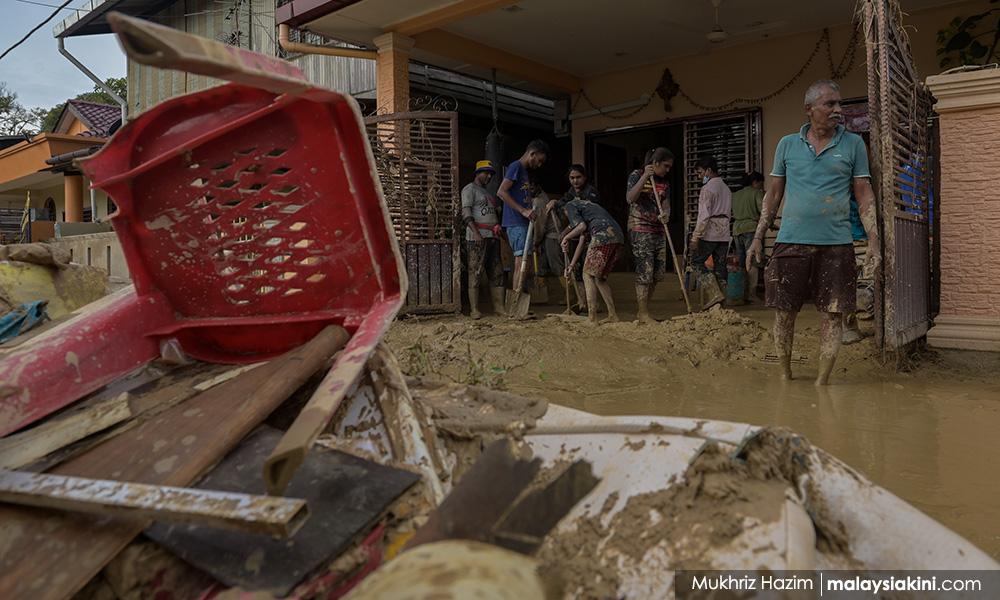
Although floodwaters from last weekend’s torrential downpour have mostly subsided, residents in Bentong and Karak in Pahang are still facing many hurdles to rebuild their lives.
Of these, the most significant challenge proved to be the disposing of damaged goods and debris, as well as cleaning their homes of mud and sediment, made more difficult by a lack of clean water.
Elected representatives have pleaded with local governments and district offices to help expedite the clean-up, only to be told they were unable to do so due to a shortage of manpower.
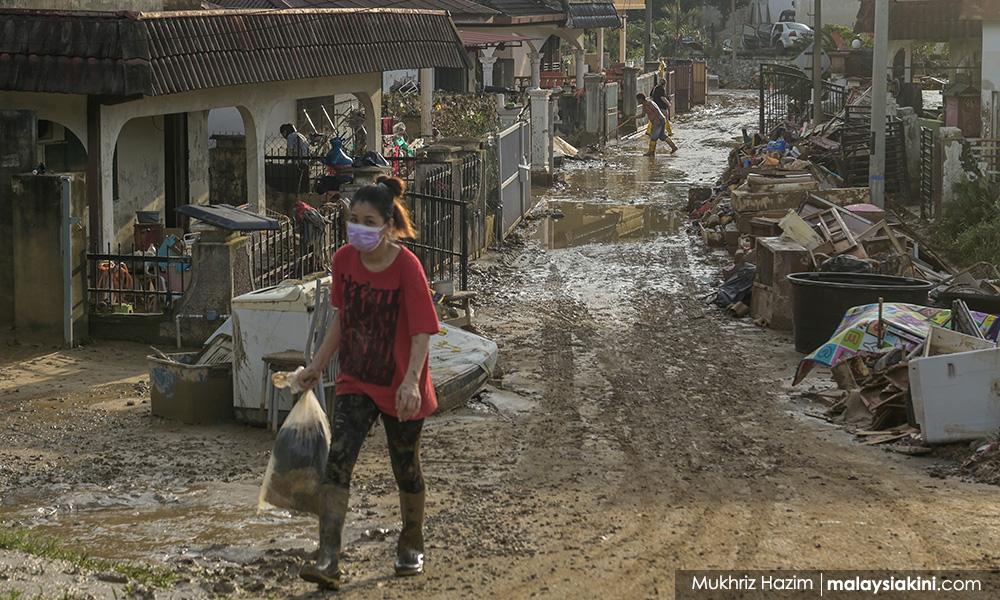
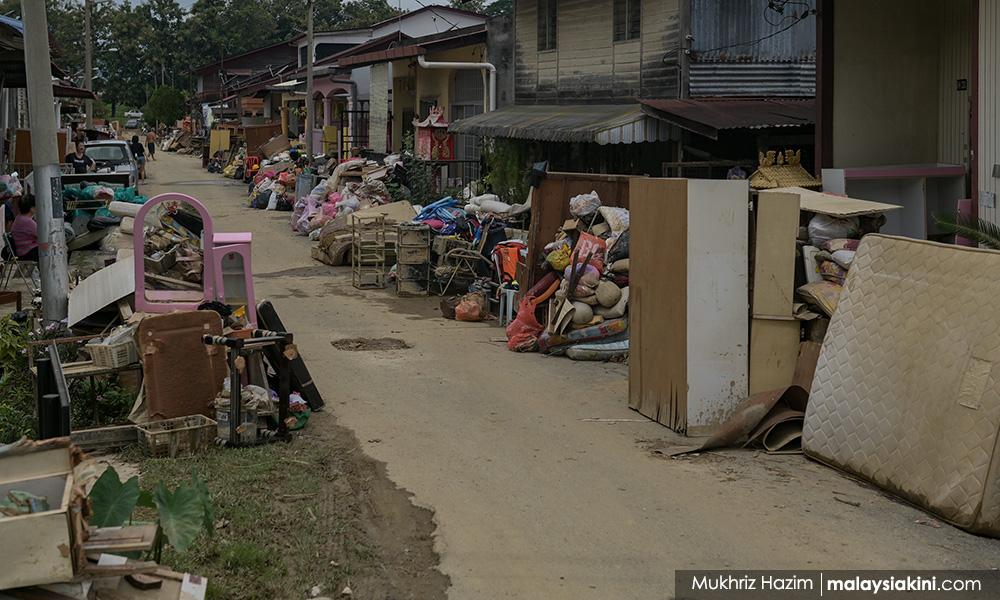
When Malaysiakini visited the area on Wednesday (Dec 22), garbage was seen piled up on roads in front of the flood victims’ houses, which could pose a health risk.
Due to a lack of assistance from the Bentong Municipal Council, some flood victims have resorted to...
Although floodwaters from last weekend’s torrential downpour have mostly subsided, residents in Bentong and Karak in Pahang are still facing many hurdles to rebuild their lives.
Of these, the most significant challenge proved to be the disposing of damaged goods and debris, as well as cleaning their homes of mud and sediment, made more difficult by a lack of clean water.
Elected representatives have pleaded with local governments and district offices to help expedite the clean-up, only to be told they were unable to do so due to a shortage of manpower.
When Malaysiakini visited the area on Wednesday, garbage was seen piled up on roads in front of the flood victims’ houses, which could pose a health risk.
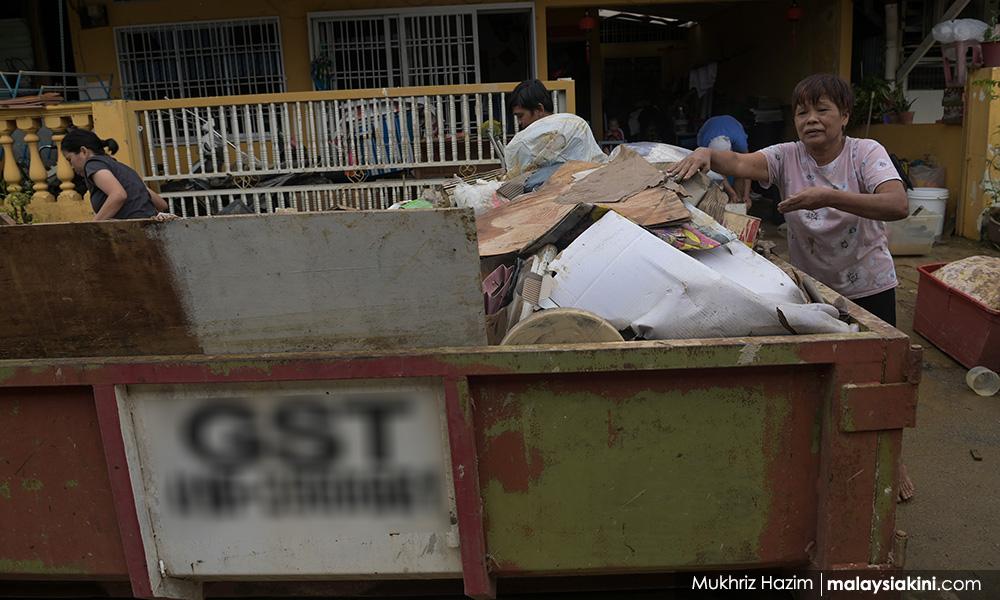
Due to a lack of assistance from the Bentong Municipal Council, some flood victims have resorted to leasing their own Roll-on Roll-off (Roro) bins, which are frequently used for the disposing of construction waste.
They also hired workers to haul away the garbage.
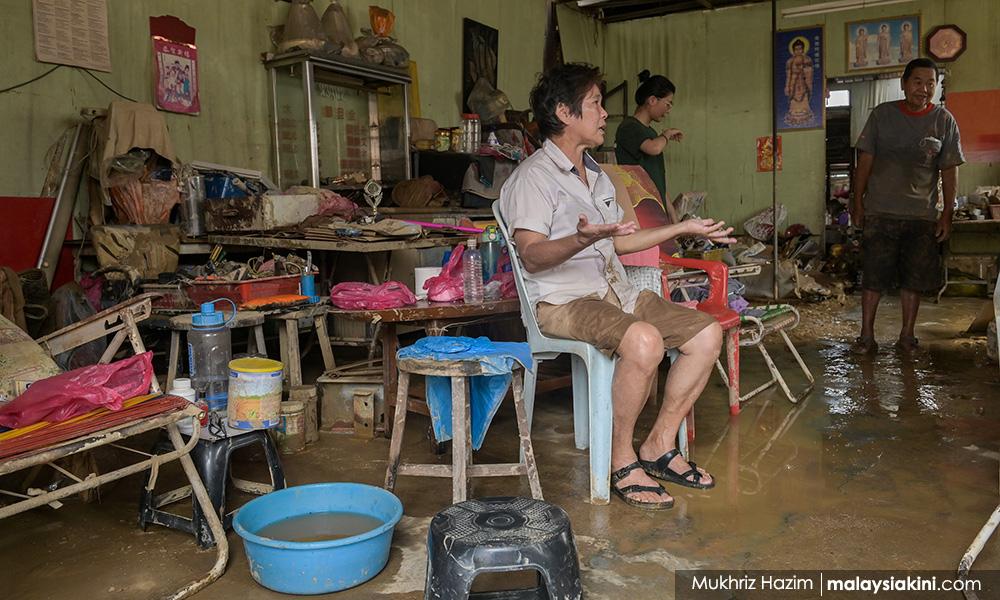
In Kampung Kemansur near Bentong, Yew Siew Ying, 68, told Malaysiakini that the bin rental costs RM250 per use.
It took several trips to finally remove all the garbage from her home, which comprised mainly of books and other items destroyed in the flood.
“It never crossed our mind that the water would rise to five feet (1.5 metres), and it came so suddenly that there just wasn’t time to move our things.
“We renovated our home more than a decade ago to raise the floor three feet higher, but it was not enough to escape this flood,” Yew said.
Many villagers were seen using similar bins to haul away their flood-damaged belongings. However, some also accused businesses of taking advantage of their misfortune.
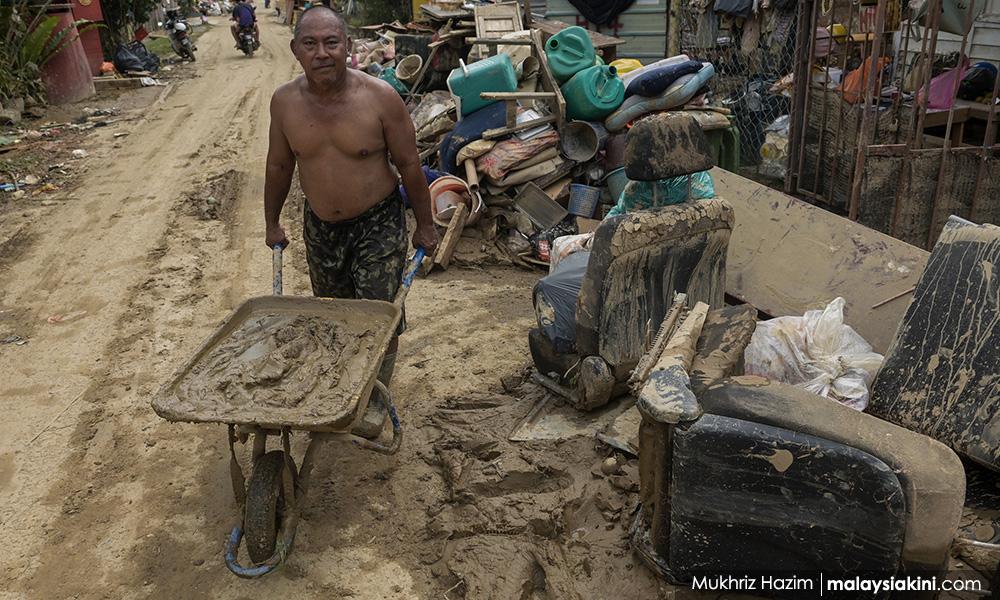
“Villagers have been waiting for the local council to clean up the garbage. It has been left outside for so many days and is about to give off a foul smell.
“Moreover, many residents’ cars and motorcycles cannot be used after being damaged by the flood, so they can’t move the garbage on their own. Renting the bins for RM250 is not cheap, and feels like we are being exploited,” said Chia, 40, who stays at the next village, Kampung Baru Perting.
Chia hoped the local council would send help soon to expedite the people's clean-up efforts.
Malaysiakini followed Bilut state assemblyperson Lee Chin Chen as he surveyed the area. Upon sighting him, the first thing many villagers asked was when the local council would turn up to help clean the garbage.
Lee replied, “I have already informed them. I will follow up on this.”

Later, he explained to Malaysiakini that he had contacted the Bentong Municipal Council over the last few days and that the council officials indicated in general terms that the garbage and silt problems will be resolved in the next two or three days.
“The council said it could not get enough people or enough excavators, and that the affected area is too big to handle. Who knows how long we’d have to wait for their help to arrive?”
Lee conceded that the flood was exceptionally serious and the council’s limited resources are insufficient to cope with the situation.
Nevertheless, he said, the authorities have opened an old waste disposal site near Kampung Lebak for flood victims to dispose of the garbage themselves.
Apart from garbage, the other hurdle for flood victims is getting sufficient water to clean their homes.
Many have complained of inadequate water pressure. Some even resorted to taking turns with their neighbours to fill buckets up with water.
“The water supply is quite slow. I can only clean up little by little,” said Kampung Baru Perling villager Kong Siw Yan, 55, as she cleaned her mud-stained furniture outside her home.
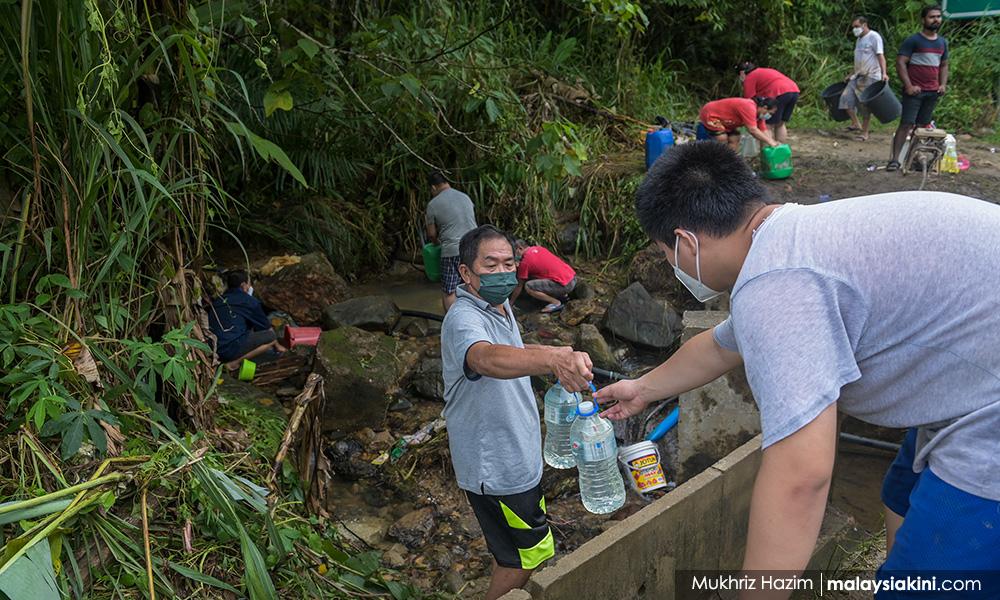
In Karak, where the water supply has yet to be restored, residents were seen drawing water from a stream using a makeshift pumping station by the road.
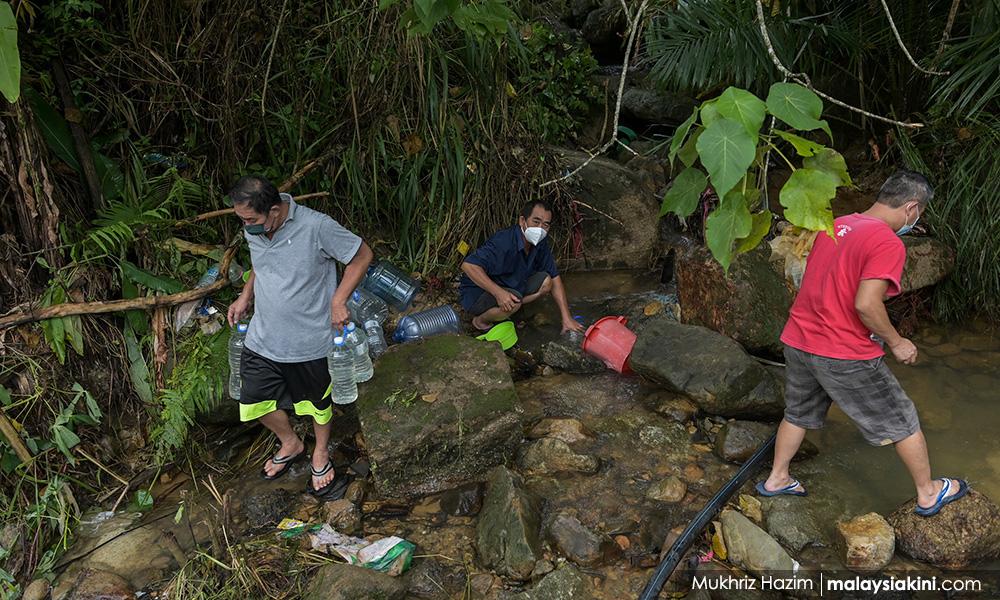
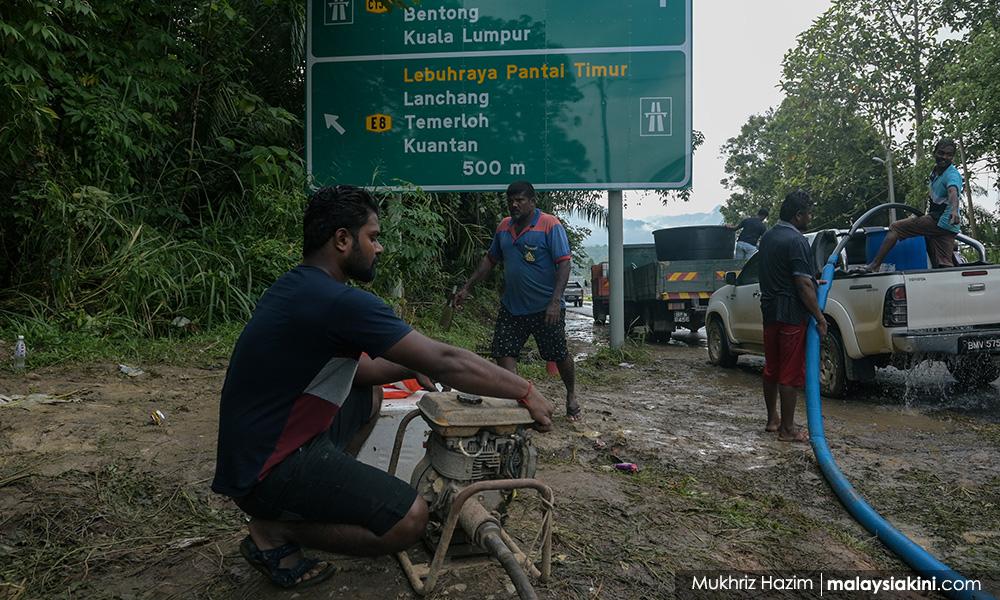
On the road from Karak to Kuala Lumpur during one evening, more than 10 people were seen banding together to fill up buckets with the pump and carrying them to waiting lorries and four-wheel-drive vehicles by the road.
According to a volunteer working at the location, the water will be sent to affected housing areas to help with clean-up works.
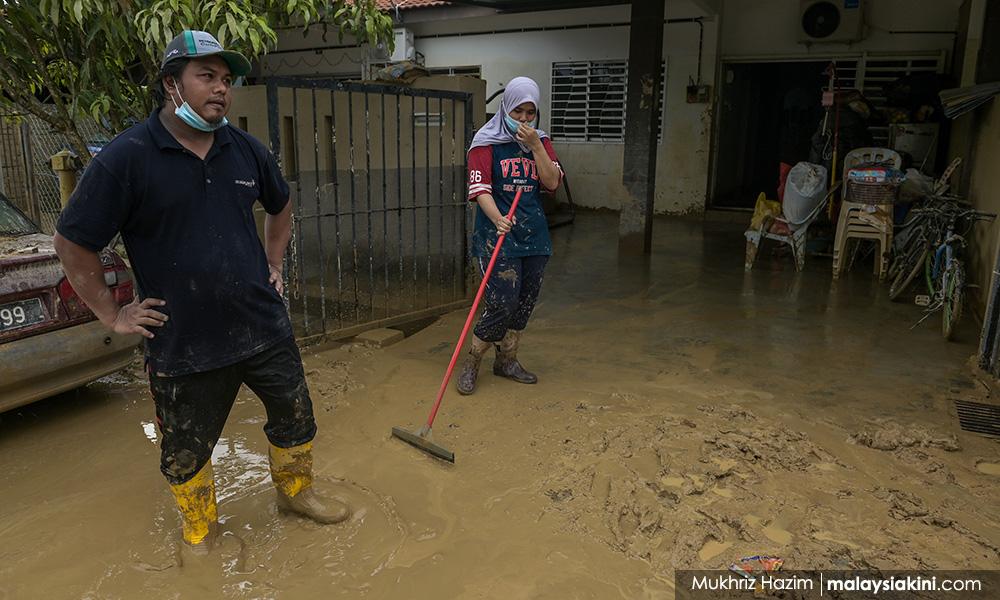
Meanwhile, in Taman Karak Indah, mud was seen still covering much of the area, including on the bodies of residents who were busy cleaning up.
Among them was Muhamad Haizol Ghani, 36, who lived in a low-lying area of Taman Karak Indah. He shared his escape from the floodwaters.
He said he and his family fled in the middle of the night when their locality was hit by the flood. Upon their return the following night, he found water stains going above the height of his windows.
“I bought this house only for a few years. I did not expect it to be more severe than the 1971 flood (in Kuala Lumpur),” he told Malaysiakini.
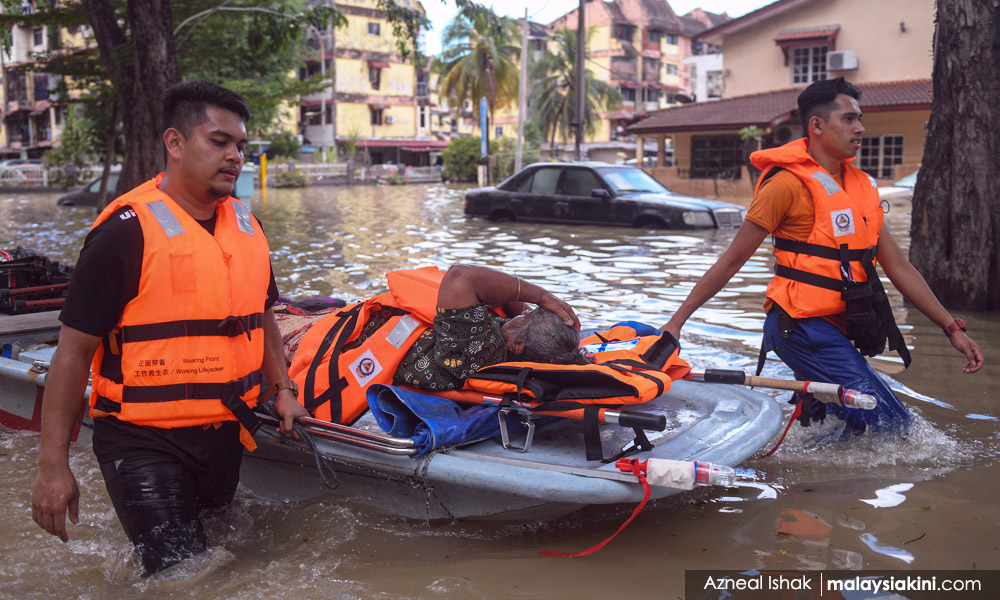
Meanwhile, a neighbour approached Malaysiakini and credited Haizol for rescuing her from the flood.
“I’m really grateful to him. It was he who helped me escape (on Saturday).
“At the time, the water had risen to my chest level; otherwise I may have to spend the night squatting on my car roof or holding onto a pillar,” said the woman who declined to be named.
It was previously reported that Karak residents faced water and power disruptions, which were gradually restored as the floodwaters subsided.
Pahang Water Management Berhad (Paip) said on Tuesday afternoon that it was cleaning pumps at its water treatment plant to restore the water supply.
Sabai state assemblyperson Kamache Doray Rajoo said she contacted Paip daily to ask about progress in restoring the water supply. However, she claimed, she was only given various excuses.
“We need water. I contacted Paip every day and they have their own reasons, but we have to give reasons to the public. The people are the victims now and they are not in a state where they can listen to our reasons.
“It is our duty, and the government's duty, to provide them with more ease at this very moment.
“They are not demanding. All they want is to clean their houses. They are frustrated because they can’t clean their houses due to the low water supply.
“The longer this takes, the more things turn bad, and the tendency there is (for people) to get sick,” Kamache said.
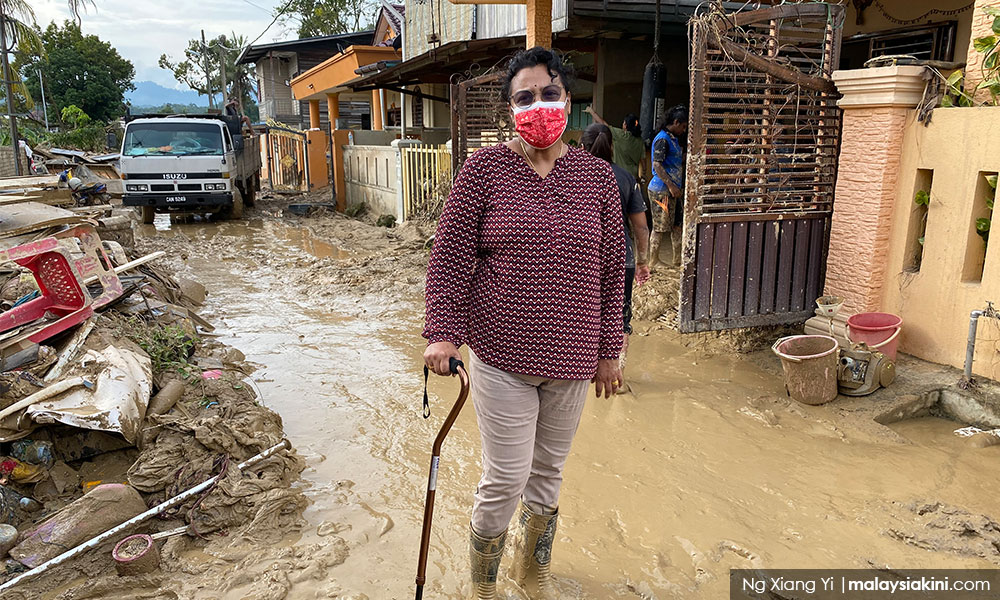
She added that opposition parties have lobbied the state government to overhaul its ageing water treatment plants but to no avail.
Now, the plant has broken down following the flood, Kamache lamented.
As of Dec 22, the death toll from the recent floods has been 37, including nine from Pahang.
According to Bernama, there are 37,356 flood victims sheltered in 264 temporary flood relief centres in Pahang.


Are you sure you want to delete this comment?
This action cannot be undone.