




Embrace the 'universal design'
Malaysia's increasing population of elderly and disabled people requires the nation to move towards adopting the 'universal design' concept in its development, said Prof Dr Satoshi Kose.
Malaysia's increasing population of elderly and disabled people requires the nation to move towards adopting the 'universal design' concept in its development, said Prof Dr Satoshi Kose.
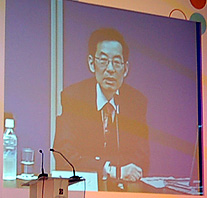 Satoshi said this during a lecture via satellite feed at the Real Access for Life Roundtable, organised by the Women, Family and Community Development Ministry and the Welfare Department in Kuala Lumpur conjunction with the International Day for the Disabled (Dec 3).
Satoshi, who is based in Japan, said instead of merely removing barriers, the universal design concept requires designers to consider the needs of all.
 He explained the universal design concept seeks to produce products, services and environments that are usable to as many individuals as possible, regardless of capabilities, age or situation.
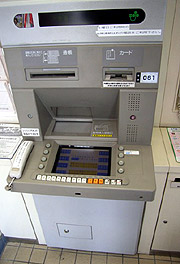
One example was an Automatic Teller Machine (ATM) in Japan, which can serve the able-bodied as well as those with visual and height disabilities as well as those confined to wheelchairs.
Other examples include the non-segregation of disabled and able-bodied public toilets, well-spaced pedestrian streets which include the needs of the blind, lifts in public transport stations, low deck busses and buildings designs that include the needs of all.
Good incentives
The universal design concept is becoming increasingly widespread in Japan, brought about by an exponential elderly population, said Satoshi, who is with the Shizuoka University Architecture Department.
"In many countries, its population is getting older and Malaysia is no exception," he added.
He said tax incentives and conditions of license were good incentives to get developers to adopt the universal design concepts in their work.
 Similarly, Prof Yutaka Takamine of the University of Ryukus told the conference that future infrastructural design must be made accessible and usable to both the disabled and elderly.
Citing the example of Singapore's Medium Rail Transit (MRT) which began in 1990, cost to retrofit 48 stations erected before 1995 reached a staggering S$81.5 million.
"Conducting retrofits later, when it could have been avoided, is just a waste of money," said Yutaka, who is also wheelchair-bound, during his lecture titled 'Accessibility to Public Amenities: A Right of Persons with Disabilities'.
At an earlier press conference, Women, Family and Community Development Minister Shahrizat Abdul Jalil said her ministry had established an 'access auditing' committee comprising Welfare Department officials, architects, academics, building designers and members of the disabled community.
The committee will identity accessibility barriers to the disabled and the elderly in 11 major urban centres. Its findings would then be relayed to local governments for further action.


