




Southern Thai peace process in danger of failure
Bangkok was today warned that its efforts to pacify the Muslim insurgency in southern Thailand are doomed to fail unless the government consults and co-operates with the leaders of the movements involved.
Bangkok was today warned that its efforts to pacify the Muslim insurgency in southern Thailand are doomed to fail unless the government consults and co-operates with the leaders of the movements involved.
It has been more than two months since a peace proposal - brokered between Thai officials and the Muslim leaders by former Malaysian premier Dr Mahathir Mohamad - was submitted to the military government that took power in a bloodless coup on Sept 19.
To date, there has been no official response from Bangkok on the leaders' demands stated in the proposal despite several overtures of peace to the Muslim communities of Yala, Pattani and Narathiwat.
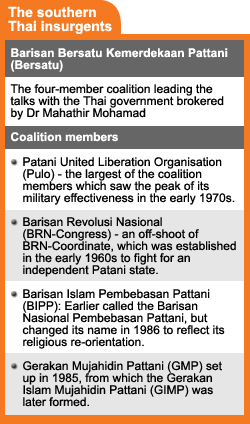 The insurgency leaders, some of whom have sought exile in Malaysia, said increased violence proves the futility of Bangkok unilaterally seeking to achieve peace and resolve the grievances.
Bombings or killings in the south - which have increased in intensity since October - peaked in November to an average of one killing a day.
While about 400 schools in the three provinces have re-opened, 600 others have been closed since October due to fears of attacks.
"They (Bangkok) feel as if they can go it alone without talking to us. But now the problems are getting more serious. If they do not want to talk, I don't know how they are going to solve things," said one leader when contacted today.
"You do not even know who is conducting the attacks, so how are you going to solve anything?"
Little choice
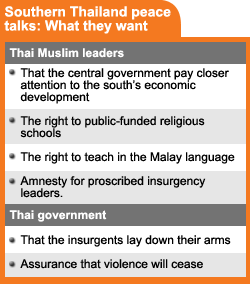
The leader lauded the government for providing public funding for Islamic religious schools, allowing Malay to be used as a medium of instruction, and for paying closer attention to plans for the economic development of the south.
At the same time, however, the government seems to be giving the impression that these steps do not mean capitulation to the Muslim movements' long-standing demands, said the leader.
 Another leader said questions had been raised as to the authority or power that the insurgency leaders have, and whether they have the ability to affect the situation on the ground.
In light of the fact that Bangkok does not have much of an alternative to seeking the co-operation and consultation of these leaders, it is sheer folly to ignore them altogether, he said.
"We told Mahathir very early on that, apart from the groups that we lead, we cannot control all the rest (in southern Thailand) or guarantee the laying down of arms. Things that are currently happening now are not coming from us," claimed the leader.
Malaysiakini had previously reported that pressure had been brought to bear on Muslim leaders of the insurgency to call off the peace talks
"But, surely, we can play some kind of role and we can assert some influence to effect change," added the leader.
Mahathir's son Mukhriz - who was among several Malaysian leaders, including former police chief Norian Mai, involved in the secret year-long negotiations - said he concurred with the leaders' sentiments.
"We are still hoping that the Thai government can take up where we left off. They have to start somewhere," said Mukhriz, co-ordinator of the Peace Malaysia Foundation, when contacted.


Are you sure you want to delete this comment?
This action cannot be undone.