




Dr M-Soros reconcile, but questions remain
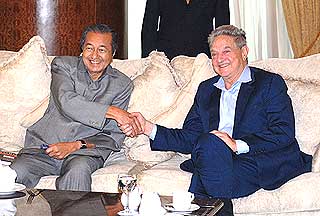
Although the reconciliation between former premier Dr Mahathir Mohamad and Jewish billionaire George Soros was heralded as a significant breakthrough in efforts to dismantle racial and religious stereotypes, other political questions have arisen.
Although the reconciliation between former premier Dr Mahathir Mohamad and Jewish billionaire George Soros was heralded as a significant breakthrough in efforts to dismantle racial and religious stereotypes, other political questions have arisen.
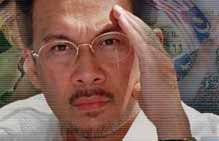
 Responding to the reconciliation, former deputy premier Anwar Ibrahim revealed in his blog that his views on the currency speculation that caused Malaysia's financial meltdown in 1997-1998 were brushed aside by Mahathir.
Anwar, who was also the finance minister then, said while Mahathir attacked Soros, he showed reports from Bank Negara, the Securities Commission, Kuala Lumpur Stock Exchange (KLSE) and the Treasury profiling foreign speculators and local corporate figures believed to be involved in currency speculation on the ringgit.
He also reiterated that the real culprits were "a group of people surrounding Mahathir" at that time.
He also questioned if the nine-year Soros-bashing was done to dupe the people in order to protect the real culprits and divert attention from the real crisis.
Although Anwar's statement is vague in details, it should serve to re-open public debates and investigations into the real and fundamental cause of Malaysia's financial crisis.
Answers needed
The questions that need to be answered: Were the causes internal or external? If it is a combination of both, then which dimension was more critical or crucial?
Was the crisis in Malaysia inevitable or avoidable? Hadn't top decision-makers here read American economist Paul Krugman's almost prophetic warning about 'The Myth of Asia's Miracle' in the November/December 1994 edition of the Foreign Affairs periodical?
 Who were these 'real culprits' referred to by Anwar and what did they do to cause the crisis? Do they still hold important positions that would allow them to harm the nation again?
Have the fundamentals of Malaysia's economy really been reformed to overcome the structural weaknesses or vulnerabilities to prevent future attacks and crises?
No less important is the question why one man's mistake or deliberate attempt to mislead the public as to the real culprit could go unchallenged or unexamined for nine long years until Mahathir himself admitted that he was not right in blaming Soros?
The Mahathir-Soros reconciliation is also a time for soul-searching for those individuals and parties who decided to jump on the Soros-bashing bandwagon for personal career advancement or political gains.
Unlike the past, no public discourses or debates can now be monopolised or dominated by propagandists simply because the Malaysian cyberspace has since been enlarged not only quantitatively but also qualitatively.
The only question is whether Malaysians want to learn real but hard lessons for the moral and intellectual benefits of future generations.


Are you sure you want to delete this comment?
This action cannot be undone.