




Local fishermen in troubled waters
The Malaysian Maritime Enforcement Agency (MMEA) is faced with problems requiring nothing less than a complete overhaul of the current system, claimed a network of fishermen.
The Malaysian Maritime Enforcement Agency (MMEA) is faced with problems requiring nothing less than a complete overhaul of the current system, claimed a network of fishermen.
The Action-Network of Peninsular Malaysia Fishermen (Jaring) said the agency faces great challenges of corruption, languidness, an insufficient budget and overlapping of roles.
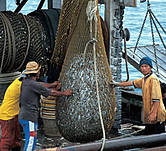 Unless a revamp is done to ensure the agency protects the rights of Malaysian fishermen, it warned that MMEA will lose its credibility and integrity.
Jaring raised these points in a memorandum submitted to MMEA earlier this week. A copy of the memorandum was made available to malaysiakini .
The document, jointly-drafted with the Penang-based Sahabat Alam Malaysia (SAM), was submitted to the MMEA headquarters in the administrative capital of Putrajaya on Monday.
Jaring and SAM cited long-standing concerns and grievances, which they claimed had not improved even after the setting up of MMEA in 1999 to ensure law and order in Malaysian waters.
Among their concerns was the frequent trespassing of legal and illegal trawlers - including those from Indonesia and Thailand - into the zones set aside for non-trawling fishing activities in Perak, Perlis, Kedah, and Penang.
Decreasing income
They said it is not only the disproportionately large share of sea life that is caught, but also the destruction to local fishermen's equipment, catch, the sea bed and eco-system in general, that have led to their loss of income.
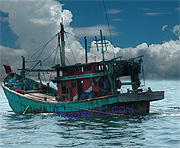 "Every time these fishermen set out to sea, their income would have decreased between 30 to 70 percent," read the memorandum.
Worsening the situation is the alleged close rapport between the illegal trawler operators and some government personnel.
Due to this, Jaring and SAM claimed that the illegal trawlers are often nowhere in sight whenever an enforcement operation is conducted.
Furthermore, such enforcement operations are rarely conducted at night whereas this is the time where there are between 100 and 200 trawlers in Perlis and Kedah alone.
"We are prepared to cooperate with MMEA and the Fisheries Department to provide a list of the boats' numbers and owners of these trawlers," they said.
Smuggling activities
Jaring and SAM also claimed that MMEA had yet to effectively tackle the smuggling of cockle eggs, an activity which government officials were alleged to be involved in.
This problem and the tendency of large scale commercial cockle-farmers to operate beyond their privately-owned cockle-farms, has led to decreasing number of cockles available for local fishermen.
The memorandum also stated that aqua-culture as an entrepreneurial activity has adversely affected the livelihood of fishermen due to the pollution resulting from chemicals emitted from commercial ponds into the seas and rivers.
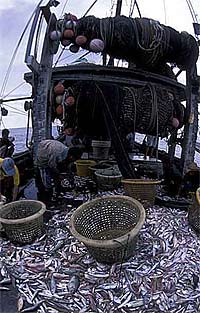 Compounding the problem is the destruction of mangrove swamps - the source of many natural resources valuable to local fishermen - that are making way for such commercial ponds.
"In several areas... the income of coastal fishermen has dropped from RM30 daily to RM5 as a result of the large-scale clearing of mangrove swamps by prawn-farming companies," they said.
Another issue highlighted pertained to Thais and Indonesians coming into Malaysia on social visit passes to fish in the waters off of the coasts of Perlis and Kedah.
"MMEA needs to work together with the Immigration Department in identifying ... fishermen without the proper work permits and to take action against those violating the Immigration Act," they said.


Are you sure you want to delete this comment?
This action cannot be undone.