




Msian tsunami child victims in slow recovery
Two years after the devastating tsunami attack on the Malaysian shores, especially in Penang and Kedah, there still are some remnants of the trauma especially among the children, said Unicef representative to Malaysia.
Two years after the devastating tsunami attack on the Malaysian shores, especially in Penang and Kedah, there still are some remnants of the trauma especially among the children, said Unicef representative to Malaysia.
 "We are still witnessing the remnants of the trauma and the displacement emotionally, made visible in the way children and young people are coping with their daily lives," said Gaye Phillips in an
article published
in the Unicef website. Unicef is a United Nations organisation on child rights.
"We are still witnessing the remnants of the trauma and the displacement emotionally, made visible in the way children and young people are coping with their daily lives," said Gaye Phillips in an
article published
in the Unicef website. Unicef is a United Nations organisation on child rights.
Talking about the impact of tsunami in Malaysia, which also hit several countries in the Indian Ocean on Dec 26, 2004, she added that the affected Malaysian children were finding their way back and looking for resources they need to "recapture that resilience that existed before the tsunami".
However, she noted that there were no physical debris in the way that was evident in some of the other affected countries.
"The situation in Malaysia is radically different from what you would find in countries like Indonesia and Sri Lanka," said Phillips who is also the special representative to Brunei and Singapore.
"In Malaysia, the physical signs and scars of the tsunami have almost disappeared in the last two years. Schools were quickly in operation and people are back in houses built by the government," she added.
New response team
Phillips said that among the lessons learnt from the tsunami was the need to look into systems and policies that enable faster and relevant responses.
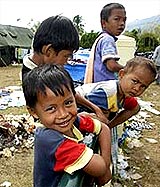 With this in mind, she said, Unicef is looking to set up a National Child Trauma Response Team.
"Once set up, the team can be deployed to new disasters, offering immediate mental health support and helping affected communities care for themselves in the long run," she said.
She added that Unicef was also engaged with children and young people affected by the tsunami to keep abreast with their needs and interests.
She said that these young people had now moved away from their fear of the tsunami, and were instead voicing their concerns on the other more immediate threats such as HIV/Aids, drugs and violence.
"In partnership with a local NGO, Empower, Unicef continues to organise age-appropriate activities for these children including theatre and art classes to facilitate youth expressions and ownership of these issues," she added.
Working with women
Phillips also said that Unicef was also working with local women affected after the tsunami tragedy.
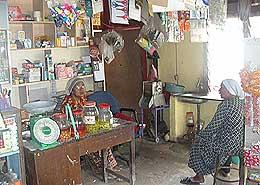 "We learnt that in addition to its destruction to the fishing industry, the tsunami also destroyed economic activities typically engaged in by women, increasing the vulnerability of children and families.
"Unicef looked at how we can help build women's capacity to strengthen their income and their families. If another disaster hits, we want them to be ready economically with a little more stability and little more reserve so they can more adequately manage a disaster," she added.
The tsunami, which also hit some parts of Perlis and Perak, claimed 69 lives in Malaysia. Almost 9,000 others suffered losses to their homes and livelihoods.
The massive tidal waves, caused by an underwater earthquake near the island of Sumatra in Indonesia, left more than 230,000 people dead in several countries along the Indian Ocean. The worst affected were Aceh in Indonesia, India and Sri Lanka.


