
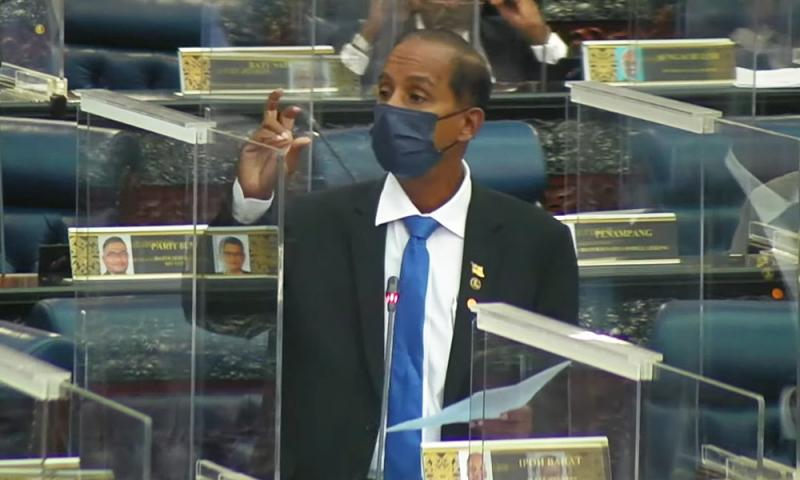
Kula queries why recruitment of foreign workers not under HR Ministry
PARLIAMENT | Ipoh Barat MP M Kulasegaran today criticised Putrajaya for not placing the recruitment and management of migrant workers under the jurisdiction of the Human Resources Ministry.
The former human resources minister claimed that the Home Ministry has been reluctant to let go of its exclusive control over the recruitment of foreign labour....
PARLIAMENT | Ipoh Barat MP M Kulasegaran today criticised Putrajaya for not placing the recruitment and management of migrant workers under the jurisdiction of the Human Resources Ministry.
The former human resources minister claimed that the Home Ministry has been reluctant to let go of its exclusive control over the recruitment of foreign labour.
"The Employment Bill was first drafted by the Pakatan Harapan government and was slated to be tabled in Parliament in March 2020 where a (new) Section 60k would be inserted," Kulasegaran (above) said while debating the bill in the Dewan Rakyat.
Section 60K is related to the intake of foreign workers, where employers would be required to submit an application and obtain prior approval from the director-general of labour.
According to Kulasegaran, the section was included in the initial bill.
Previously, the employers were only required to notify the director-general of the details of the employed foreign workers.
Kulasegeran said thousands of workers were given special permits by the Home Ministry without the knowledge of the Human Resources Ministry.
Muhyiddin objected
Kulasegaran also revealed the resistance faced by the Harapan government, particularly from then home minister Muhyiddin Yassin, in pushing for the bill.
"Muhyiddin objected, citing the interference into the business of the Home Ministry," he said

Kulasegeran then noted that the cabinet and the attorney-general eventually approved the matter.
Section 60K was not part of the Employment Bill which was tabled by the government for first reading in October 2021.
"(This showed) the Home Ministry wants such exclusive control in the recruitment of migrant workers and we have a big problem as the Human Resources Ministry doesn’t know where they are working and how many of them," Kulasegaran said.
The amendment of the Employment Bill is expected to be passed in Dewan Rakyat today.
Provision for paternity leave
The amendment of the Employment Bill involved changes to 46 clauses, including 10 new, 26 amended and six repealed clauses.
Among the changes was a proposal to provide for three days of paternity leave for those employed in the private sector.
During their debate, the lawmakers from both sides of the divide urged the government to increase paternity leave from three to seven days.
Mohd Salim Sharif (BN-Jempol) urged the government to increase the paternity leave to seven days.
"The paternity leave (increase) has been long-awaited by us. But why do civil servants enjoy seven-day paternity leave while those in the private sector only have three-day paternity leave? This should be standardised," he said.
Kula also said the government should stop discriminating against new fathers who work in the private sector.
"Why such discrimination? I don't understand the rationale. It makes no sense at all," he said.
In his winding-up remarks, Deputy Human Resources Minister Awang Hashim promised to amend the bill further to introduce the seven days of paid paternity leave in the private sector.
"After taking into consideration the welfare aspect, the ministry agreed with the suggestion. The amendment will be done in the committee stage (or third reading of the amendment to the Employment Bill)," he said.
Currently, new fathers in the private sector are not entitled to any leave, while those in the public sector enjoy seven days of paid leave with their newborns.


Are you sure you want to delete this comment?
This action cannot be undone.