


Amnesty, 'shoot to kill' anti-graft plan if another Razak son in power
Answering a hypothetical question at an event today, the banker said there are two things he would carry out immediately to address the country’s systemic problems, which include corruption.
He pointed to a method introduced by...
Nazir Abdul Razak, the younger brother of former prime minister Najib Abdul Razak who has been convicted of multiple corruption charges, today said that he would introduce a “shoot to kill” anti-graft policy if he were in power.
Answering a hypothetical question at an event today, the banker said there are two things he would carry out immediately to address the country’s systemic problems, which include corruption.
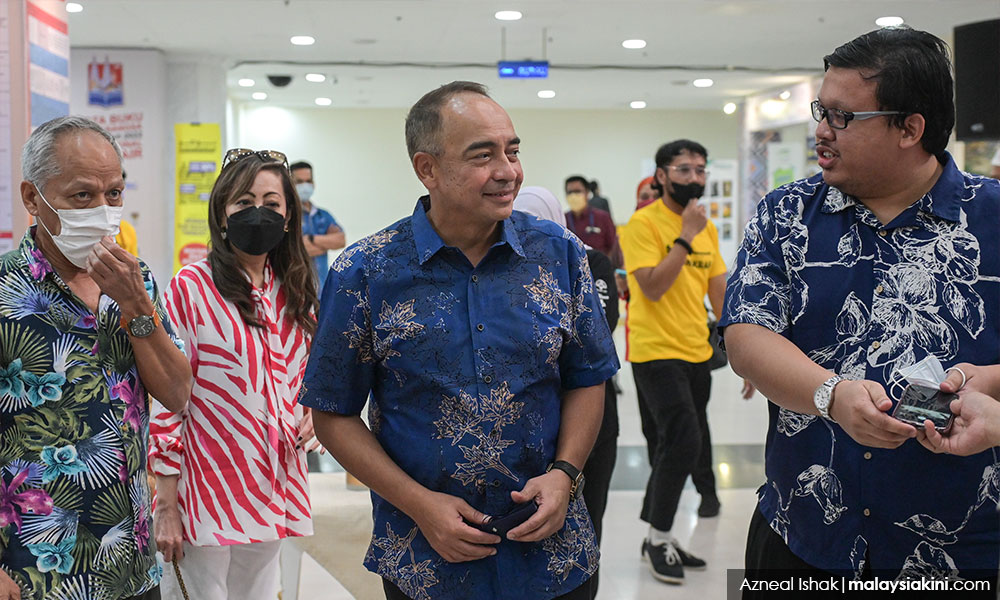
Nazir (above) pointed to a method introduced by Hong Kong back in the 1970s to address rampant corruption in the port city then, where its government offered amnesty to offences pre-1977 but adopted a strong approach against future violations.
“The second thing I would want to address is corruption, how to break corruption (in this country). There is a model in Hong Kong in the 1970s. They overhauled the system, offered amnesty, and shoot to kill.
“When there are so many people involved (in corruption), you must have some amnesty. If not, everyone will block (your effort to clean up the system).
“(If you do corruption) in the future, we will shoot to kill (policy). If what they did in the past is nothing serious, we forgive,” he said at a talk session to introduce his book ‘Di Sebalik Nama’ during the Kuala Lumpur International Book Fair 2022 at the KL World Trade Centre.
Nazir was asked what he would do to change Malaysia for the better if he were in power.

The other change, he told the programme, was to establish a consultative assembly that comprises ordinary citizens, which would function as a platform to find solutions to problems faced by the country.
“This would be the most important thing on my list, and the first I would do. Nobody is clever enough to understand all our problems.
“Like the lady said just now, a lot of smart people are ‘kayangan’ (elites).”
Consultative democracy
Nazir also urged the country to adopt consultative democracy, an approach that his group is proposing through a platform called Malaysia Assembly (BMA).
BMA is a citizen-centred approach proposed by a group of 55 prominent individuals behind the idea. The group had written a letter to the Conference of Rulers in December last year, where they proposed to establish BMA as an initiative comprising representatives from various segments of society to deliberate on issues of nationhood and institutional reforms.
According to him, consultative democracy is an evolution and has been started in 28 countries around the world.
“I think we have to want a democracy with innovation. Look at Yale, Stamford, Oxford... These universities are only starting to establish their consultative democracy departments.
“I believe Malaysia should take the step to move forward in democracy.”
Nazir said since they made the proposal last year, they have received mixed feedback.
The group also had an engagement with the national palace and Putrajaya on the issue but is still awaiting formal responses from them.
The corporate world figure said there were some who resisted the idea but he believes that this could be due to a lack of information and lack of engagement.
“For now, I want to meet with those who resisted. I want to understand why they disagree with the idea.
“To me, this idea is pretty simple. This people’s assembly is a process toward Malaysia 3.0, and we do not want it to be built only by the elites.
“We want the ordinary people to discuss and find solutions to the country’s issues,” he said.




Report this comment
Are you sure you want to delete this comment?
This action cannot be undone.