



Tasik Chini rehab: Over 7,000 trees replanted so far - Forestry Dept
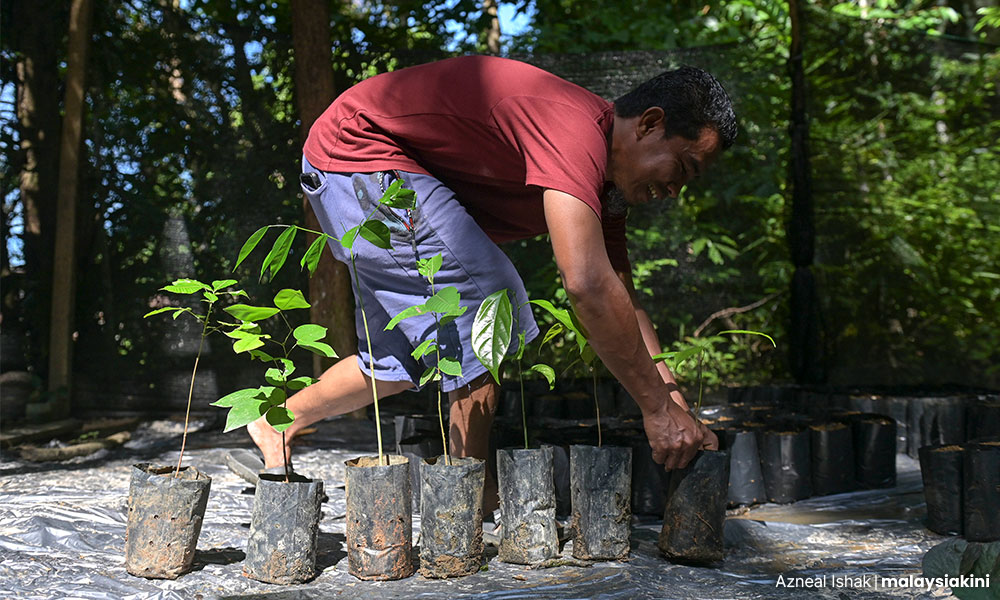
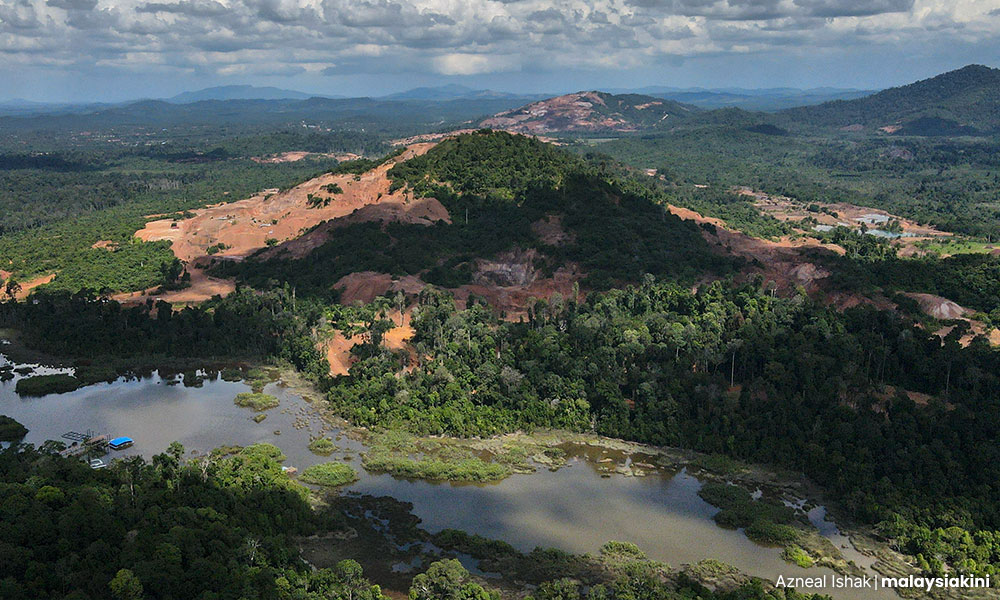
Over 7,000 tree saplings have been planted in Tasik Chini - a Unesco Biosphere Reserve - under a Pahang government initiative to reforest areas damaged by mining and logging activities.
According to the Pahang Forestry Department, around 200 hectares in the area have been identified as "degraded" forest and are earmarked for the replanting exercise.
The goal was to plant 100,000 trees in this area with the assistance of Tasik Chini locals, environmental groups and other government agencies.
"Between 2017 and this year, a total of 7,281 forest trees and bamboo from various species have been planted in the Tasik Chini area and its vicinity.
"This replanting and greening efforts are carried out in areas where the forest had been degraded and trespassed, which we have managed to identify through continuous enforcement activities by this department and other related agencies," the department's senior assistant director for silviculture Nurfazliza Kamarulbahrin...
Over 7,000 tree saplings have been planted in Tasik Chini - a Unesco Biosphere Reserve - under a Pahang government initiative to reforest areas damaged by mining and logging activities.
According to the Pahang Forestry Department, around 200 hectares in the area have been identified as "degraded" forest and are earmarked for the replanting exercise.
The goal was to plant 100,000 trees in this area with the assistance of Tasik Chini locals, environmental groups and other government agencies.
"Between 2017 and this year, a total of 7,281 forest trees and bamboo from various species have been planted in the Tasik Chini area and its vicinity.
"This replanting and greening efforts are carried out in areas where the forest had been degraded and trespassed, which we have managed to identify through continuous enforcement activities by this department and other related agencies," the department's senior assistant director for silviculture Nurfazliza Kamarulbahrin told Malaysiakini.

Among the tree species are merbau, keruing, merawan siput jantan, meranti temak nipis, batai and balau. They also use bamboo and cover crops.
According to Nurfazliza, the replanting exercise was a continuous programme until all the affected areas were returned to their original form.
"We expect that it would take between 15 and 20 years for the areas that have been deforested and mined," she said.
Orang Asli nursery
For the replanting exercise, Nurfazliza said saplings are sourced from the Forestry Department's nursery and through a ‘Buyback Guarantee Programme’ with Orang Asli villagers.
The department supplies farming equipment to Orang Asli families to sow tree seeds they collected from the forest. Participants are expected to grow the saplings to a certain size before selling the plants to the agency.
Kampung Gumum villager Joye Ismail, who heads the nursery programme for the Orang Asli community, told Malaysiakini that it takes about six months to grow saplings to size.
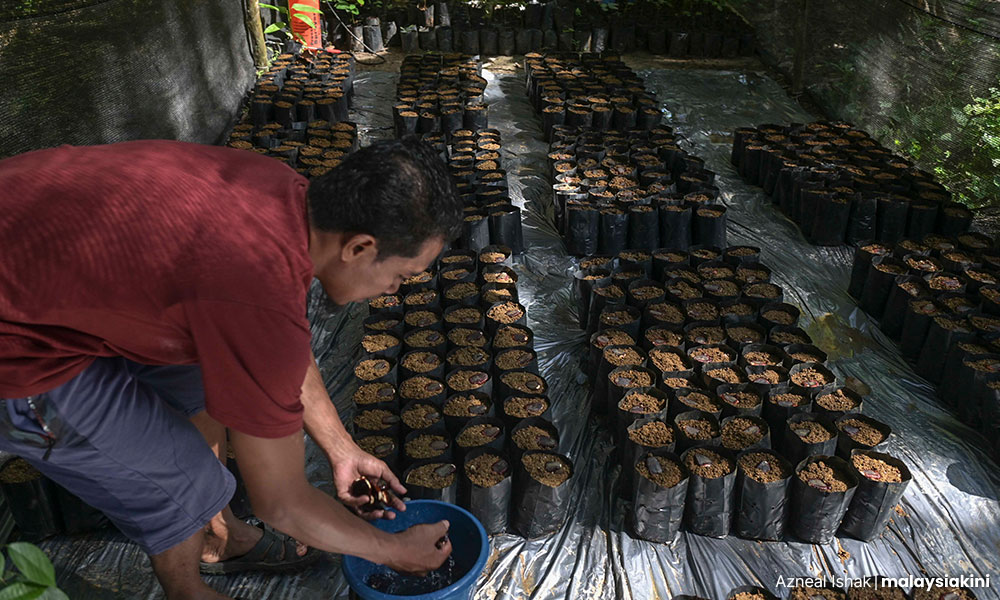
So far, he said, there are a total of 14 small nurseries in three participating villages under his supervision.
"Since we started in July last year, 14 families have participated and we have so far sold back to the government around 4,000 saplings," Joye said when met recently.
The nurseries also grow trees like pokok kelat and pokok jambu air (rose apple). These trees are more durable to be planted in swampy areas close to the lake water.
Joye said the saplings are tended to until they reach between two and three feet (about one metre), before being sold to the Forestry Department.
The agency would take the saplings for about RM3 each.
"The actual number of saplings that we grew was much higher, but many had died in the process," he said.

Joye said while Orang Asli may be very skilled when it comes to surviving in the jungle, farming was something new to them. They also had to deal with pests and fungus.
Additional income
According to Joye, the community participates in the initiative as they see it as their collective responsibility to help heal the forest.
It also provides a new source of income for the villagers, as the Forestry Department allows them to sell saplings to third parties.
Nur Fakrul, 18, who was waiting to further his study, said he plans to expand his family's nursery and turn it into a business.
"We have sold around 600 trees so far. Now we have started to grow a new batch, including meranti and merbau.
"I see this as an opportunity to earn side income for my family. If possible, I will try to expand this," Nur Fakrul said.

Meanwhile, Chini state assemblyperson Mohd Sharim Md Zain, when met during an event in Kampung Gumum, expressed his appreciation to all who participated in the initiative.
Sharim said there were also plans to revive the bio-diversified lake's tourism industry.
"Tasik Chini is an asset, which is its tourism value. We realised that things had not been going well during the two years of the Covid-19 pandemic.
"So, as we are transitioning to the endemic phase, I see this as an opportunity for us to revive the tourism activities here, including the Chini Resort which has been closed down," he said.
"It should be given a new breath (of life) to attract tourists from inside the country and from overseas, which will, in turn, help the locals here to generate their economy,” Sharim added.
Read more
Tasik Chini: Damage done, Orang Asli community foresees long road to recovery
New royalty-linked mining project near Tasik Chini despite 'rehab' pledge
More than two years on, Tasik Chini area yet to be made a forest reserve
Planned Tasik Chini forest reserve revised to exclude mining site




Report this comment
Are you sure you want to delete this comment?
This action cannot be undone.