


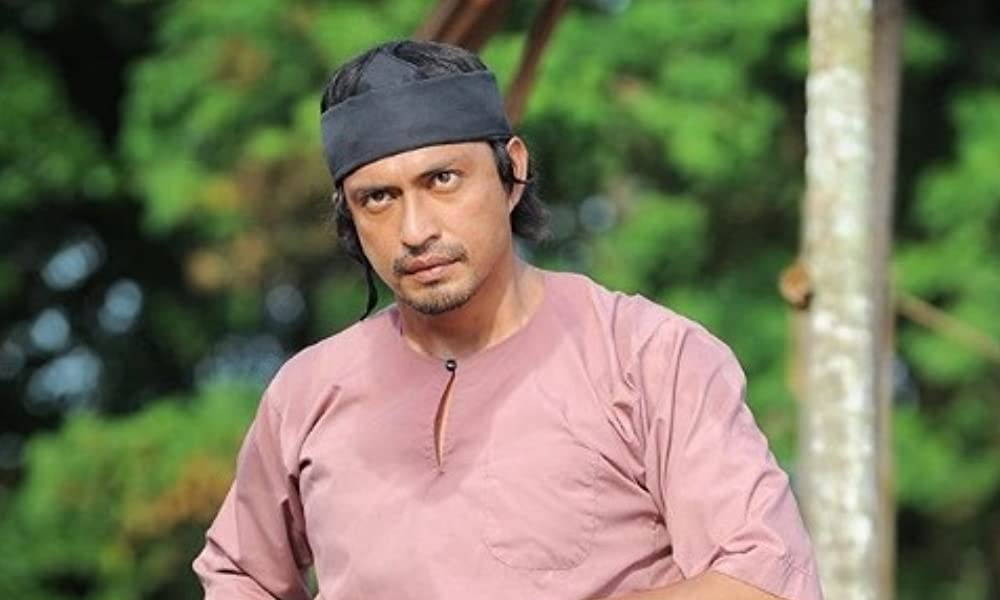

Why the fuss over ‘Mat Kilau: Kebangkitan Pahlawan’?
Every few years or so, there will be a movie that will draw controversy for its content. Very often, the movie will be banned or severely censored before its release.
There have been cases such as the 2013’s highly controversial Tanda Putra, a film on May 13 racial riots that took many liberties with history and demonised certain opposition politicians.
That film, however, was not widely viewed, relying on support from fringe politicians and special screenings.
This year on June 23, Mat Kilau: Kebangkitan Pahlawan was released, and it has been breaking box office records week after week.
Although projected as a “historical movie”, the movie opens with a...
Every few years or so, there will be a movie that will draw controversy for its content. Very often, the movie will be banned or severely censored before its release.
There have been cases such as the 2013’s highly controversial Tanda Putra, a film on May 13 racial riots that took many liberties with history and demonised certain opposition politicians.
That film, however, was not widely viewed, relying on support from fringe politicians and special screenings.
This year on June 23, Mat Kilau: Kebangkitan Pahlawan was released, and it has been breaking box office records week after week.
Although projected as a “historical movie”, the movie opens with a disclaimer that the film is merely inspired by the character and story of Mat Kilau.
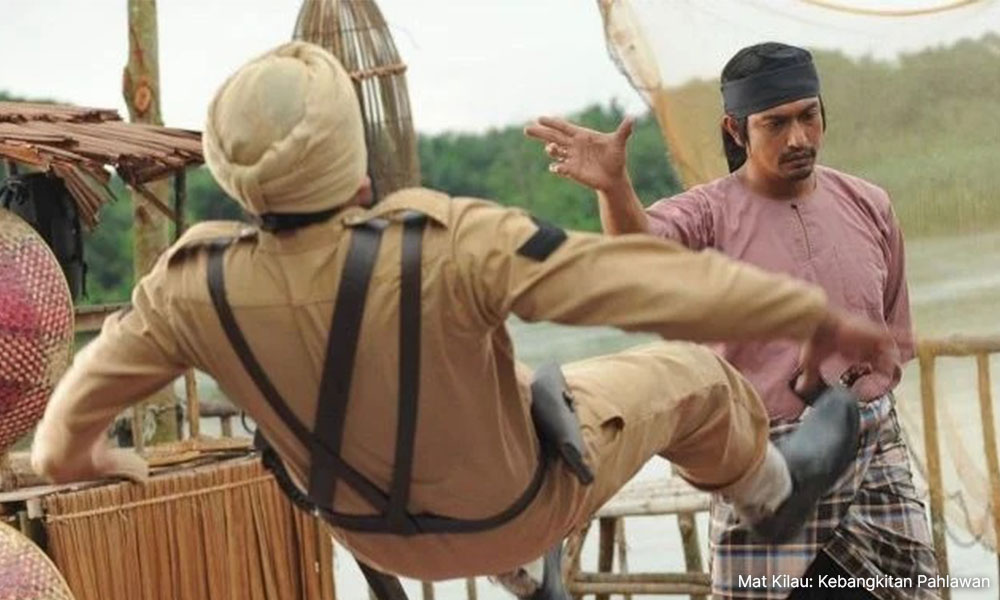
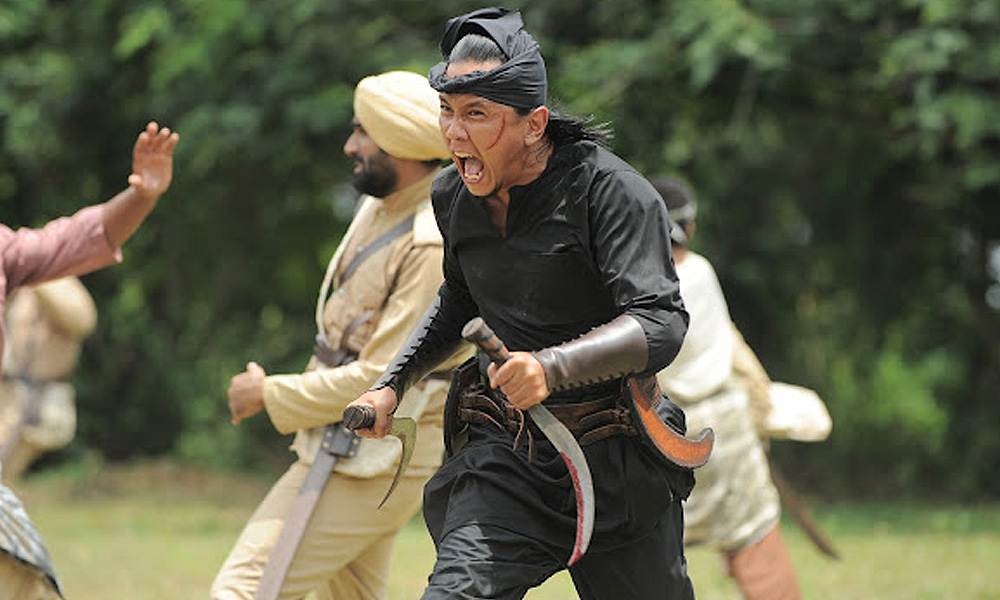
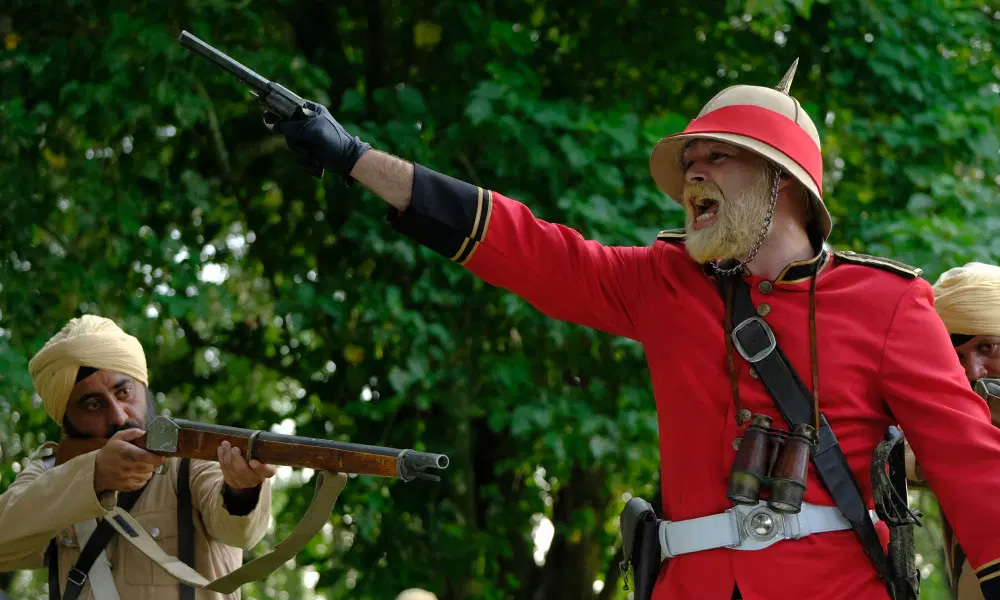
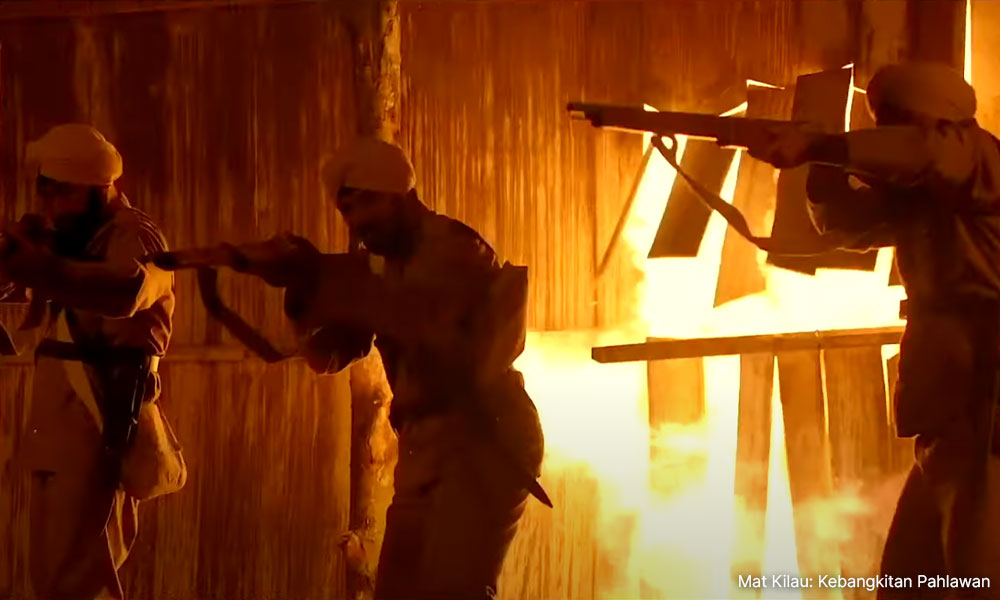
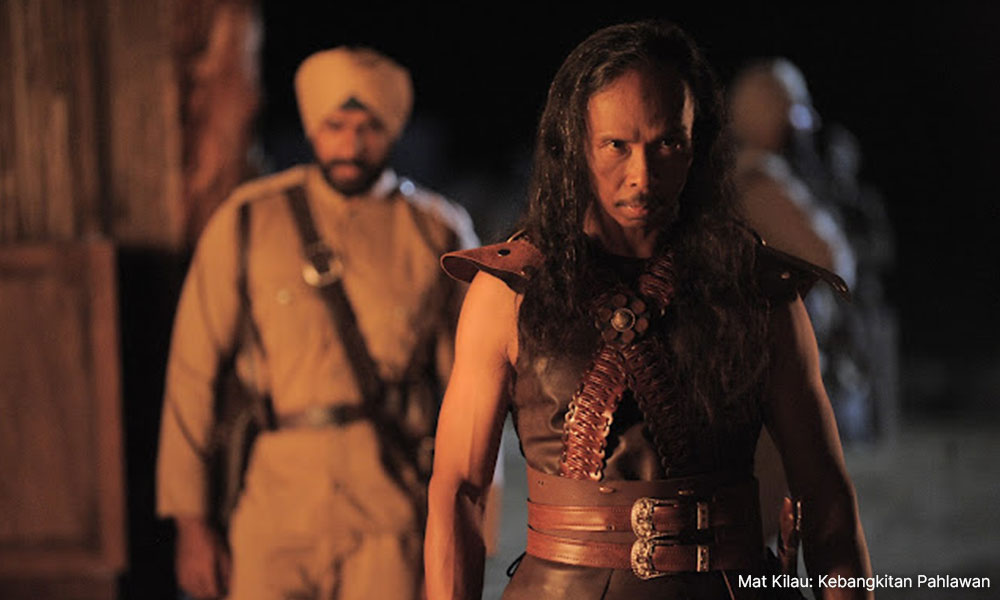
The movie is currently drawing controversy for its depiction of non-Malays - such as the Sikh soldiers who are part of the British army - as being cold-blooded, ruthless and at the same time incompetent.
The Chinese are depicted as manipulative agents of the British, while the Malays in the movie are brave and principled.
The Malay hero
For years, the greatest Malay hero was depicted as Hang Tuah, a warrior whose blind loyalty to the sultan led him to kill his best friend Hang Jebat.
However, over time, this story of loyalty and duty took a beating as many saw Hang Jebat as the hero for taking revenge as he believed his friend was unfairly executed on the sultan's orders.
History is full of local warriors and their run-ins with colonial invaders. However, from the Portuguese to the Dutch and subsequently the British, it is pretty apparent who won.
There were many other stories of “heroics” by Malay warriors but not all withstand the test of time, such as the murder of slavery abolisher JWW Birch who was killed by Maharaja Lela and his friends while he was taking a bath.
Mat Kilau, by far, is the closest to a real deal as one can get. He was an ordinary man, caught up in extraordinary circumstances, who went into battle against British forces and was forced to go on the run for decades.
Perhaps that is why the story of Mat Kilau resonated with so many Malays who went in droves to cinemas to watch this “historical epic”.
It was a movie that celebrated the Malay warrior spirit, the strength that comes with faith (religion) and that the Malays must protect their way of life from “outsiders”. In this case, the “outsiders” are the British with their army made up of Sikh soldiers and the Chinese.
It appears that nothing sells better than controversy for the film is raking in big bucks at the box office.
Who is behind the film?
The movie is directed by Syamsul Yusof and produced by Studio Kembara and Skop Productions Sdn Bhd.
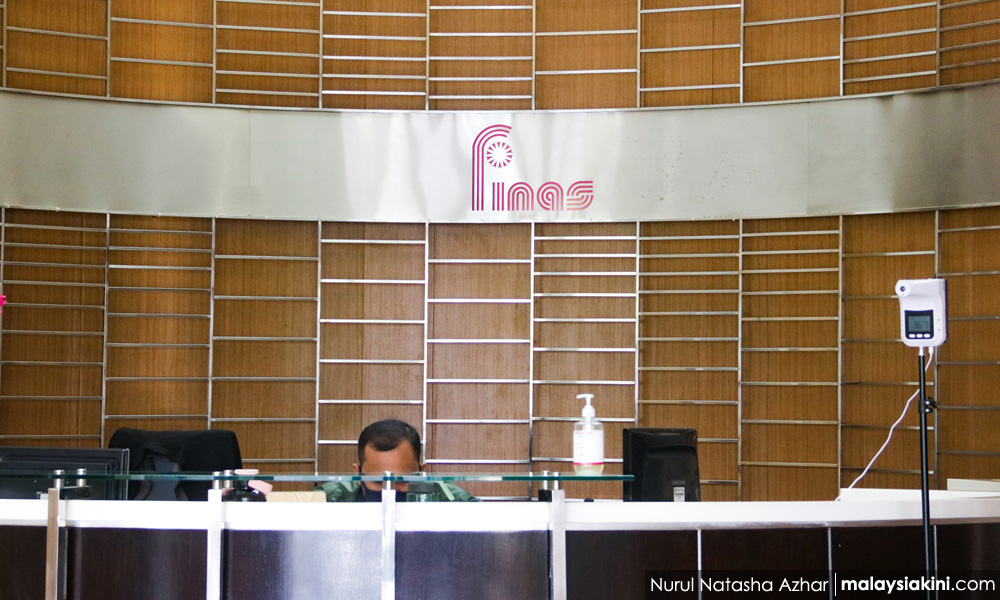
In a statement, the National Film Development Corporation (Finas) chief executive officer Mohd Nasir Ibrahim confirmed that the producers were given a production fund of RM1.5 million as well as RM300,000 for marketing the Digital Content Fund.
Millionaire businessperson Abdul Rahman Mt Dali, the owner of Studio Kembara, is the former vice-president of Ikatan Muslimin Malaysia (Isma).
Well-known graphic artist Fahmi Reza, who is best known for his satirical artworks, posted the Isma connection to “Mat Kilau” on his website.
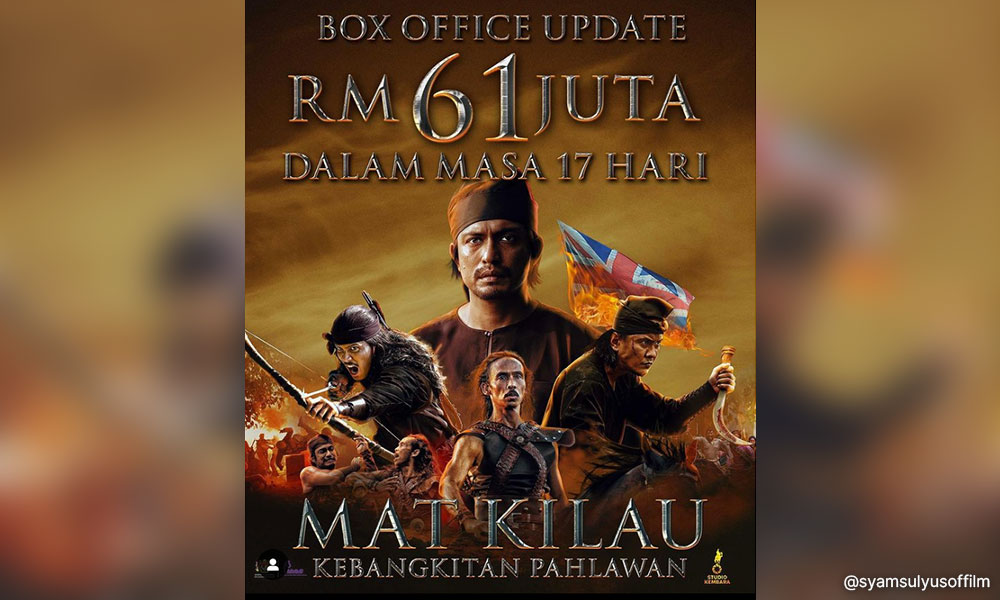
Still, the most recent box-office report states that “Mat Kilau” has crossed the RM60 million mark within 17 days of screening.
This makes it the highest-grossing Malaysian movie to date. The previous high-grossing Malaysian movie was Munafik 2 (2018), also directed by Syamsul.
Based on the number of screenings across the country, it just cracked the record of the biggest box-office earner in Malaysia of all time which is Marvel’s Avengers: Endgame (2019), which is estimated to have earned over RM87 million during its run in the cinemas here.
Just who was Mat Kilau?
Mat Kilau was the son of local chieftain Imam Perang Rasu (aka Tok Gajah) and was one of the Malay warriors who rebelled against the British colonial authorities in Pahang between the 1880s and 1890s.
At first, Mat Kilau, Bahaman, Tok Gajah, Mat Kelubi, Awang Nong, Teh Ibrahim, Mat Wahid and Mat Lela proved to be formidable foes for the British.
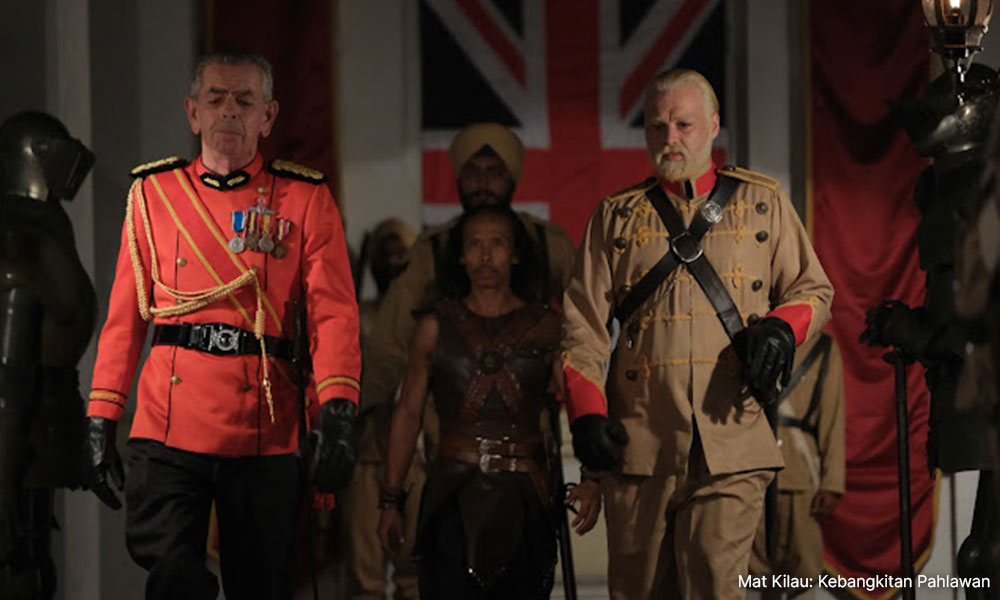
However, with the arrival of reinforcements and a disinformation campaign accusing them of betraying the sultan of Pahang, the British managed to stop more locals from joining the resistance.
Isolated from their community, they were forced to go on the run. With the British army in pursuit, some of the resistance leaders died and many others surrendered.
Not much was known about what happened to Mat Kilau, but he was said to have gone from place to place seeking refuge, each time using different names.
After being on the run for many years, he returned to Pahang and settled down in Gambang, Kuantan, using the name Mohamed bin Ibrahim @ Mat Siam.
He was said to have finally revealed his true identity after Friday prayers at the Pulau Tawar mosque in Jerantut on Dec 26, 1969. After months of investigations, the Pahang state government confirmed that he was indeed Mat Kilau.
Unfortunately, 10 days after the confirmation, Mat Kilau died on Aug 16, 1970, at his home in Kampung Batu 5. He was said to be 122 (based on his estimated birth year of 1847) and was buried with full honours at his birthplace, Kampung Masjid Pulau Tawar, Jerantut.
This unlikely age is itself an indication of how fast and loose one could play with the facts.
What was the film’s initial controversy?
The first controversy was when Pertubuhan Kebajikan Adat Budaya Malaysia pointed out that the keris tucked in Jalaluddin Hassan’s sarong band was a Javanese Keris and not a Pahang Keris, which was what the Malay warriors would have used then.
Critics also poked holes at the plot, saying it was historically inaccurate and was compared to Ip Man (that starred Donnie Yen), a Hong Kong production that took a lot of liberties in telling the story of Wing Chun kung fu martial arts legend.
Also, in a Berita Harian report, Finas’ CEO reportedly said that Studio Kembara failed to give proper credit to Finas in the film as per their agreement.
Mohd Nasir added that the producers failed to include Finas’ logo in the printed materials relating to the film even though this was stated in the agreement with the film development body.
At its heart, the message was seen as playing to the right-wing Malay gallery, a fertile field ploughed by Umno, PAS and other such parties.
PAS ulama wing chief Ahmad Yahya called for more films to be made about independence figures following the success of Mat Kilau: Kebangkitan Pahlawan.
“Films have a strong influence and pull and can also frame the behaviour and emotions of the public. Films are also useful when trying to get a message across to the public. By bringing our independence figures to the silver screen, we can instil a spirit of identity in the hearts of the public,” he said in an article published on June 30.
However, Malaysiakini columnist Zan Azlee said that the film was full of Malay pride.
“It is also full of Islamic and religious pride too. Every five minutes, there is a dialogue that repeats the importance of how they need to fight for their bangsa and agama (race and religion) and how if they lose these two elements, they lose everything.
“Again, I stress that there is nothing wrong with being proud of who you are. I am also Malay and Muslim and very proud of it.
“However, the film is so one-dimensional that there is nothing more to it than just a group of Malay warriors who are fighting foreign forces (those who are not Malay and Muslim) because they are considered a threat to their bangsa and agama,” Zan added.
Writer Terence Aaron noted: “But why am I bothered about all this if I have a high tolerance of dumb action flicks?
“All of these characters, who aren’t Malay-Muslim men, are brutally killed off, maimed, and not given any humanity. All Malay-Muslim characters are treated as victims of oppression.”
Historian Ranjit Singh Malhi pointed out that it was essential to separate facts and actual events from fiction as depicted in the movie to avoid disseminating wrong messages to the public, particularly in a multi-ethnic and multi-religious society like Malaysia.
Who is promoting it?
Cinemas are banned in Kelantan, but the ban courted controversy again after Pasir Mas MP Ahmad Fadhli Shaari watched Mat Kilau: Kebangkitan Pahlawan at a cinema in the Klang Valley.
Fadhli had, in 2016, opposed having cinemas in Kelantan because it would lead to social problems, prompting netizens to accuse him of double standards.
Kelantan Deputy Menteri Besar Mohd Amar Abdullah, in an interview with the FengRenGuan YouTube channel, said Kelantanese have other options to watch films, and the state government does not stop them from doing so.
“Kelantanese are not making noise about the cinema (ban) because they can watch Netflix (at home). They can watch everything.
“Thus, why pay money for a cinema ticket when you can watch (films) at home while chewing kuaci (sunflower seeds),” he said.
Despite the criticism that the movie portrays non-Malays in a poor light, some members of the opposition party DAP have been having special private screenings for their constituencies.
“We want to promote the importance of (supporting a) local production,” said DAP Youth chief Dr Kelvin Yii said in an interview with Malaysiakini.
On July 3, Pemuda Isma, in a social media post, said that 218 tickets were sold for a special screening of Mat Kilau.
The Malaysian chapter of United Sikhs has expressed concern that the film may cause religious and racial misunderstanding.
“Whilst the controversial scenes in the movie were fictional, it is distasteful and hurts the sentiments of Sikhs,” the group said.
The Malaysian Gurdwaras Council also issued a statement, saying that the way nationalism was promoted in Mat Kilau can cause divisions in a multi-racial country like Malaysia.
The council said the film has the tendency to promote ill-will against the minorities as they were shown as barbaric oppressors in the film.
Political commentator Lim Hong Siang opined that the film has a hidden political message.
“While the non-Malays and non-Muslims might feel uncomfortable with the characters which were written based on stereotypes, there is a more crucial question - in present Malaysia, how should we interpret the film narrative of ‘uniting the Malays to fight outsiders?’” he said.
Lim said Umno has been playing up Malay sentiments since the 2008 general election.
He said more than 12 years later, Umno took it further to team up with PAS and Bersatu in a coup dubbed as Sheraton move.
“In other words, the film's message echoes the main theme of the Malay and Muslim politics,” Lim wrote in his Chinese column on ATV News Online.
What do you learn from the movie?
This movie is set in 1892 and begins with a disclaimer that the story of Mat Kilau inspired it.
There is a strong message that this land is only for Malays and all outsiders should leave.
There is less emphasis on Malay traditions and more on Islam as the characters often quote from the Quran to emphasise points such as bravery and honour.
The Chinese are depicted as quiet miners or the token manipulative stooge who gets his comeuppance.
There is an old saying “don’t bring a knife to a gunfight”. In this movie, despite having guns, the Indian army is unable to take on a single warrior who beats them off using silat. It screams the supremacy of the Malays and their culture.
When it comes to race, it is cut and dry, and black and white. No shades of grey.
The movie portrays all Malays are being persecuted or as powerful superheroes. Those of other races are bad guys.
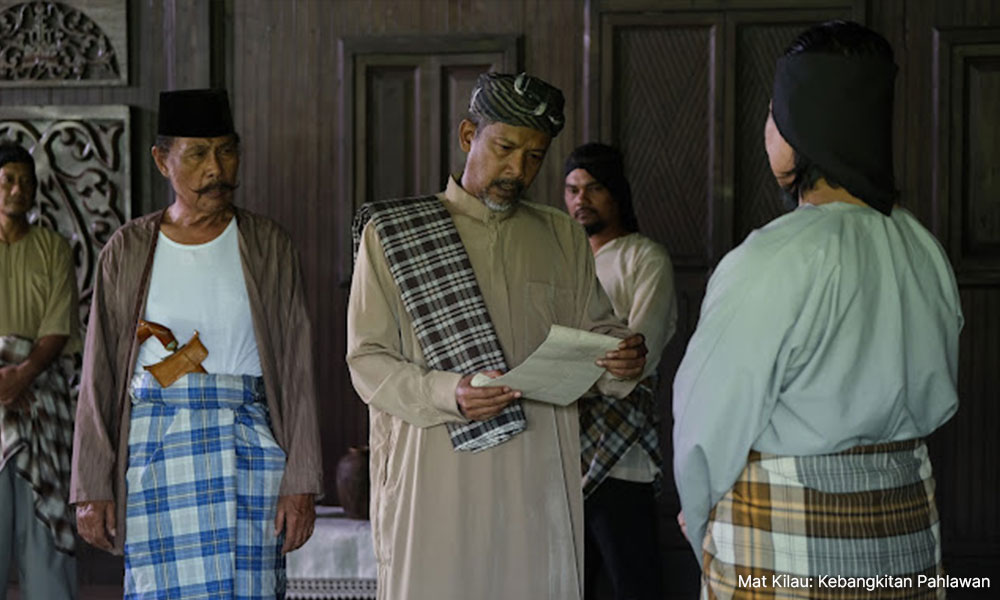
Another aspect that is noticeable in the movie is that the older village heads and noblemen passed the baton of taking care of Malay rights to younger leaders such as Mat Kilau. Maybe that is the filmmaker’s way of saying it is time the old politicians make way for young people.
At the end of the film, Mat Kilau tells the villagers that the only thing that will keep the Malays united is Islam. This is one message that was loud and clear throughout the movie.
The movie has been such a huge hit among its target audience that Abdul Rahman told Utusan Malaysia that a sequel for the movie is in the works and a storyline is ready.
Finas said it would not hinder or obstruct anyone from releasing films after an NGO voiced concerns over the negative portrayal of Sikhs in Mat Kilau.
It said funding was supplied to the filmmakers behind the movie through the Digital Content Fund, which aimed to provide a conducive post-production environment for the film development.
Nevertheless, Finas urged filmmakers to respect multicultural sensitivities.



Report this comment
Are you sure you want to delete this comment?
This action cannot be undone.