


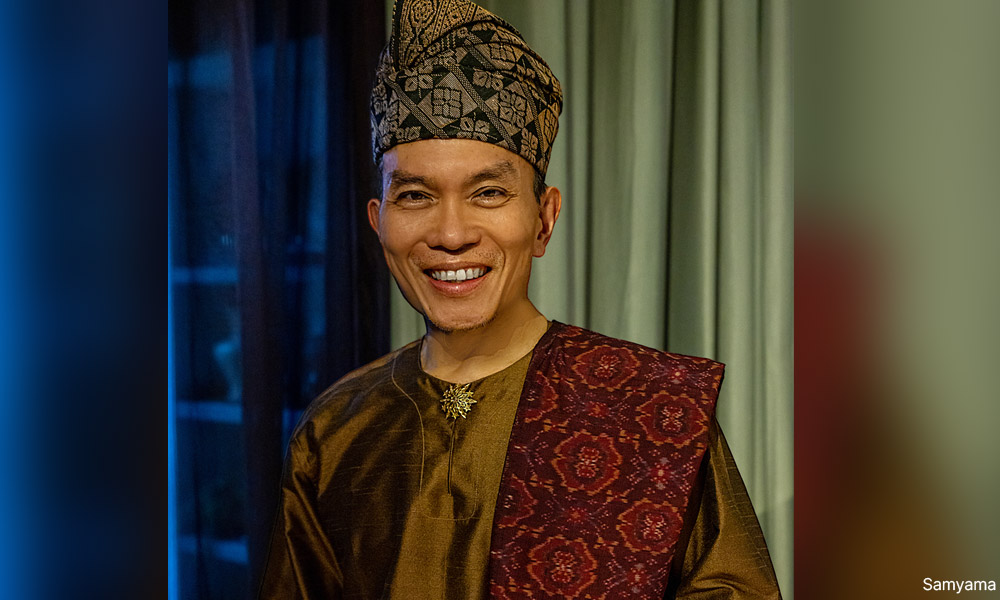

John Ang catalogues history with his collection of Malay textiles
But there will be one nonetheless at Menara Ken in Taman Tun Dr Ismail, Kuala Lumpur, for the next three months.
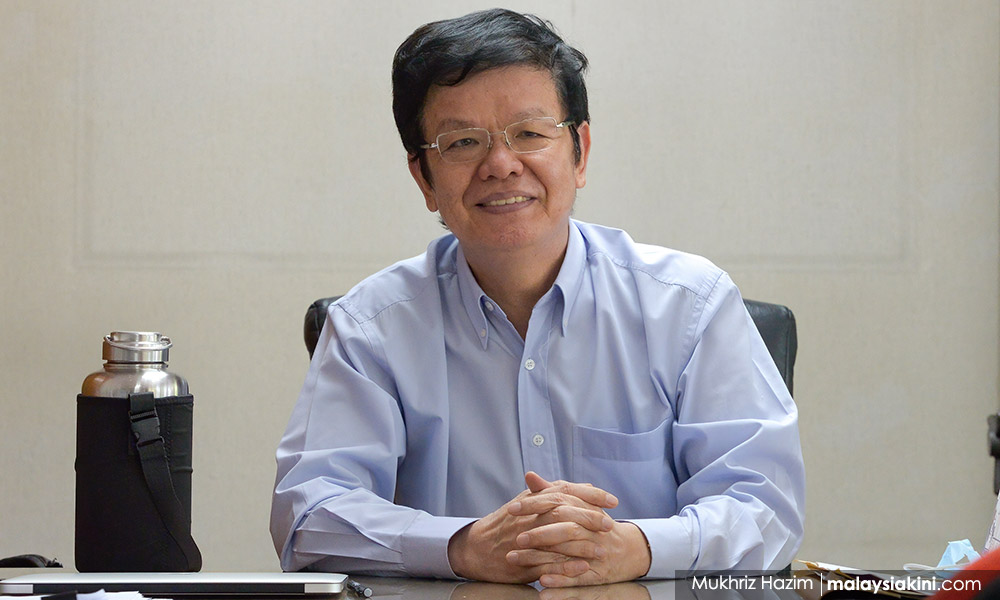
The owner and curator of this unique exhibition is John Ang, who has been collecting unique Malay textiles since January 2014.
Ang, whose parents are Singaporeans, was born in Chicago. He obtained a bachelor's as well as a master's degree in Asian Art History from the University of Michigan.
He was previously based in Tokyo as an art journalist for the Japan Times for two years. He then moved to Taipei and established a gallery that specialised in Asian antiques, furniture, textiles, ceramics and jewellery.
He has written numerous articles on Asian art for art magazines in Hong Kong, Singapore and the US. He has also written a book on Chinese furniture, two books on yoga and one book on Asian cuisine.
He thinks there are many factors as to why he became such an avid collector of textiles. Among them was...
It is painstaking work to collect rare textiles, catalogue them into 12 distinct categories, and then put them on display in an unprecedented exhibition called “Splendour of Malay World Textiles”.
But there will be one nonetheless at Menara Ken in Taman Tun Dr Ismail, Kuala Lumpur, for the next three months.
The owner and curator of this unique exhibition is John Ang, who has been collecting unique Malay textiles since January 2014.
Ang, whose parents are Singaporeans, was born in Chicago. He obtained a bachelor's as well as a master's degree in Asian Art History from the University of Michigan.
He was previously based in Tokyo as an art journalist for the Japan Times for two years. He then moved to Taipei and established a gallery that specialised in Asian antiques, furniture, textiles, ceramics and jewellery.
He has written numerous articles on Asian art for art magazines in Hong Kong, Singapore and the US. He has also written a book on Chinese furniture, two books on yoga and one book on Asian cuisine.
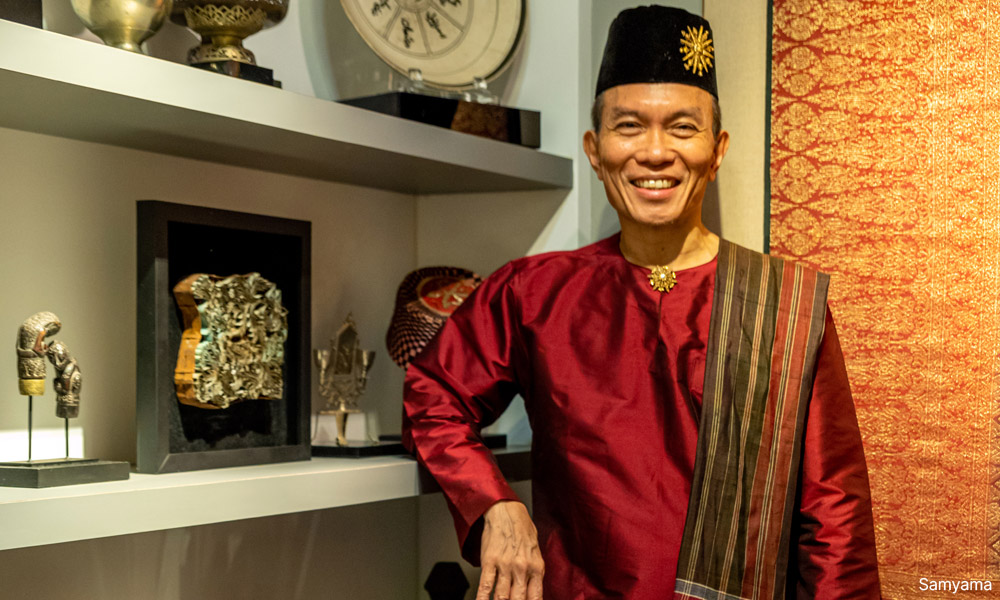
He thinks there are many factors as to why he became such an avid collector of textiles. Among them was yoga.
“I think yoga made me aware of life being mission-orientated. Then you have my unexplainable passion for textiles. Whenever I see textiles I get excited, “ said Ang, who moved to Malaysia in 2018 so that he could devote more time collecting and researching Malay textiles.
In 2019, he organised an exhibition on Malay keringkam embroidery at the Terengganu State Museum.
In his blood
You could say that Ang’s fascination with textiles was probably in his blood. His great-great-great grandfather (on his mother’s side), Tan Hiok Nee, was a textile merchant in Teluk Belanga, Singapore.
“He was selling textiles to Maharajah Abu Bakar before he became Sultan of Johor. The street with his textile shops is still in Johor Bahru and is named after him,” Ang explained.
Growing up, he recalled there were always textiles in the house and during celebrations, all the embroidered textiles would come out.
“Maybe all those things make me nostalgic when I see these textiles,” he said.
“Another thing that attracts me to textiles is their beauty. I used to collect Chinese textiles and Indonesian textiles. I realised there is a lot of research on both textiles.
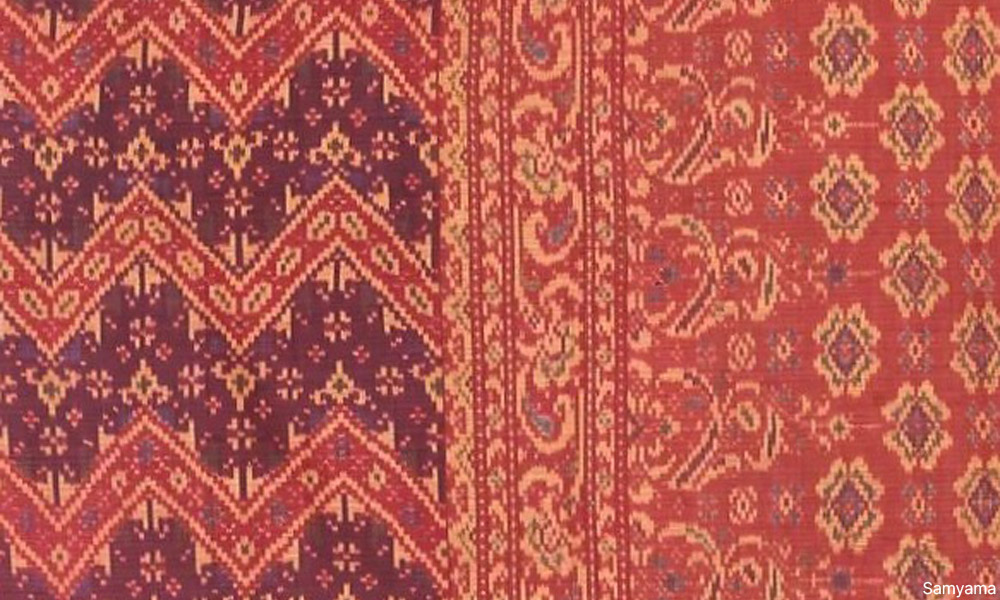
"There are a lot of books on Chinese textiles and a lot of books on Indonesian textiles. When it comes to Malay textiles, there is not much material and so it excites me to go in search of something that has not been discovered. The attraction is for undiscovered beauty rather than known beauty, “ he elaborated.
Ang sees himself as a pioneer who is exposing the beauty of Malay textiles in a big way and that is exactly what he is seeking to do with his exhibition.
During a sneak preview, many of Ang’s Malay friends were surprised by what they saw and were unaware that some of the textiles on display were part of their Malay culture.
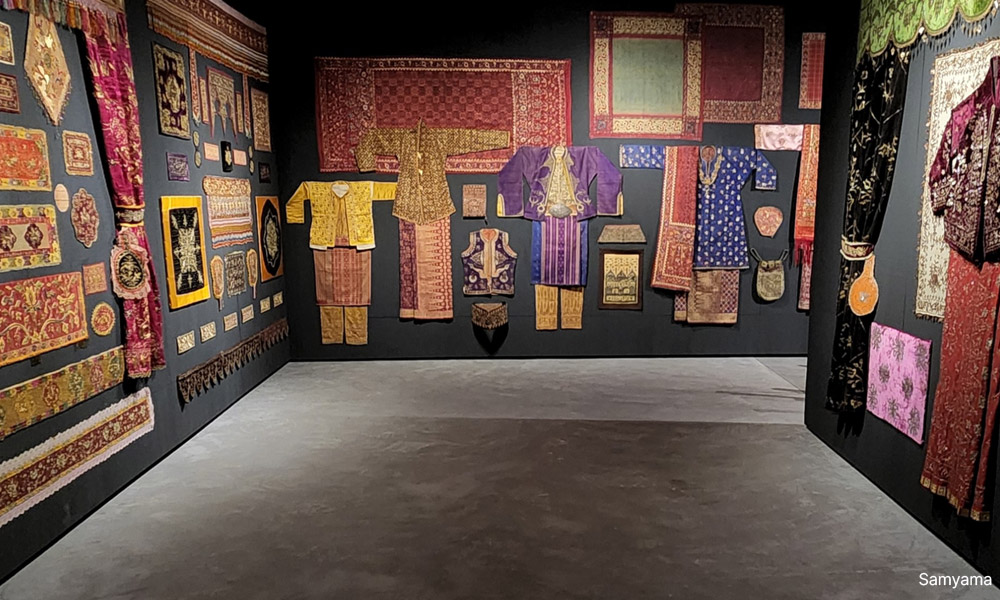
There will be 700 individual pieces on display.
These are divided according to 12 categories:
Songket (brocade)
Limar (weft ikat)
Telepuk (gold leaf applique)
Tekatan (embroidery)
Pelangi (tie-dye)
Ikat Loseng (warp ikat)
Tenunan (plain weave of stripes and checks)
Linangkit (tapestry)
Cetakan (prints)
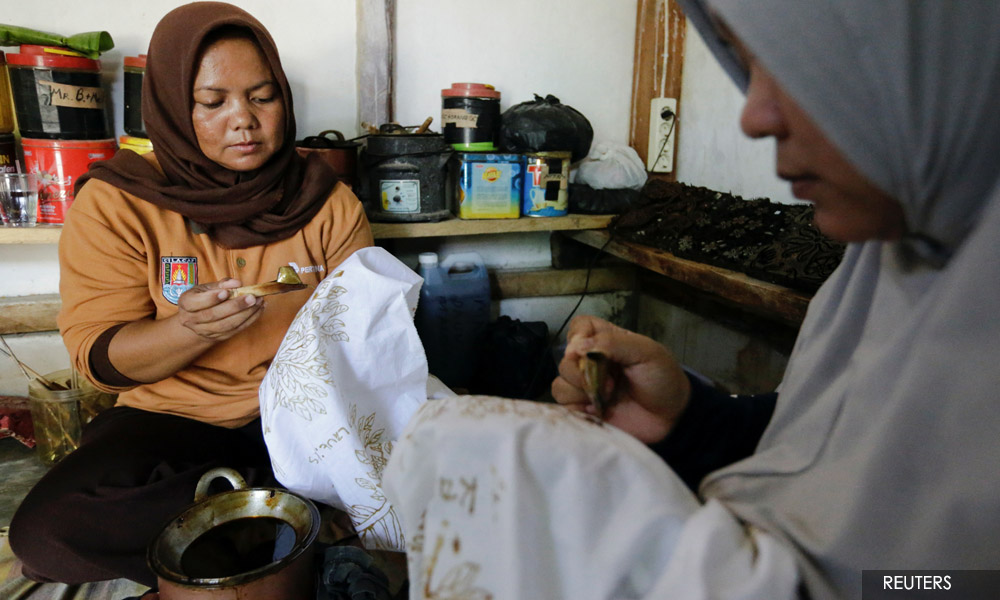
Batik (wax resist)
Renda (lace)
Anyaman (woven unspun plant fibre)
Recalling what got him started on Malay textiles, Ang said, "The first piece was very enigmatic. It was very intriguing. It was offered to me and I did not pay much attention to it.
"I forgot about it but then it started playing in my mind two months later. I then realised how special it was because, although it was Malay, it was related to Cambodian textiles," he said.
Ang then called the dealer and asked if it was still available - only to be told that it had been sold.
"I asked him to put a trace on it and after two months we found out that it was bought by another dealer. I paid double the original amount to get it.
"Until today, I still haven’t solved its mystery because it copies a Cambodian textile in its proportion, length and pattern. But it is not Cambodian.
“What it did was make me trace the trade routes of all the Chams (people from Champa) people in Cambodia. I have been collecting similar textiles, all Cambodian, from around the region," he said.
As Ang points out, the Chams people travelled around because they were traders and they also had a close connection with the Malays because they were Muslims.
Collecting an encyclopedic reference
The highest amount Ang has paid for any textile is in the high five figures for a Limar.
Some of the pieces he has procured over the years were handed down from one family member to another.
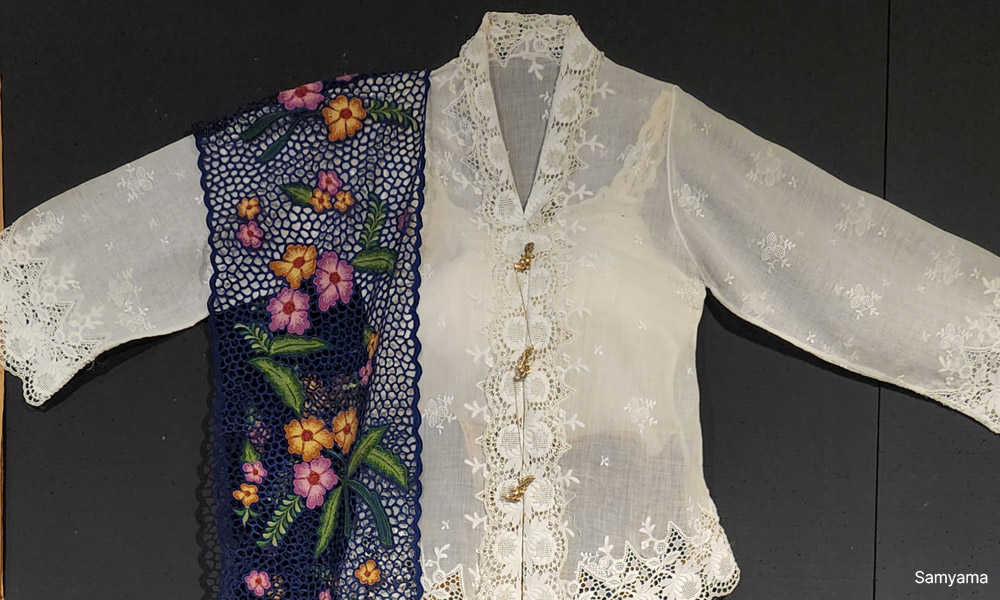
“In the world of fast fashion, some people in fast fashion design still want to stick to tradition but do not have any reference points. So they only make guesses or look up Google,’ Ang said.
“What I am offering is an archival repository, an encyclopedic reference for people. Nothing like this has been done."
Ang has divided the textiles into 12 categories and they are in 10 different sections. So visitors, especially those interested in fashion, can find what interests them easily.
In this fast-paced world, he said, not many take the time to see and hear the story behind a particular textile.
“I am hoping this exhibition will change that. When people don’t see these textiles and don’t know the stories, they won’t know their value.
“I have students from UiTM who have taken textile courses who have never seen a lima. When they come to my house, they see 36 pieces. In school, they only saw one piece. How can you be interested in something without visual stimulation?” asks Ang.
He believes when one sees textiles and embroideries that are meticulous, with so much work put into them, it offers an insight into the broader concept of who the Malays are, instead of the narrow stereotypes perpetuated by colonial masters.
Setting up an exhibition
Although the exhibition was developed in Taiwan, it was never displayed in Taiwan. This exhibition at Menara Ken is the first.
Ang has no plans to bring this exhibition elsewhere because there is a logistics problem. The textiles have to be carefully wrapped in acid-free paper and there is a lot of inventory and cataloguing work to be undertaken.
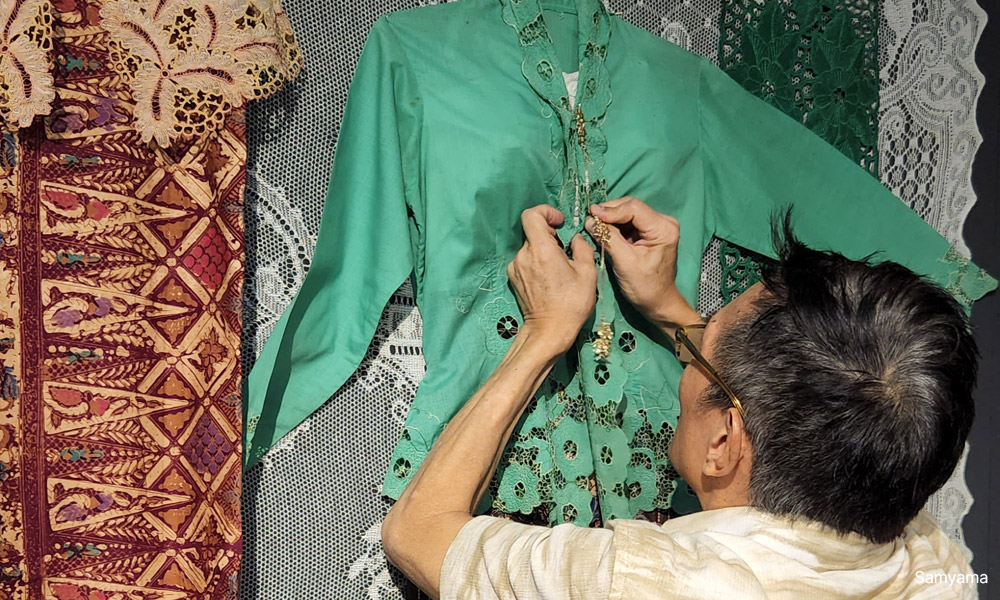
He will consider doing so if there is an invitation or funding for an exhibition.
Insurance is also a problem as he found out from three insurance companies that textile bought without an official receipt from a registered company cannot be insured.
He points out the challenges. For example, in a fire, it is not just direct heat damage that is a threat, as even if the fire does not burn in the same room, it can cause sprinklers to turn on.
“It will be a big tragedy waiting to happen. Considering the limitations, the universe is supporting me. I am confident that these textiles will one day find a good home in Malaysia.”
Ang is currently working on a book on Malay textiles due to be released in 2023.
The Splendour of Malay World Textiles exhibition will be open in the second-floor ballroom of Menara Ken TTDI from July 24 to Oct 30. There will be workshops and lectures held throughout this period.



Report this comment
Are you sure you want to delete this comment?
This action cannot be undone.