


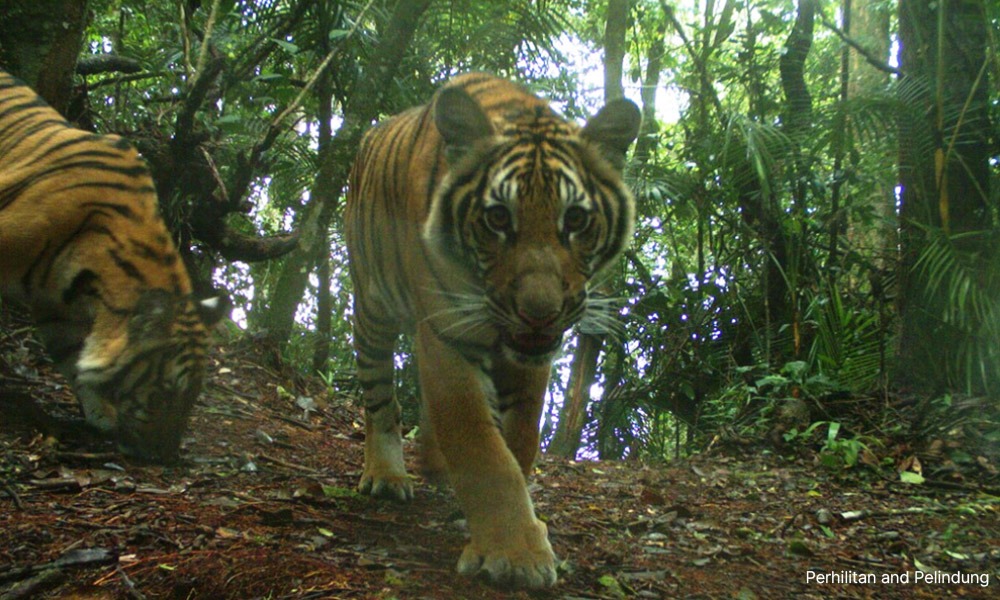

International Tiger Day: A quarter century of fighting to save them
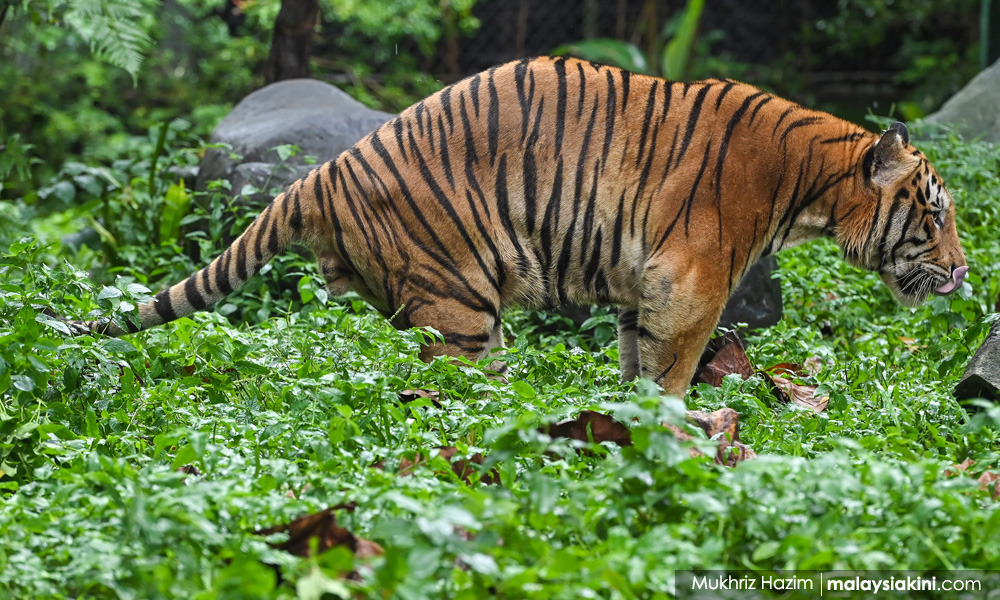
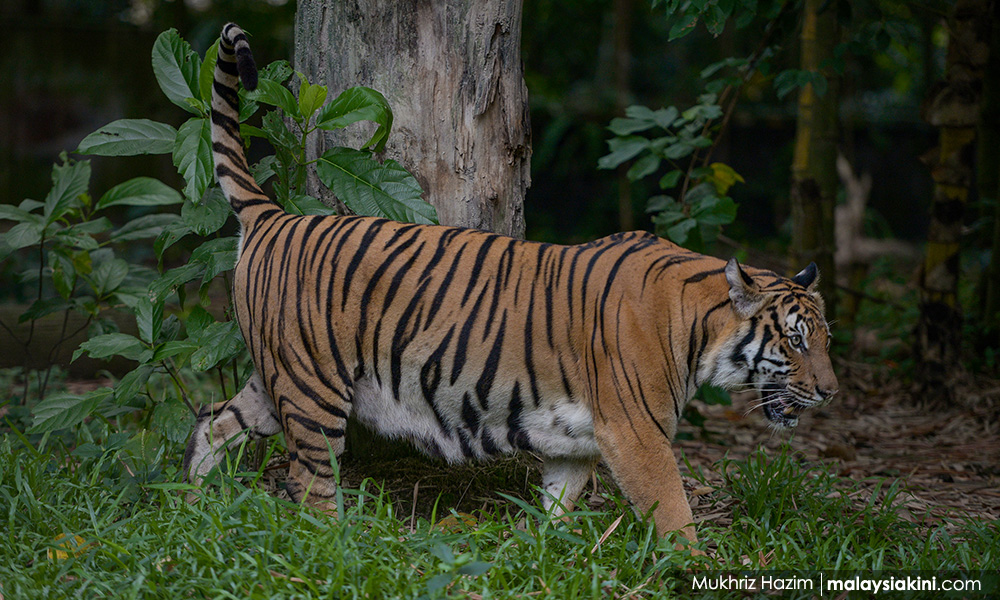
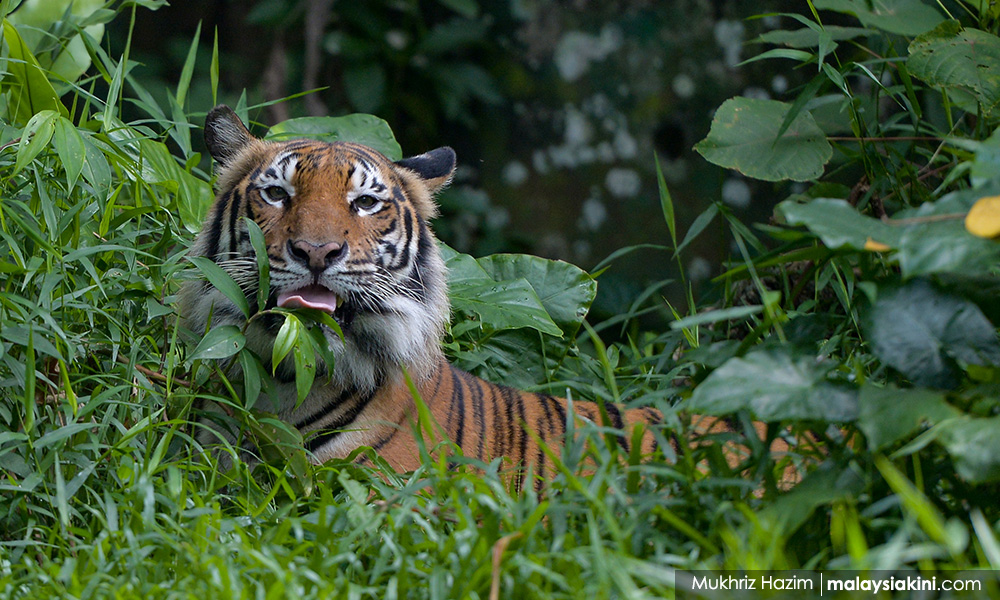
According to the National Tiger Survey, less than 150 tigers were roaming free in the forests of Peninsular Malaysia last year.
Among the NGOs that were involved in the survey is Pertubuhan Pelindung Alam Malaysia (Pelindung), which was established in 2016 and is spearheaded by a team of wildlife conservationists.
A director of Pelindung, Liang Song Horng, has been in the field of tiger conservation for over 20 years.
“My interest in nature started during my scout group activities back in Chung Hwa High School in Muar, my hometown. I was not the smartest kid in my class, but I was the most outdoorsy one. I was fortunate enough that my parents supported me to study in Canada for my degree after high school,” he said.
While he was studying for his biology degree at the University of Victoria in 1999, he met Kae Kawanishi, the current general manager of the Malaysian Conservation Alliance for Tigers (MyCat), who was doing her PhD in Taman Negara.
MyCat is an alliance of non-governmental organisations comprising the Malaysian Nature Society, Traffic Southeast Asia, Wildlife Conservation Society-Malaysia Programme and WWF-Malaysia.
“One of the articles that featured her work mentioned that she was looking for a research assistant, so I wrote an email to her applying for the job.
“Two months later, I delayed my studies, and I was in Taman Negara assisting on my first ever tiger project under her.
“The project opened my eyes to the abundance of wildlife...
According to the National Tiger Survey, less than 150 tigers were roaming free in the forests of Peninsular Malaysia last year.
Among the NGOs that were involved in the survey is Pertubuhan Pelindung Alam Malaysia (Pelindung), which was established in 2016 and is spearheaded by a team of wildlife conservationists.
A director of Pelindung, Liang Song Horng, has been in the field of tiger conservation for over 20 years.
“My interest in nature started during my scout group activities back in Chung Hwa High School in Muar, my hometown. I was not the smartest kid in my class, but I was the most outdoorsy one. I was fortunate enough that my parents supported me to study in Canada for my degree after high school,” he said.
While he was studying for his biology degree at the University of Victoria in 1999, he met Kae Kawanishi, the current general manager of the Malaysian Conservation Alliance for Tigers (MyCat), who was doing her PhD in Taman Negara.
MyCat is an alliance of non-governmental organisations comprising the Malaysian Nature Society, Traffic Southeast Asia, Wildlife Conservation Society-Malaysia Programme and WWF-Malaysia.
“One of the articles that featured her work mentioned that she was looking for a research assistant, so I wrote an email to her applying for the job.
“Two months later, I delayed my studies and I was in Taman Negara, assisting in my first ever tiger project under her.
“The project opened my eyes to the abundance of wildlife captured in camera traps, which back then were 3kg to 4kg heavy devices, with a Kodak roll of 36 films and four Type-C batteries that we needed to check every month,” recalled Liang.
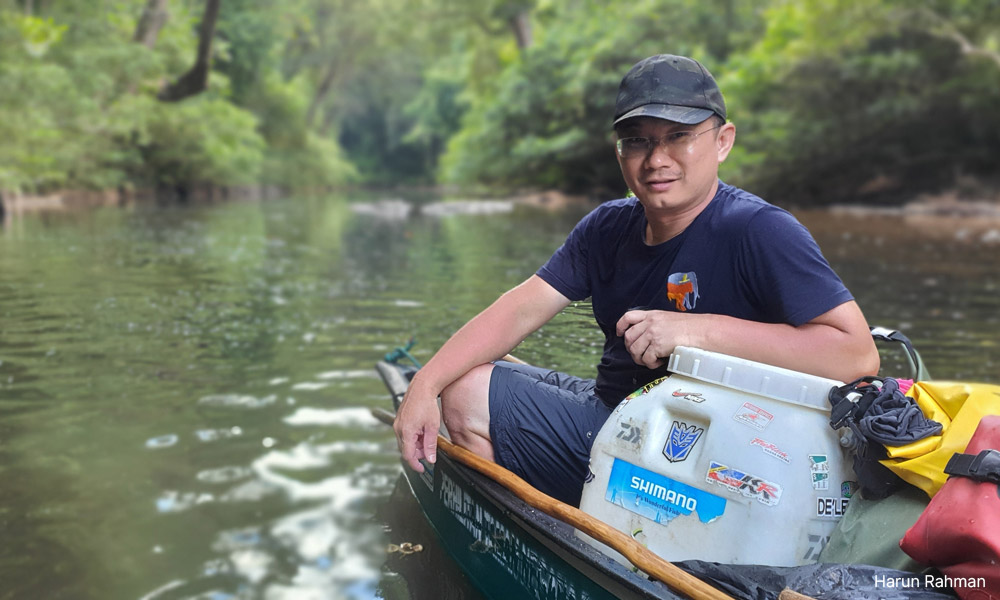
After the project, Liang returned to Canada to finish his degree and worked for the Wolf Project along the Canadian West Coast under Chris Darimont of Raincoast Foundation, before he returned to Malaysia to work for Traffic Southeast Asia on the undercover investigation of the tiger and tiger prey trade.
“The trade-related work really ‘trained’ up my mental strength to face the nastiest and dead end of the conservation equation because most of the wildlife I saw during the investigation was either dead or half-dead.
“After having a taste of the wildlife crime situation in Peninsular Malaysia, I joined the Wildlife Conservation Society – Malaysia Programme, under Melvin Gumal as the country director, to set up their tiger and prey programme in Endau Rompin Landscape.
“I was subsequently put in charge of their Asian Elephant Programme as well as dealing with the human-elephant conflict and mitigation among the Orang Asli villages,” he said.
National Tiger Survey
After Liang finished his Masters’s degree at the National University of Singapore, he left WCS.
He felt Malaysia needed more NGOs with more local approaches to the country’s many wildlife conservation issues and a different way to assist the Department of Wildlife and National Parks.
“I set up Pelindung after consulting Reuben Clement, who had set up Rimba three years before that.
Pelindung was involved in the first National Tiger Survey (NTS) led by Perhilitan and also assisted by other NGOs such as WWF Malaysia and WCS Malaysia Programme from 2016-2020.
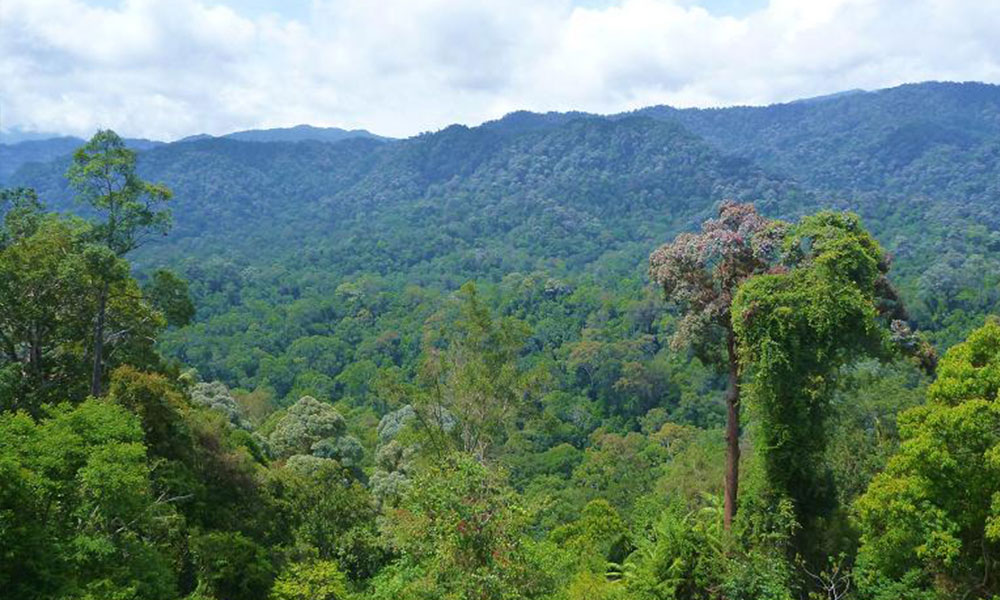
“The large and contiguous forests in Peninsular Malaysia were divided into 20 plots to be surveyed by Perhilitan and NGO partners, covering more than 40,000 square kilometres from Endau Rompin Landscape in the south to Greater Taman Negara Landscape, Banjaran Titiwangsa (or main range) to Bintang Hijau Complex and Ulu Muda Complex in the north.
“As a newly formed local NGO, we took up the mammoth task of surveying the largest area among the NGOs, covering more than 16,000 square km,” explained Liang.
Liang said this was the first ever large-scale wildlife survey in Malaysia’s history with the funding provided directly from the federal government under the 11th Malaysia Plan.
Despite the humidity in the rainforest, rough terrain and less than ideal conditions in the field, they managed to carry out the survey successfully.
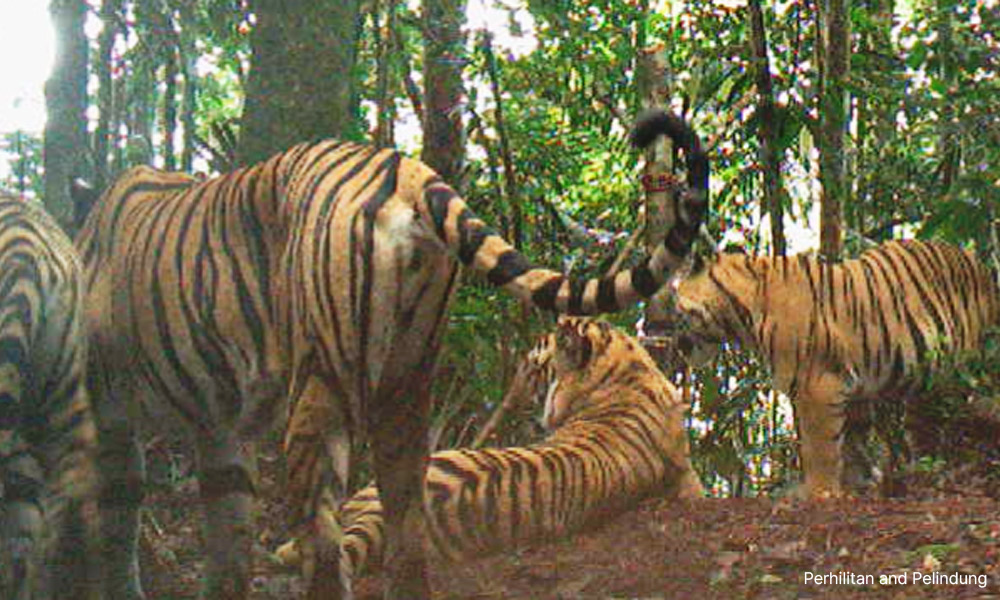
The survey teams used mainly camera traps, which could take photos or video when triggered by an animal walking in front of the camera.
“To carry out the population survey of tigers during the NTS based on their individually unique stripes. At the same time, the field team also records any other wildlife they encounter in the forest, based on their footprint, scent marking, scratch marks on trees or calls.
“Data from the camera traps not only provide the records of tigers but also that of any animal that passed through the camera traps - from serow and dhole to smaller mammals such as banded linsang and yellow-throated marten.
“When combined with the animal sign survey data, the NTS, although supposed to be a tiger survey, actually provided us with invaluable data on many other species,” Liang said.
Besides wildlife data, the field teams also collected human activities encountered in the forest to give a temporal location of the human threat, especially poaching, to our wildlife.
Liang explained that they now have the baseline data for the major forest complexes in Peninsular Malaysia that they never had before and very few tiger-ranged countries in Southeast Asia have baseline data for the whole country.
“The official figure was announced last year to be less than 150 tigers from the area that had been surveyed during the NTS in Peninsular Malaysia. Its numbers are critically low.
“However, the result of the NTS also provided us, as a nation, with where to focus and what to focus on. This is the first ever and most accurate scientifically based estimate for the whole country, as almost all the tiger habitats were surveyed,” he said.
Tigers are in trouble
NTS also showed some forest complexes are more crucial than previously believed to be tiger priority landscapes, such as Belum-Temenggor or Endau-Rompin.
“It is a national crisis nonetheless, as our national symbol is disappearing in our forest, but it is also a critical turning point for tigers and wildlife conservation in the country as well.
“This is the first time that the government has undeniably true, scientifically-backed evidence that our tigers are in deep trouble, and something extraordinary must be done to turn the tide.
“The whole wildlife protection and conservation results have forever changed since the preliminary results of NTS were announced even back in 2018,” Liang explained.
He said that when the preliminary result of NTS was first announced in 2018, Perhilitan had sounded the alarm that our tigers were in deep trouble. They immediately announced Op Belang in early 2019 to deploy 200 of its rangers to patrol, 24/7, the focused tiger areas in the country.
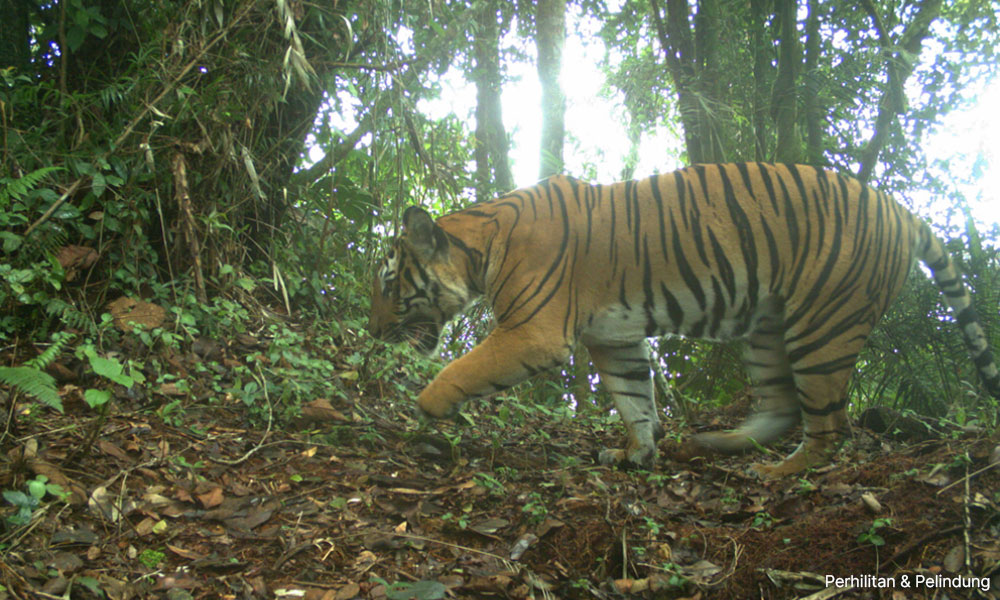
During the World Tiger Day event in July 2019, the photo of a three-legged female tiger was captured by camera traps during the NTS by Pelindung, and Perhilitan field teams shocked the then IGP, Abdul Hamid Bador, into action.
Two months later, Abdul Hamid initiated Operasi Bersepadu Khazanah (OBK) with Perhilitan director-general Abdul Kadir Abdul Hashim.
The joint operation would see the police formally join efforts to protect tigers and other wildlife by offering the assistance of the General Operations Force’s (GOF) Senoi Praaq units to conduct anti-poaching patrols in major tiger habitats across the country, together with the Perhilitan rangers.
The GOF’s two battalions of Senoi Praaq are made up almost entirely of Orang Asli.
The current IGP, Acryl Sani Abdullah Sani, has continued his predecessor’s efforts to support OBK.
Liang said Perhilitan and police had included NGOs, state parks and other agencies in the OBK committee from the very beginning.
“It has been a very transparent operation where arrests and cases are shared to enhance and strengthen the collaboration among the OBK agencies.
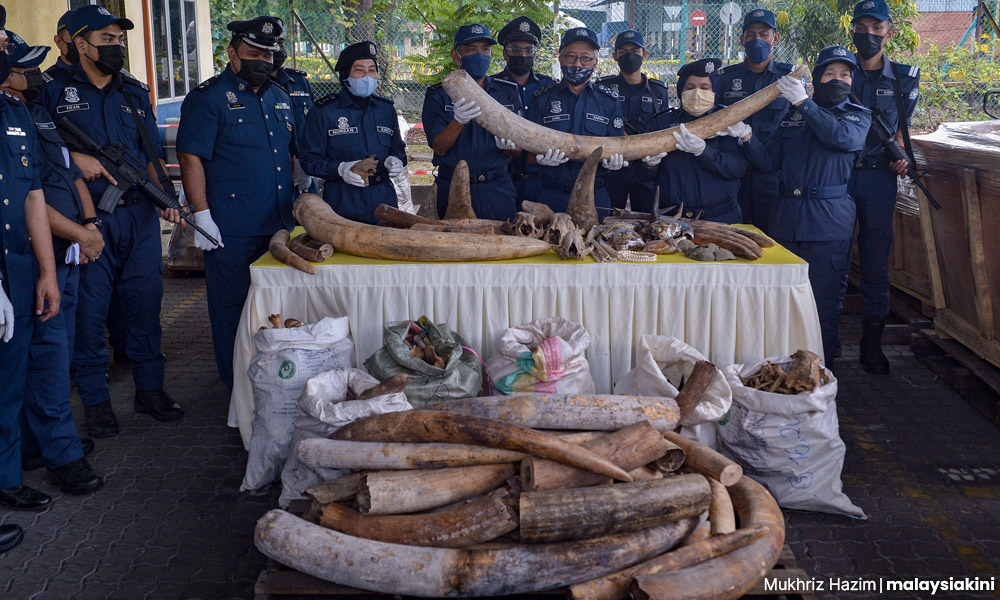
“The Royal Malaysian Customs joined the force in the subsequent year in order to tackle the trafficking part of the wildlife protection, so we are now having law-enforcement agencies and NGOs securing and protecting our wildlife from the source deep in our forest to the exit points getting out of the country.
“OBK was also expanded to Sabah and Sarawak in the second year, involving the GOF’s Tiger platoons. Building upon the success of OBK, the police force is setting up its own Wildlife Crime Bureau,” Liang added.
Starting in 2020, the federal government approved the Biodiversity Protection and Patrolling Programme (BP3) initiated by Perhilitan to formalise the budget for OBK and initiate the Veteran-Orang Asli (Vetoa) Programme, which involves veteran army personnel and Orang Asli as wildlife rangers to conduct anti-poaching patrols in the forest.
The Vetoa programme started with 200 personnel in 2020 and now has close to 900.
Perhilitan has invited NGOs working on tigers to assist in managing the many Vetoa personnel and also in a way to support NGOs’ monitoring and anti-poaching work on the ground and to work as a whole to bring back our Malayan tigers.
Pelindung is assisting Perhilitan in managing 263 Orang Asli Vetoa from 24 local community posts this year, along Banjaran Titiwangsa, by providing training, equipment and supplies for them and managing their monthly work tasks while reporting the findings to Perhilitan on a monthly basis.
All Vetoa use GPS to track their patrol and use an international conservation platform called Smart for compiling patrolling data.
According to Liang, based on the NTS findings, Perhilitan has initiated a long-term monitoring and protection project for the Malayan tiger, along with Taman Negara and Banjaran Titiwangsa, to monitor the Malayan tigers throughout the year.
He said that the optimal number of rangers estimated by Perhilitan and NGO partners is based on the international standard of one ranger per 10sq-km.
“If we use the overall tiger habitat under NTS, which is 44,000sq-km, we would need 4,400 personnel,” he said.
National Tiger Task Force
The National Tiger Task Force (MyTTF), chaired by Prime Minister Ismail Sabri Yaakob, had its first meeting in January this year to outline several initiatives to implement to stop the decrease of Malayan tigers.
Each tiger-ranged state has conducted its state-level MyTTF in the subsequent months.
Liang said that all the changes and developments in tiger conservation, in terms of intensity and commitment, were not foreseen by any local NGO, or even by the international conservation community.
“These were all due to results that are scientifically backed. NTS has given the country the reason to step up all we could or lose all we love: our national symbol and the symbolic animal that represents Malaysia on our national emblem.
“If we compare it to even five years ago, we now have a force of over 1,000 people on the ground at any time patrolling our forests, and this has never happened in our history before,” he said.
Liang is optimistic that with the support given to conservation, it would be possible to bring tigers back from near extinction.
“As a tiger ecologist, from the population dynamic and areas where the tigers were captured during the NTS, I am confident we can bring tigers back from near extinction biologically.
“A survival probability analysis has been done by Perhilitan and NGO partners under the NTS to predict how many years it would take for the tiger to reach the carrying capacity in major tiger habitats,” he said.
Perhilitan also initiated the Malaysian Tiger Genotyping System, or MyTags, to look into the genetic diversity among the wild tiger populations to ensure there is no genetic bottleneck in the wild population.
“However, we have a very narrow window, maybe three to five years max, for tigers in the more accessible area outside of Taman Negara to make sure there is no direct killing of tigers and their prey while working to stop the loss of their remaining habitats to save our Malayan tigers,” Liang said.
Positive news
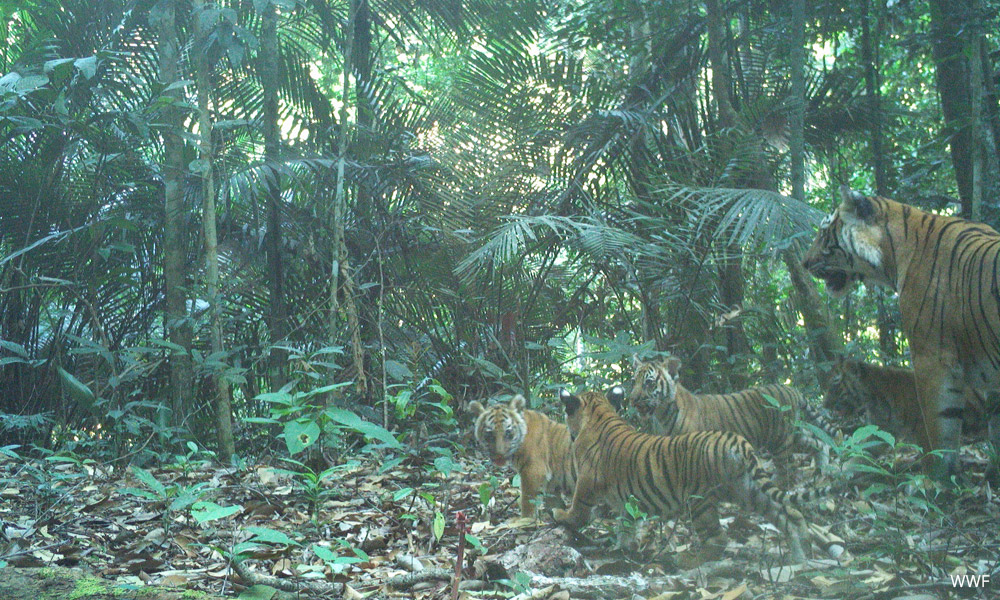
After NTS, he added, they detected new tigers and cubs that were not detected during the study.
“However, such information needs to be handled with caution and should not be announced openly. With the current internet accessibility, international poaching gangs could also be reading the online ‘good news’ of tigers born in the wild or tigers being spotted in a certain area posted by the general public or even NGOs.
“We certainly do not need foreign poaching gangs to specifically target Malaysia again for tigers, even though we have much better protection now than before the Covid-19 pandemic.
“My advice to those who have accidentally spotted tigers is, ‘please, only share with authorities like Perhilitan rather than viral them on social media’, because you will be putting a nail to the tiger’s coffin rather than saving it,” said Liang.
Besides that, Liang mentioned with the strong enforcement action since 2019, the three-legged female tiger that shocked the former IGP into action is still alive and has given birth, despite missing one leg, according to their ad-hoc camera-trapping monitoring.
Lack of funding
Pelindung works with other NGOs by sharing information from the field and giving training to the field teams of other NGOs, like the Rimau’s Menraq and SenoiBeq Orang Asli rangers, late last year.
Rimau is an NGO that is made up of Orang Asli wildlife patrollers.
As for areas to be monitored by various NGOs, Perhilitan has assigned Pelindung to help monitor the areas, which are mainly in the Banjaran Titiwangsa, Taman Negara and Greater Taman Negara on the Pahang side. Among the tiger conservation community, what needs to be done immediately is clear. However, lack of funding is the main obstacle.
The long-term biological monitoring of tigers using research devices like camera traps is lacking in most of the areas that had tigers detected during the NTS.
As this monitoring is mainly carried out by NGO partners, funding for such large-scale and continuous surveys throughout the year is severely lacking due to the high cost of all the research equipment.
“Without monitoring every single tiger we still have, we would not be able to know the population situation in the wild.
Many NGOs only conduct ad-hoc or hotspot monitoring using very few camera traps due to a lack of funding. However, only the result from full-scale monitoring would be able to tell us how much positive impact our law enforcement initiatives have had on the tiger population and whether we are bringing our Malayan tigers back,” Liang explained.
Pelindung has been in discussions within the NGO community to set up a scheme for corporate or individual Malaysians to contribute to compensate the state for each hectare of the forest they preserve for tigers in the next 25 years.
It could be a mere RM100 to RM200 per hectare per year for the next 25 years to stop any logging or conversion of forests, since the usual reason that states use for their inability to stop the logging or conversion of forests is the “lack of income”.
“Although it is still at the very early stage of discussion, we believe such a scheme would be able to reduce the rate of habitat loss for tigers immediately, rather than using the usual carbon credit scheme that might take years before it materialises,” Liang added.
Pelindung has been seeking funds from non-government entities since the NTS.
Liang said that not many are aware of the work they do, the vast forest area they monitor and they have to manage the largest number of Vetoa personnel as well.
He said that Pelindung also does not want to spend too much time seeking publicity or end up as one of those organisations that talk more and work less.
“However, there are still donors who would look at the track records rather than popularity. We recently received a grant from Yayasan Hasanah under the Hasanah Special Grant 2022, which is a matching grant by the Finance Ministry, to cover part of the area we have been assigned by Perhilitan along Banjaran Titiwangsa.
“We need the corporate sector to step up to join the forces across Peninsular Malaysia as there is still only a handful that has saving tigers on their agenda, such as Maybank Foundation, Sime Darby Foundation and KLK Group,” he said.
Liang urged ordinary Malaysians to push more businesses to come forward to support the cause of saving the Malayan tigers because small businesses can also make a huge difference.
“Many small businesses, local and foreign, have been supporting us by contribution-in-kind during the NTS to give us special rates when we purchase their products.
“This kind of support, even though not a direct contribution, does have a huge impact in terms of how much equipment and supplies we could buy on a limited budget.
“There are many locally renowned brands and businesses that could come in to help. Every single cent we save means we could do more to save more Malayan tigers,” Liang added.



Are you sure you want to delete this comment?
This action cannot be undone.