



Sewang - the Temiar tribe’s symbolic defence of the environment
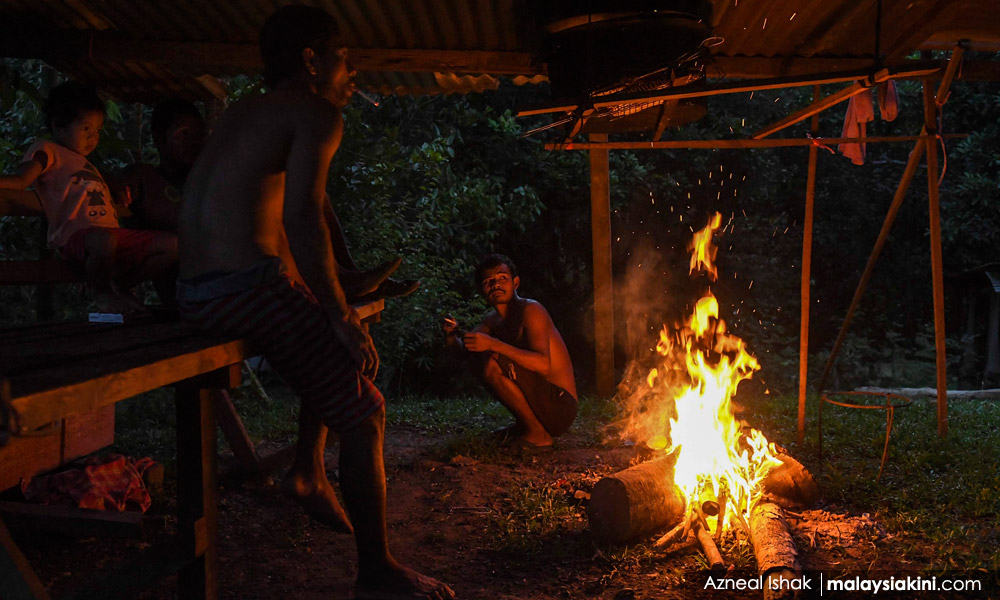
An air of festivity filled an otherwise quiet Kelantan village of Kampung Kaloi, home to 22 Orang Asli households from the Temiar tribe on June 14.
Situated 37km from Gua Musang town, some 70 villagers were busy making preparations for the Sewang ceremony through gotong royong (community cleaning) amid the hot weather.
Sewang, an integral part of Orang Asli culture, is a traditional dance performed to...
An air of festivity filled an otherwise quiet Kelantan village of Kampung Kaloi, home to 22 Orang Asli households from the Temiar tribe on June 14.
Situated 37km from Gua Musang town, some 70 villagers were busy making preparations for the Sewang ceremony through gotong royong (community cleaning) amid the hot weather.
Sewang, an integral part of Orang Asli culture, is a traditional dance performed to appease spirits, treat the sick or seek guidance on health and major decisions. It is also now used to entertain guests.
A Sewang, which involves dancing to music produced from bamboo, brings everyone under one roof.
A Bernama team on June 14 had the opportunity to witness the Sewang ceremony after travelling some 62km from Kampung Bering, a two-hour journey to Kampung Kaloi.
The team was informed that Sewang is usually a closed event, but ours was a special case as it was organised to pray for our safe journey to their village.

Asking for protection
At Kampung Kaloi, our four-wheel drive stopped right opposite the ceremonial venue, the Dewan Adat, a traditional bamboo hut with a rooftop weaved using bertam leaves.
The hut also functions as a house of worship for the Temiar community who traditionally are animists. The practice of animism and the belief in the presence of spirits continue to influence their lives until today.
On arrival at 5pm, we were warmly greeted by Jimi Along, 48, a resident of Kampung Kaloi.
“This is the atmosphere in the village when Sewang is held. The ceremony is usually held for three consecutive nights in the dark, depending on the situation and purpose.
“But to entertain guests like all of you, it is only for one night,” he said.
Jimi said, based on the traditional Temiar practices, no one is allowed to record or take photographs of the Sewang ceremony. However, we were allowed to do so provided we do not use flash during the event.
“Every Orang Asli village may have their own Sewang ceremony. For example, we do not carry out this ceremony in the dark, but instead, switch on the lights when Tok Halak (ketua balai) has a problem with his eyesight.
“Based on the traditional Sewang, Tok Halak plays the role of dukun (shaman) who can communicate with the patient and the spirits,” he added.
As we stepped into the Dewan Adat, there was a white cloth banner stating ‘Warisan Bumi, Mesra Alam Hayati Tok Halak, Hukum Adat Orang Asli Suku Kaum Temiar’ (Respecting nature is part of Temiar traditions) hung in the hall and decorated with leaves.
Dinner was served with rice and a mix of dishes in bamboo, the traditional cuisine of the Temiar tribe, before the start of the Sewang ritual at 9pm.
There were rules that needed to be adhered to throughout the ritual to not break their traditional customs.
“Our usual practice is to conduct the ceremony for four to five hours, and two hours later, we will break for 30 minutes to one hour, and continue with the ritual till late at night.
“Throughout the event, everyone must be in the hall and are not allowed to leave as the hall is already surrounded by ‘spirits’ and are waiting for their ‘turn’ to join the ceremony.
“It is feared that anyone who steps out of the hall will fall sick due to ‘disturbance’ from the spirits,” Jimi said.
At the veranda of the hall, all men were asked to wear decorative hats weaved from palas leaves while the women adorned their hair with flowers and leaves from the forest.
The specially arranged bouquets of flowers called tempok turut were handed to us.
“The tempok is used as protection against evil spirits that may enter the body while the ritual is ongoing,” explained Jaben Angah, 52, a villager of Kampung Kaloi who was the drummer for the performance.
Selected group
In the shimmering darkness, with only a ray of light in the hall, several villagers from Kampung Kaloi were seen entering the hall with bamboo sticks and palas leaves.
Upon entering the hall, we were invited to our seats. There were several materials placed in the centre of the hall for use during the ceremony such as drums, candles, betel leaves and cooking pots filled with charcoal incense.
Along Busu, 75, was the Tok Halak leading the Sewang that night. He greeted us before proceeding to the centre of the hall together with 10 men who were dancing in the ritual.
A group of women was seated on the floor while holding two bamboo sticks and acted as the musicians for the event.
“Only the chosen men trained by Tok Halak can sit in the centre and participate in the ritual as dancers or better known as ‘nyuk’.
“We believe that spirits reside in the earth, rivers and trees. These are the ‘Raja’, ‘Naga’ and ‘Datuk’.
“While Sewang is in progress, those in the centre will be chanting mantras before they are possessed by the spirits,” Jimi explained.
Highlights
About five minutes later, candles were lit and incense permeated the hall. The Tok Halak then whispered to a man beside him to signal the start of Sewang.
In the still of the night, the coarse voice of a young man suddenly broke the silence as he shouted out loud in Temiar.
There were words such as rahmat, berkat (both meaning blessing) and selamat (safe) as the Tok Halak recited some mantras.
After communicating with the spirits in the forest, the Tok Halak stood and started to sing and was accompanied by the ‘orchestral’ sound of a woman hitting two bamboo sticks on hardwood to an upbeat tribal beat in the hall.
The dancers – both men and women - would repeat every line their leader sang while stomping their feet on the floor.
Based on Temiar beliefs, every line and verse in the Sewang songs was chosen as a chorus for the people to communicate with their forefathers and the spirits in the forest.
Just as what their ancestors have done for generations, the Temiar tribe conducts a Sewang to consult ‘higher powers’ for guidance and help.
In the centre of the hall, a group of male dancers were immersed in the rhythm and sounds of the musical instruments called ‘smer’. At times, the bamboo floor swayed across our seats due to the heavy stomping of the dancers.
“They are all in a trance, the spirit has entered their body,” Jimi said.
The atmosphere in the hall was enlivened with decorative leaves hung around the dance hall, while items for appeasing the spirits such as glutinous rice and boiled eggs were placed near the windows.
We were occasionally taken aback when some male dancers went into a trance, swaying to the drum’s rhythm and started to bang their heads with a bouquet of flowers.
“Don’t emulate their acts as that can be dangerous for ordinary people as these people are all trained since they were young,” Jimi advised.
After almost two hours, the event ended with prayers by Tok Halak at 11pm.
Logging threat
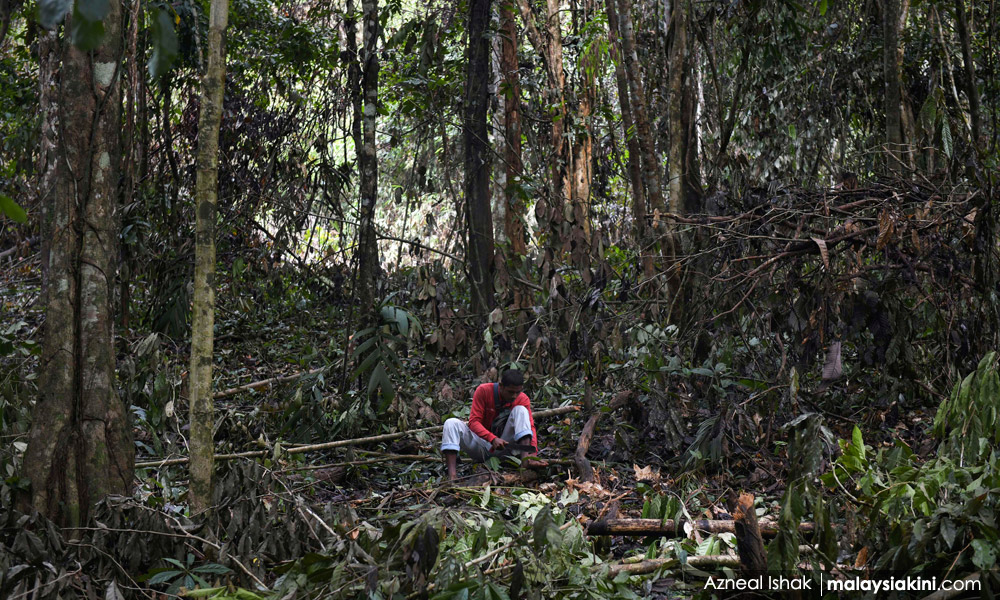
Hasmawi Along, 28, who was among the dancers during the Sewang, told Bernama that large-scale logging in their forests made it difficult for them to look for essential materials for the ritual.
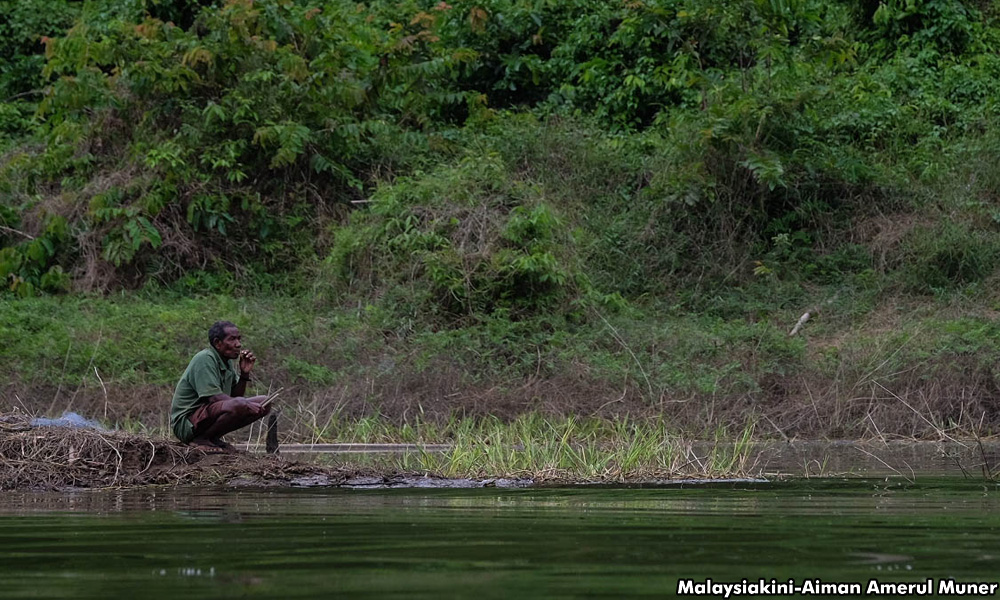
“Previously, palas leaves and flowers for Sewang were easily available, just at our own premises. Now, we are forced to walk for two hours from our village to get them.
“This is because the trees in the forests have all been felled by irresponsible loggers. They indiscriminately cut our trees, with no respect to our customary land. This is the land of our ancestors for hundreds of years,” he said, adding that logging in the surrounding areas of Kampung Kaloi started about 10 years ago.
Hasmawi expressed concern that one day the Temiar community’s identity may be wiped out and their customs and traditions will no longer be passed down to their future generation due to uncontrolled logging.
“When forests are cut, we lose our identity and our main source of livelihood.
“We want our future generation to inherit our identity and culture, at least let them know the uniqueness of our heritage as practised by our ancestors more than 100 years ago,” he said.
Sharing similar sentiments as other villagers, Hasmawi urged the government to control these large-scale logging activities by gazetting the permanent forest reserve.
/file/1295/2a2904f61c3a3d065400fcb1b62c00ac.jpeg)


Are you sure you want to delete this comment?
This action cannot be undone.