




Sensitive issues could be dropped from FTA talks
Malaysia today said that intractable "no-go" areas could be dropped from free trade talks with the United States as Washington races to strike a deal before a March deadline.
Malaysia today said that intractable "no-go" areas could be dropped from free trade talks with the United States as Washington races to strike a deal before a March deadline.
The two sides are embroiled in a critical fifth round of talks in the resort town of Kota Kinabalu in Sabah which are due to conclude on Friday.
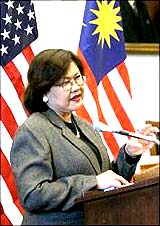 Trade Minister Rafidah Aziz said she and her counterpart, US Trade Representative Susan Schwab, decided during phone calls on Wednesday to list areas where talks had broken down to see if any progress could be made.
"The agreement is for me and Susan to list our own snags, our own difficulties, and then to see which of these snags can be negotiated again," Rafidah told reporters.
With "this approach, I feel that negotiations will be able to continue," she said.
Rafidah said she had alerted Schwab to areas where talks were "at a standstill" because Malaysia could not agree to US requests, positions which Schwab understood "very well."
Both sides will examine "how much we can tolerate" in further talks, and could decide to ditch areas where either side cannot agree, she said.
"Susan and I will decide. And if it's dropped from the table, it's fine."
Critical congressman
Rafidah said difficult areas included Malaysian government procurement, where the US is seeking priority treatment in the awarding of international tenders for expensive government projects.
Negotiators are also struggling to agree on US access to Malaysia's protected financial services industry while Malaysia has also refused to negotiate on imports of rice and tobacco, she said.
Besides protracted wrangling, the free trade deal has also been overshadowed by calls from a senior US congressman to suspend talks after a Malaysian firm forged a 16-billion dollar energy deal with US foe, Iran.
But Rafidah, who last week herself threatened to halt the talks over the issue, said Schwab had stressed the US government was not linked to the criticisms.
"I'm glad to say I have got a letter in writing, in black and white from Susan, to say that that comment by ... that congressman does not matter at all," she said.
Washington wants to have an agreement on the table in time to push it through Congress before US President George W Bush's trade authority, which allows deals to be fast-tracked, expires on July 1.


