


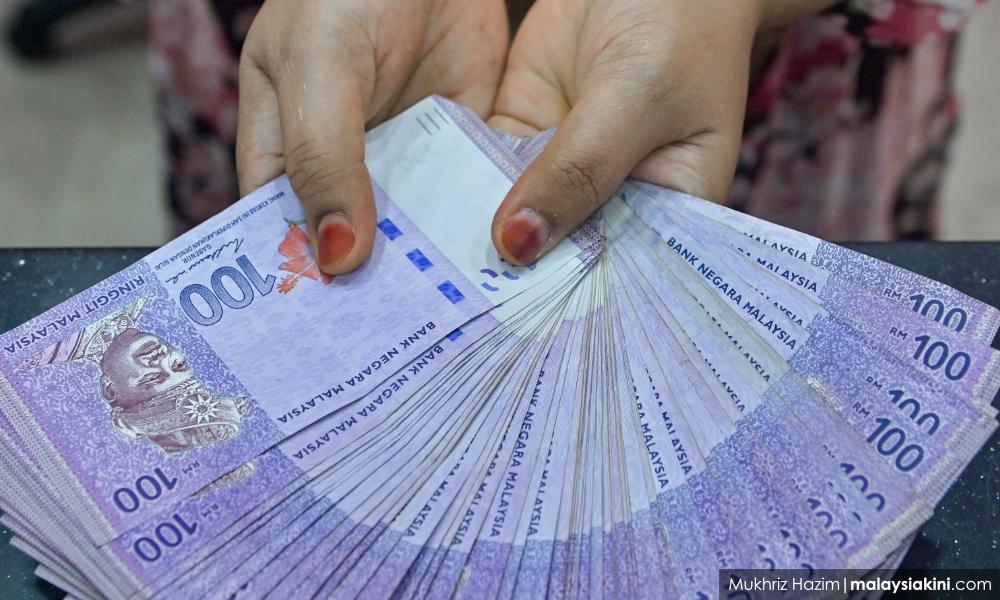

Minister: Govt's proactive monetary policy ensures stable ringgit
He said the government, through Bank Negara Malaysia (BNM), maintains domestic financial stability by implementing prudent monetary policies.
This includes minimising the...
The government proactively ensures the stability of the ringgit and financial markets, said Finance Minister Tengku Zafrul Abdul Aziz at the Dewan Negara today.
He said the government, through Bank Negara Malaysia (BNM), maintains domestic financial stability by implementing prudent monetary policies.
This includes minimising the exposure of the federal government’s debt to the risk of currency fluctuations through the setting of foreign loan limits, he said.
“We also ensure the flexible exchange policy remains Malaysia’s first line of defence to absorb external shocks, while at the same time, ensuring that domestic lending activities continue to be supported,” he said.
Zafrul (above) was replying to a supplementary question by Senator Jefridin Atan on the government’s measures to minimise the impact of aggressive monetary tightening measures by the United States Federal Reserve (Fed).
In addition, the minister noted that the government also maintains the strength of BNM’s international reserves estimated at US$109 billion (RM484 billion) as a liquidity buffer.
This, he said, is to ensure an orderly adjustment of the ringgit’s exchange rate, especially during periods of large and uncertain capital flows, he said.
“Lastly, we must ensure that Malaysia’s banking institutions remain resilient against external and domestic risks through robust risk management practices,” Zafrul said.
The value of the ringgit decreased by 6.5 percent against the US dollar from January to Aug 9, 2022, in line with the movement of regional currencies.
The minister said other national currencies also depreciated at a higher rate compared to the US dollar in the same period.
“This includes countries in Asia such as South Korea, which has fallen by nine percent, the United Kingdom, Europe, Japan, as well as countries that are closer to us such as the Philippines,” he said.
Zafrul said the ringgit’s value performance needs to be looked at holistically and opined that, on average, the ringgit’s exchange rate is not too affected compared to Malaysia’s trading partner currencies.
Inflationary pressures
He answered additional questions about external factors that caused the value of the ringgit to continually decline as well as on the strengthening factor of the US dollar.
“Firstly, the sudden increase in inflationary pressures especially in the United States, where we can see inflation rising by approximately nine percent.
“This prompted the Fed as well as several central banks to increase policy rates faster which can lead to the financial environment being tighter globally.
“The second factor is the geo-political situation in Russia and Ukraine, and the third factor is the economic slowdown in China, because China is Malaysia’s main trading partner and its conservative Covid-19 policy has caused the supply chain to be somewhat disrupted,” he said.
- Bernama






Are you sure you want to delete this comment?
This action cannot be undone.