




Thailand U-turn on rebel talks
Thailand said today it was willing to hold talks with separatists in the kingdom's Muslim-majority south with the help of neighbouring Malaysia, reversing an earlier statement denying such plans.
Earlier, the foreign ministry had denied that Thailand was planning to hold talks with Thai separatists after Malaysian Prime Minister Abdullah Ahmad Badawi offered to help mediate.
Thailand said today it was willing to hold talks with separatists in the kingdom's Muslim-majority south with the help of neighbouring Malaysia, reversing an earlier statement denying such plans.
Earlier, the foreign ministry had denied that Thailand was planning to hold talks with Thai separatists after Malaysian Prime Minister Abdullah Ahmad Badawi offered to help mediate.
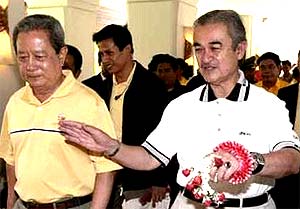 But Thailand's army-installed Prime Minister Surayud Chulanont, who met with Abdullah in Bangkok on Monday, said his government was now ready for talks with Malaysia acting as an intermediary.
"We have agreed that there should be talks if Malaysia can help Thailand figure out which groups we should hold talks with, and if such talks can produce substantial and effective results," the premier told reporters.
"We don't want to talk about rice with mango farmers. That is, we want to talk with the right people who can yield (results)," he said, but declined to give further details.
Little progress
The separatist insurgency was one of the key topics during discussions between Surayud and Abdullah, who vowed to cooperate with Thailand to resolve the violence, which has killed more than 1,900 people since 2004.
The southern insurgency strained ties between mainly Buddhist Thailand and Muslim-majority Malaysia during the government of Thailand's deposed prime minister Thaksin Shinawatra.
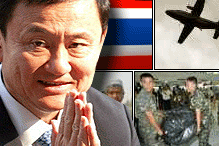 Thaksin had accused Malaysia of failing to prevent insurgents from crossing the border to stage attacks.
But since Thaksin was ousted in a coup in September, Surayud has made a priority of improving relations with Malaysia and curbing the unrest in the three southernmost provinces.
So far his efforts - which included an offer last year to hold talks with the militants - have yielded little progress, and violence has surged in the last four months.
Doubt over control
The shadowy militants never claim responsibility for the attacks, leaving officials uncertain about who exactly they should talk to.
The restive region has a history of separatist violence ever since Thailand annexed what was an autonomous ethnic Malay sultanate a century ago.
But analysts doubt that previous generations of separatists retain much operational control over fighters in the latest conflict.


