


/file/publisher-c1a3f893382d2b2f8a9aa22a654d9c97/2022/11/d9a17abfa454f520dbb7a80d057ba6df.jpg)

‘Gotong-royong’ delivers record overseas ballot
In the ‘beginning’, if you are living abroad and wanted to vote in Malaysia, you would have to fly back home. If you were in Singapore, or southern Thailand, you could just hit the road. That was more than 10 years ago.
Now, people living abroad can make an online visit to Malaysia’s Election Commission, or Suruhanjaya Pilihan Raya Malaysia (SPR), to participate as a voter.
While internet friendliness represents a genuine change at SPR, voters’ serial numbers had to be handwritten on the ballot envelopes distributed worldwide two weeks ago by private courier contractors. It’s a cumbersome system, given to human error, but it’s cheaper than a bus ride from Golok to Kuala Lumpur, and a return ticket from Toronto, Canada. You can do it all on a computer, and His Majesty’s government pays a courier company to come to your door.
It wasn’t always like this, and while ‘SPR 2.0’ is far from first-rate, Malaysian voters as well as NGOs at home and abroad have already brought historic change. Consider that, up to GE13, the law restricted the overseas ballot to a select group of citizens living abroad, and these were, by far, students holding Malaysian government scholarships, military personnel, government servants (we never did call them ‘public servants’, did we?) and their spouses.
Slightly more than 10 years ago, a group of Malaysians in the United Kingdom with no government links took SPR to court to tear down that particular wall of segregation. They lived far from Malaysia, and they wanted to vote.
The plaintiffs fought in the name of all Malaysians abroad who were eligible to vote, and their right to be part of the overseas ballot. The legal argument was clear-cut: SPR was discriminating against a huge and growing swathe of Malaysians overseas. Before a decision could be handed down, SPR conceded that it must and would change its policy. The private citizens’ victory was nevertheless too late to be embodied in SPR’s rollout for GE13.
In that court case, a homegrown Bersih and MOV (My Overseas Vote) should also be credited with fanning a flame into the fire of change, providing legal support and guidance to the plaintiffs.
A forecast record-setting overseas ballot for GE15 didn’t just happen.
Global Bersih, Vote Malaysia (VM), Undi18, the Global Malaysia Network (GMN), Amsa (the Australian, Malaysian, Singaporean Association) and other NGOs have together pulled it off with vision, determination, a willingness to work together and too many volunteer-hours to count.
Across Australia, the digital footprints of the Malaysian Students’ Council of Australia (Masca) are virtually everywhere. The council has been working with NGOs like Undi18 and Global Bersih to build the diaspora vote.
Masca used a map of the world to create a ‘live’ infographic that listed every city and collection point that had been registered with the student council. It developed digital posters of individual collection points, with dates and times, which were then posted on community pages online. New posters were produced within five minutes for desperate city coordinators and collection agents.
Ei Lyn, 24, is Masca’s advocacy director. Jon Lee, of Malaysian Student Global Alliances, helped her to envision a different Malaysia, with elections at the centre.
“I was an international student in Adelaide in 2017 feeling homesick,” Ei Lyn says. “Masca gave me a lot of comfort, and I was very grateful. This is giving...
In the ‘beginning’, if you are living abroad and wanted to vote in Malaysia, you would have to fly back home. If you were in Singapore, or southern Thailand, you could just hit the road. That was more than 10 years ago.
Now, people living abroad can make an online visit to Malaysia’s Election Commission, or Suruhanjaya Pilihan Raya Malaysia (SPR), to participate as a voter.
While internet friendliness represents a genuine change at SPR, voters’ serial numbers had to be handwritten on the ballot envelopes distributed worldwide two weeks ago by private courier contractors. It’s a cumbersome system, given to human error, but it’s cheaper than a bus ride from Golok to Kuala Lumpur, and a return ticket from Toronto, Canada. You can do it all on a computer, and His Majesty’s government pays a courier company to come to your door.
It wasn’t always like this, and while ‘SPR 2.0’ is far from first-rate, Malaysian voters as well as NGOs at home and abroad have already brought historic change. Consider that, up to GE13, the law restricted the overseas ballot to a select group of citizens living abroad, and these were, by far, students holding Malaysian government scholarships, military personnel, government servants (we never did call them ‘public servants’, did we?) and their spouses.
Slightly more than 10 years ago, a group of Malaysians in the United Kingdom with no government links took SPR to court to tear down that particular wall of segregation. They lived far from Malaysia, and they wanted to vote.
The plaintiffs fought in the name of all Malaysians abroad who were eligible to vote, and their right to be part of the overseas ballot. The legal argument was clear-cut: SPR was discriminating against a huge and growing swathe of Malaysians overseas. Before a decision could be handed down, SPR conceded that it must and would change its policy. The private citizens’ victory was nevertheless too late to be embodied in SPR’s rollout for GE13.
In that court case, a homegrown Bersih and MOV (My Overseas Vote) should also be credited with fanning a flame into the fire of change, providing legal support and guidance to the plaintiffs.
‘Live’ infographic
A forecast record-setting overseas ballot for GE15 didn’t just happen.
Global Bersih, Vote Malaysia (VM), Undi18, the Global Malaysia Network (GMN), Amsa (the Australian, Malaysian, Singaporean Association) and other NGOs have together pulled it off with vision, determination, a willingness to work together and too many volunteer-hours to count.
Across Australia, the digital footprints of the Malaysian Students’ Council of Australia (Masca) are virtually everywhere. The council has been working with NGOs like Undi18 and Global Bersih to build the diaspora vote.
Masca used a map of the world to create a ‘live’ infographic that listed every city and collection point that had been registered with the student council. It developed digital posters of individual collection points, with dates and times, which were then posted on community pages online. New posters were produced within five minutes for desperate city coordinators and collection agents.
Ei Lyn, 24, is Masca’s advocacy director. Jon Lee, of Malaysian Student Global Alliances, helped her to envision a different Malaysia, with elections at the centre.
“I was an international student in Adelaide in 2017 feeling homesick,” Ei Lyn says. “Masca gave me a lot of comfort, and I was very grateful. This is giving back.”
She has been part of an integral guidance system for Australia’s 19 flyers who are carrying the ballots home.
Elsewhere, Malaysians overseas are simply not accepting that voting from abroad belongs in the too-hard or no-point basket.
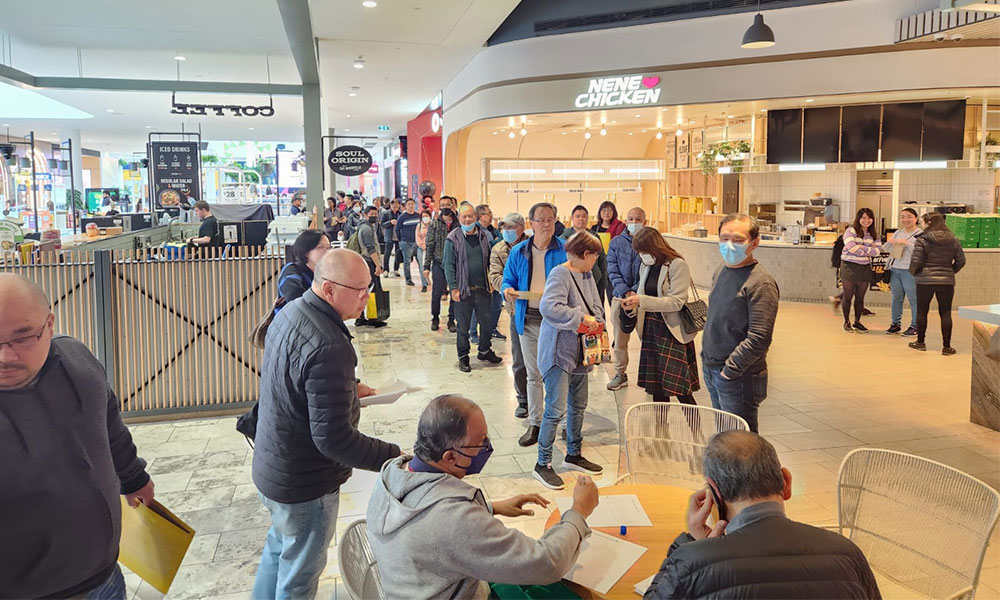
A Malaysian woman in Dubbo, Australia, drove nearly 400km to deliver her ballot to a collection agent at one of the Sydney locations set up to collect overseas ballots, and provide witnesses in the process.
Another dropped off her ballot only yesterday morning, at Stamford Hotel, near Sydney’s airport. A volunteer who was to fly back to Malaysia had been housed there by the airline he was to fly with because his flight had been delayed overnight. Patrick Choy picked up the ballot at Stamford’s driveway, minutes before he left for the airport.

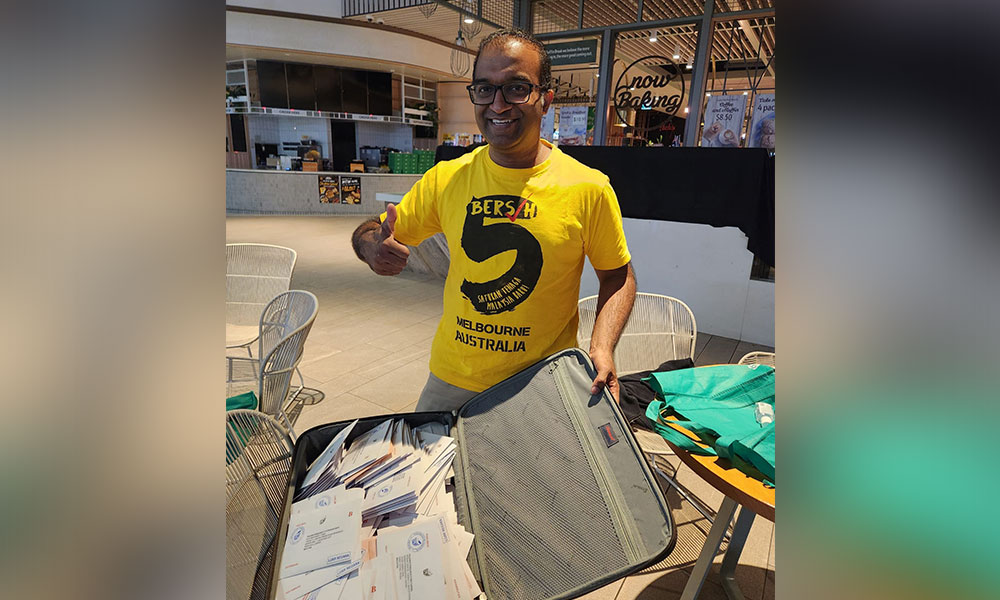
An elderly Malaysian from home, who had come to Melbourne for the birth of a grandchild, registered to be an overseas voter, along with his wife. He then proceeded to help his son, Praveen Nagappan, of Saya Anak Bangsa Malaysia in Australia, and volunteered at ballot collection centres. Praveen’s father, Dr Nagappan, and his wife flew in from Penang.
Similar stories are unfolding in cities across the world. Social media platforms are bursting with comments to Get Out the Vote (GOTV). NGOs are fighting off rumours that sealed ballot envelopes will be opened to check for currency smuggling. People are stressing over whether to seal the ballot envelope with glue or cellotape.
‘Collective voice of the good’
The fact is, Malaysia’s diaspora has worked long and hard, striking at the fault lines in the country’s electoral system for years.
Dr Yolanda Augustin, 42, was among the people who took SPR to court to open the overseas ballot to all Malaysians abroad who were eligible to vote.
The clinical oncologist and Global Bersih activist refers to the “collective voice of the good, the kind and the brave who see a Malaysia built on good governance, and evidence-based transformative policies that ensure all Malaysians are cared for in terms of healthcare, education, social and economic empowerment”.
Yolanda sees a country “where compassion and respect for human dignity are upheld and we are able to truly live the Malaysian experience together”.
Syed Muhammad Fathi, 23, the chair of Masca New South Wales, is the youngest Malaysian in Sydney’s GE15 coordinating group.
Fathi is voting for the first time. “I have felt a need to make GE15 special, both for myself and for any other first-time voter in Sydney. My Masca team believes in the right to vote, which represents the people’s power. The youth are more aware of the current political landscape of Malaysia, and this is when each of us can make a choice that matters for the whole country.”
Running through hoops
One Sydney-based voter said she had to “run through several hoops” with the courier service to obtain her ballot paper. After several days, she managed to make the collection, and her ballot has most likely reached the Batu counting station as you read this.
When she held the brown envelope addressed to her emblazoned with the words ‘Urusan Seri Paduka Baginda’, her mind immediately flashed to the nation’s first prime minister, Tunku Abdul Rahman.
“Our forefathers fought so hard for the freedoms we have today. We need to protect it… we need to preserve it,” she says.
“I don’t live in Malaysia, but this is for all my fellow Malaysians, the generations to come.
“Voting is a privilege not to be taken lightly. We need to honour it and go out and vote en masse on Saturday. This is how I understand ‘Jasa kepada negara’.”
Sydney voter Patricia Goh says: “Last election, I carried the votes home and toppled a government. This time, we need to see a legitimate government and not a government we didn't vote for.”
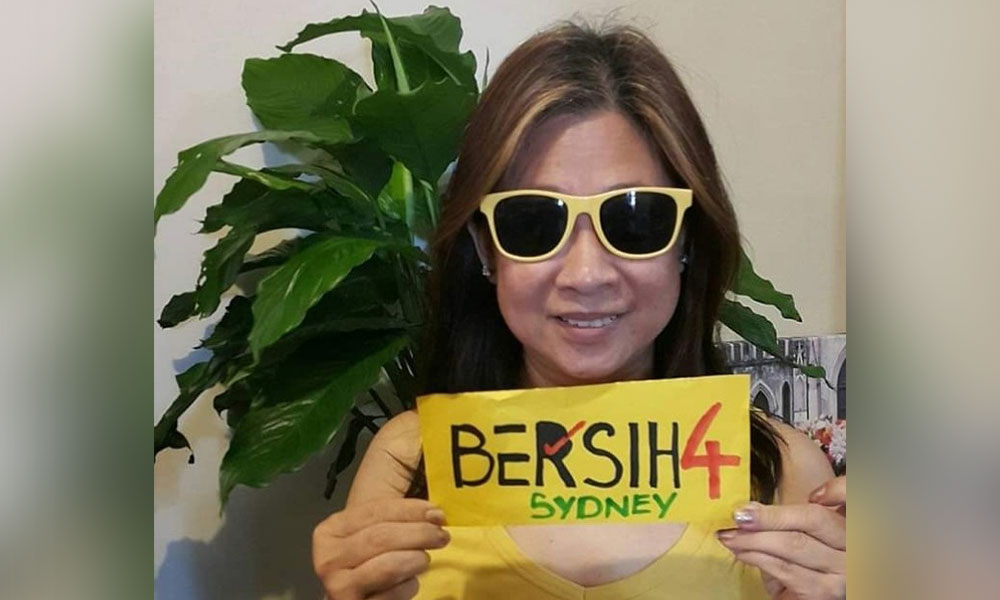
Nirmala Devi Windgaetter, Global Bersih’s secretary-general, speaking from Berlin, says: “I believe Malaysians deserve better. We have come so far and there is no way back anymore. We just need to move forward.
“There are many special memories - nothing beats the ‘semangat’ of overseas Malaysians trying to get every single vote back home.”
Bala Chelliah, a former Global Bersih president, lives in Geneva. “I realised we had done a lot in 10 years. Reform is a journey. You can’t get it all done in one election. When (former prime minister) Najib (Abdul Razak) was jailed, it was a great motivator.
“The exciting thing is that so many voters who turned up with their ballots were young.”
Young voters
That ‘youth’ sector is also serving up strong leadership. Thomson Ch’ng, 33, Amsa president, lives in Sydney. “Democracy requires participation by citizens and elections are a big part of democracy,” he says.
“The work of parliamentarians matters, and it has a real impact in our life.”
Motivation at its best is a two-way street, and while Amsa has worked to GOTV, Ch’ng has been moved in turn - “Seeing hundreds of Malaysian overseas voters braving the rain, turn up and hand over their ballot papers at Sydney Kopitiam Cafe (one of the collection points).”
Melbourne’s Praveen Nagappan (Saya Anak Bangsa Malaysia Australia and Global Bersih’s first treasurer) often asks himself why he keeps getting drawn back into this activism. “I cannot draw a line between life and Malaysia,” he says.
“Malaysia is my life. It's as if Malaysia is just another bodily function of mine. It’s like, why do I breathe - I just do.
“Some might ask, then why do you live somewhere else?” For Praveen, “there is no room in this world for siloed identities. And this is where I find myself, a Malaysian living and breathing Malaysia, residing overseas, proudly carrying the Malaysian flag. I and my friends exude this energy about Malaysia here, and the diaspora fuels us.
“The sense of gotong-royong is everywhere. It's as if we were all from one ‘taman’ meeting at the ‘rukun tetanga’ family day. New friendships were definitely made thanks to GE15 postal voting!”
Then, there is Nagappan, Praveen’s father. “My dad is here with me to help out with all this. Although I've been involved with Bersih in Australia for a little over 10 years, my dad usually avoids drawing attention to this.
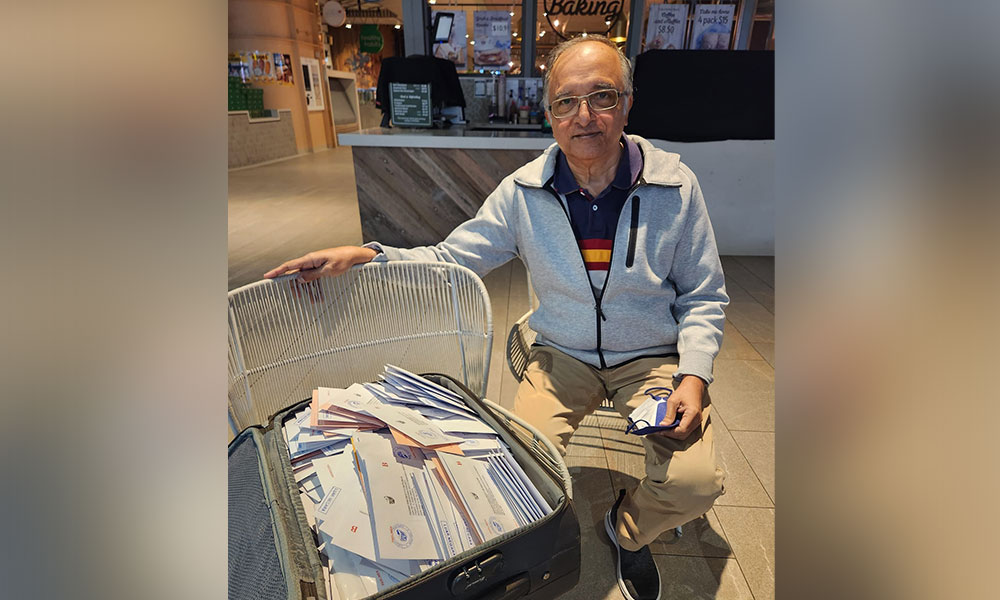
“But this time, my parents are visiting us, awaiting the arrival of another grandchild. Dad persevered and got himself and my mom registered for a postal ballot. He's also working hard with the rest of the guys at our ballot collection centre. Proud to see my dad lah.”
‘Every vote is going to count’
David Teoh, 37, was in Melbourne studying architecture more than 10 years ago, when he set up an email discussion group, bringing together Malaysians from various countries who were discussing Malaysian politics, canvassing how they may work together to help. This was years before WhatsApp, Zoom and Tik-Tok.
The little email group brought strangers to the table, with a common purpose. They would occasionally Skype. Through thick and thin, the group blossomed, and decided to create the entity that we now call Global Bersih.
David says: “The seeds planted a decade ago by a small group of overseas Malaysians continue to bear fruit three election cycles later.
“The policy decision to enfranchise Malaysians living overseas is an empowering message that will augur well for the country’s future. In effect, we are saying to them, ‘You are part of our Malaysian family, we need you.’
“I’m very grateful to the volunteers at Global Bersih who have continued to carry this torch and for being a tremendous contribution to Malaysia.”
Perhaps Thomas Fann, Bersih’s chair in Malaysia, best encapsulates that vital connection between voting and the future.
“All elections are important, but this election is critical,” Fann says, in a Nov 17 video appeal to voters.
“Malaysia has been a one-party state for six decades, but we have evolved into a multi-party democracy - because we came out to vote in the last few GEs.
“We have proved that change is possible. By voting, we take back our country from the corrupt. Every vote is going to count, and every voice must be heard.
“Don’t let others decide your future. Vote to shape the future you want on 19 November.”
COMMENT | Malaysia’s diaspora sends tens of thousands of votes
WILLIAM de CRUZ was Global Bersih’s first president. He is based in Australia.
/file/publisher-c1a3f893382d2b2f8a9aa22a654d9c97/2022/11/92bc180c69b73d40b4f68a6241c3644a.jpg)
/file/publisher-c1a3f893382d2b2f8a9aa22a654d9c97/2022/11/d528881daa204900d30ce23ddd3466ef.jpg)
/file/publisher-c1a3f893382d2b2f8a9aa22a654d9c97/2022/03/a57eb4d357a75a4a068e885b2d88296c.jpg)
/file/publisher-c1a3f893382d2b2f8a9aa22a654d9c97/2022/11/39075d6058709daab34c95f1e0b08929.jpg)
/file/publisher-c1a3f893382d2b2f8a9aa22a654d9c97/2022/10/5489aaa2d919d6f2bd7f6e5bf046af64.jpg)


Are you sure you want to delete this comment?
This action cannot be undone.