




Ethnic woes in UNHCR
A Burmese refugee who served as an interpreter with the United Nations High Commissioner for Refugees (UNHCR) office in Kuala Lumpur accused his former colleagues of discrimination.
A Burmese refugee who served as an interpreter with the United Nations High Commissioner for Refugees (UNHCR) office in Kuala Lumpur accused his former colleagues of discrimination.
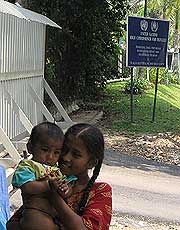 Mohd Sadek Ali Hussin, who volunteered with the agency for four months until January this year, claimed that Burmese asylum-seekers who do not belong to the Chin ethnic community are sidelined by the UNHCR.
He said the discrimination occurs in terms of obtaining assistance for medical treatment, registering for refugee status and being accepted for resettlement in third countries.
Sadek told malaysiakini that he himself was dissuaded from interviewing Rohingyas when working as an interpreter.
According to him, of the 200 or so asylum-seekers that UNHCR interpreters meet daily, only about 20 to 30 are Rohingyas and other non-Chin Burmese.
"By the end of the day, more than 80 percent of those who enter the UNHCR compound for interviews are Chins.
"It's mostly Chins who get registered as refugees, and it's mostly Chins who get interviewed and accepted for resettlement in third countries," he said.
Sadek, who now teaches in an 'underground' school for Rohingya refugee children, and about 100 other Burmese held a brief demonstration last Thursday calling for the UNHCR to abide by its mandate to accord equal treatment and protection to all Burmese asylum-seekers.
"We also called on the agency to abide by the Universal Declaration of Human Rights on equal treatment," he said, in reference to the memorandum which the protestors submitted to the UNHCR.
Allegations denied
 However, the UN agency dismissed the allegations.
Its spokesperson Yante Ismail said its workers are doing their "utmost to protect and assist genuine refugees."
She said any prioritisation or decisions to grant interviews to asylum-seekers and refugees are not in the hands of individuals but made through a specific process - with checks and balances - by a team of UNHCR staff.
"Such decisions are certainly not decided by volunteer interpreters who are not employers and whose conduct are strictly monitored," she added when contacted.
The issues raised by Sadek reflect, in part, a misunderstanding of and a grievance with the factors influencing how refugees are accepted for resettlement in third countries.
For example, the Chin are more likely to be resettled in European countries compared to the Rohingya because of the perception that the latter - being Muslim - would have more cultural affiliations with Malaysia.
Many in the international community feel that Malaysia is therefore more fitting for the temporary settlement of Rohingya asylum seekers.
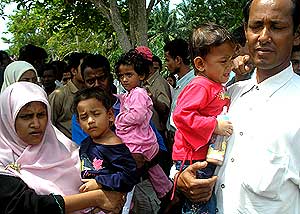 "Resettlement countries have however consistently pointed out that Rohingyas have been in Malaysia for a long time, many speak Bahasa Malaysa and so the gvernment has announced that they will grant them temporary stay in Malaysia.
"For others with no close links to Malaysia, the long-term solution is finding a new home in a third country," said Yante.
She stressed, however, that "such decisions to accept - or otherwise - refugees for resettlement is always determined by the various resettlement countries and not by UNHCR."
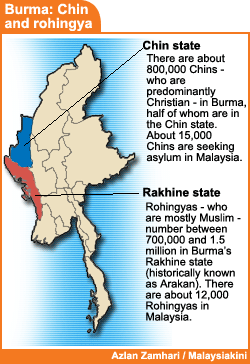
There are some 15,000 Chin and 12,000 Rohingya asylum seekers in Malaysia.


Are you sure you want to delete this comment?
This action cannot be undone.