




Penang heritage buildings on SOS call
The Penang government should implement pro-active policies, including applying tighter heritage laws and provide financial incentives to prevent the rotting of pre-war structures and heritage buildings in the state.
The Penang government should implement pro-active policies, including applying tighter heritage laws and provide financial incentives to prevent the rotting of pre-war structures and heritage buildings in the state.
 Penang Heritage Trust (PHT) president Dr Choong Sim Poey lamented that owners have neglected many pre-war buildings to rot over the past few years, especially in George Town, due to mainly financial constraint and lack of legal mechanism to punish their negligence.
He said neglected buildings have fast become an eyesore sight in George Town and other urban areas in Penang.
"The state government should implement strict heritage laws to prevent the rot," said Choong.
He said the government should provide financial incentives, such as outright grants and tax exemptions, to encourage the owners to carry out restoration projects on their pre-war premises, which have so much heritage values.
"In Europe, pre-war and heritage building owners were given outright grants and tax incentives to carry out restoration projects.
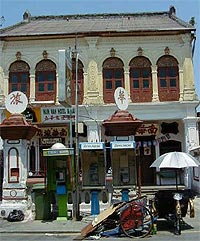 "Penang should emulate it if the state government was serious in getting George Town listed as a world heritage city under the Unesco World Heritage Listing," he told malaysiakini.
At present, the state government has not implemented any laws to govern heritage structures neither has it provided incentives to owners to restore and conserve their pre-war premises.
The non-existent of a comprehensive heritage policy to restore and preserve pre-war buildings in Penang is the main reasons behind Unesco's rejection to George Town application to be listed as a heritage city.
The impact of the Act
Penang main tourist attraction has been its heritage buildings, mostly built in Anglo Indian architectures.
During pre-1997 years, Penang has approximately 12,500 pre-war buildings, the highest in the country, including about 10,000 premises in George Town.
The rotting and demolition of pre-war buildings began when the Control of Rent (Repeal) Act 1997 was implemented 10 years ago.
The local municipal tightened up their building by-laws by creating three different zones to safeguard the pre-war buildings.
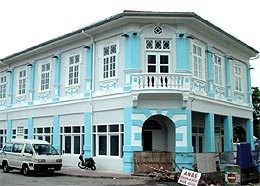 Under the local government by-laws, owners in inner George Town are prevented from demolishing the buildings and rebuilding them with new structures. They can only carry out restoration projects.
Owners at the buffer zone were allowed to renovate the interior parts of their buildings while maintaining the facade of their premises.
In the outer zone, the councils apply flexibility to allowing owners to demolish pre-war structures and build new premises. Buildings with historical values are, however, prevented from being demolished.
The local government by-laws hindered owners from replacing their pre-war premises with different structures in inner George Town, although several owners have had defied the law.
Due to financial constraint, many of them did not initiate projects to restore their buildings.
A painful eyesore
This has left a trail of vacant, rotting and crumbling pre-war buildings in the heart of the city.
The buildings have become hubs for drug addicts and a concrete farm for vegetation.
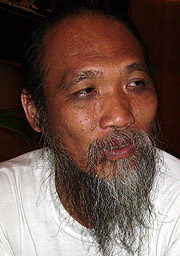 "The sight of vacant, crumbling and rotting pre-war buildings has become an eyesore in George Town," said Save Ourselves (Sos) secretary BK Ong, while pointing out that the present law was virtually hapless to prevent the negligence.
"The authorities are powerless to prevent the owners from neglecting their buildings.
"The state government should tighten the laws and, provide grants and tax exemptions on building materials as incentives to owners to restore and preserve their heritage premises.
"We should do it if we were serious in preserving our heritage," said Ong.


