




Why the fascination with 'ghost' exhibition?
news analysis Culture, Arts and Heritage Minister Dr Rais Yatim has been quoted as saying that he wants the Alam Misteri: Hantu dan Jin (World of Mystery: Ghosts and Djin) exhibition organised by the Negri Sembilan State Museum to be stopped.
news analysis Culture, Arts and Heritage Minister Dr Rais Yatim has been quoted as saying that he wants the Alam Misteri: Hantu dan Jin (World of Mystery: Ghosts and Djin) exhibition organised by the Negri Sembilan State Museum to be stopped.
 Rais also reportedly said the exhibition is not beneficial to the community and does not contribute to development of Malaysia as a nation.
His objection has been echoed by among others including Perlis mufti Dr Mohd Asri Zainul Abidin, who said such exhibitions must be stopped because they could result in society living "in fantasy".
However, the state museum curator Shamsuddin Ahmad reportedly disagreed with the opinions of both personalities. He was quoted as saying that the exhibition is a popular one - 20,000 visitors have viewed it since it was opened on March 10, while three experts have been invited "to answer any doubts or questions the public may have on the subject".
According to news reports, the experts are Dr Jahid Sidek, a former lecturer at Universiti Malaya's Akademi Islam; Dr Mad Jantan, a lecturer with the International Islamic University; and Professor Emeritus Norhisham Wahab.
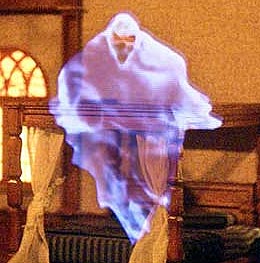 To minds that have been conditioned to challenge any authority that orders a ban on freedom of expression, the question of "why not" could certainly be raised.
Secular liberals may even suspect that there is an Islamist agenda on the part of Rais and Mohd Asri who want to exhibition stopped.
However, for a publicly-funded state museum to hold a three-month long exhibition on 'ghosts and djin' is arguably a different category of controversy.
Why doesn't the publicly-funded state museum organise exhibitions on more useful themes such as the history of the tin-mining or rubber industries; British colonisation and resistance; the Japanese invasion and occupation; or development of indigenous weaponry?
Why not exhibitions showing the change of the transportation system of Malaya/Malaysia from the use of elephants to Light Rail Transit?
What about exhibitions showing the transformation of information and communication technologies in press rooms, police stations and army camps?
Aren't these themes more concrete, real and educational than 'ghosts and djin', especially to the younger generation?
If these questions are asked and answered rationally, surely many would come to the conclusion that there is a malaise in the intellectual system of the concerned museum and curator, as well as the visitors.
Troubling dimension
Why are so many Malaysians in the 21st century interested in thinking about and wanting to see 'ghosts and djin' instead of knowing about real and concrete entities?
Why are academics and so-called 'intellectuals' willing to spend their time and energy explaining 'ghosts and djin' to the public?
If we connects the dots of the exhibition' and reports of people seeing human faces on banana trees or organising spirit marriages, surely we can strongly sense that a not-insignificant segment of society is facing psychological problems of some kind.
The more troubling dimension is that these superstitious activities are normalised or even dignified in the media and publicly-funded institutions like museums.
It is indeed time for the nation to seriously examine this dangerous trend of psychological disorientation to prevent disintegration of the modern outlook among the people on a massive scale.
As the Perlis mufti has insightfully and correctly pointed out, if the trend is left unchecked, the society could be led into "living in fantasy".
Qualified psychiatrists can certainly contribute more professionally to examination of this phenomenon in our society.


