


/file/publisher-c1a3f893382d2b2f8a9aa22a654d9c97/2020/09/1f2c42242779769773fa4da5c20a4f24.jpg)

Hadi: Nothing wrong with politicians speaking in mosques, suraus
PAS president Abdul Hadi Awang said there is nothing wrong with Muslim politicians delivering sermons in mosques or surau, pointing out they have a duty to speak up on various matters including politics.
The Perikatan Nasional deputy chairperson, who delivers weekly Friday sermons from Masjid Rusila, Marang, stressed that politics and religion in Islam are inseparable.
“Even the Prophet Muhammad SAW talks about politics in his sermons...
PAS president Abdul Hadi Awang said there is nothing wrong with Muslim politicians delivering sermons in mosques or surau, pointing out they have a duty to speak up on various matters including politics.
The Perikatan Nasional deputy chairperson, who delivers weekly Friday sermons from Masjid Rusila, Marang, stressed that politics and religion in Islam are inseparable.
“Even the Prophet Muhammad SAW talks about politics in his sermons.
“We are talking about Islam, and in politics there is Islam, so it becomes political Islam. There is nothing wrong and we have a duty to talk about it,” said the Marang MP during a press conference in Rusila yesterday.
“Something that is not right, we must speak up. Be it on the economy, politics, or others, Muslims have a duty to speak up, including to encourage good deeds and prevent vices,” said Hadi (above).
He said this in response to the ban against all politicians including parliamentarians, state assemblymembers, and senators from delivering a lecture or sermon in all mosques and surau across Terengganu.
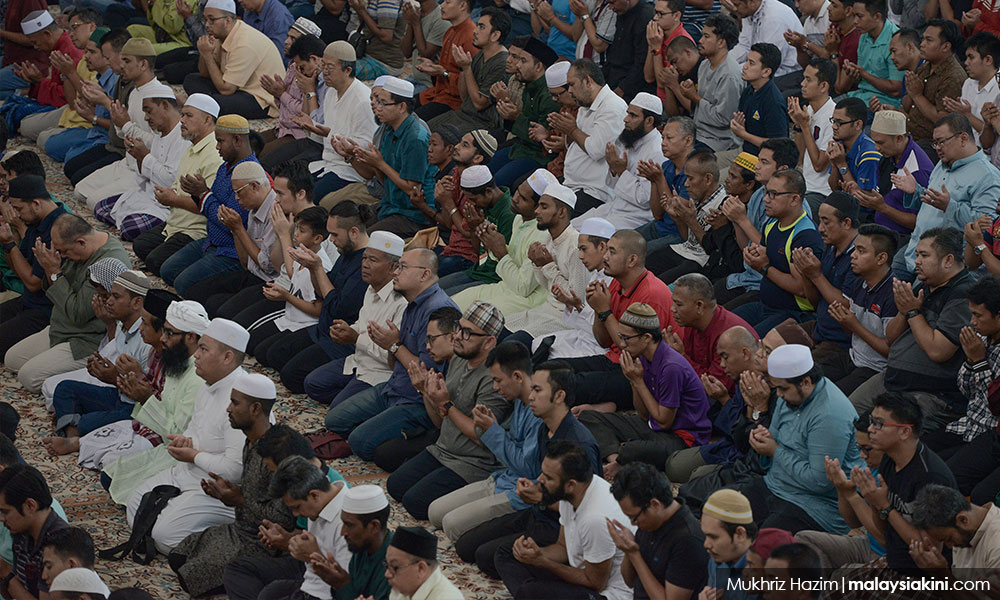
Hadi, however, said the Terengganu Malay Heritage and Islamic Religious Council had in the 1960s issued a similar directive to prevent houses of worship from being abused for partisan politics.
“I will continue my sermons as per usual in surau and mosques," added Hadi.
The religious council’s chairperson Shaikh Harun Shaikh Ismail said the ban, effective March 2, was issued after Terengganu ruler Sultan Mizan Zainal Abidin was upset that some politicians had delivered religious lectures or classes and led Friday prayers without approval.
However, Shaikh Harun said exemptions are given to politicians who have been recognised to teach or those with permission to do so from the council.
In January, Johor crown prince Tunku Ismail Sultan Ibrahim decreed that all mosques and surau in Johor were prohibited from being used as platforms to deliver political speeches.
Tunku Ismail, who is also Johor Islamic Religious Council chairperson, forbade any individual or politician from using mosques and surau as a place to discuss political issues.
/file/publisher-c1a3f893382d2b2f8a9aa22a654d9c97/2023/03/7e73eee0933feaf44ddb8315c3038e99.jpg)
/file/publisher-c1a3f893382d2b2f8a9aa22a654d9c97/2023/03/66c40d9728a367b82c0c61eb362727ab.jpg)
/file/publisher-c1a3f893382d2b2f8a9aa22a654d9c97/2023/01/78c96d6318df769e0407617fa54db389.jpg)
/file/publisher-c1a3f893382d2b2f8a9aa22a654d9c97/2023/02/d9d1c8aea612c594c324819f09c49af0.jpg)
/file/publisher-c1a3f893382d2b2f8a9aa22a654d9c97/2023/03/47b43820b081e10922cf8983bb3b7bb2.jpg)
/file/1328/3fdbf4d7f300cc0d180073d2fcbcb11e.jpeg)
/file/publisher-c1a3f893382d2b2f8a9aa22a654d9c97/2019/10/9cf4528d0009551fbcb1ba6e400049ce.jpg)


Are you sure you want to delete this comment?
This action cannot be undone.