




Speedy decisions needed on halal goods
Islamic scholars and businesses must speed up halal certification on products as technology advances, or risk losing a market worth over 600 billion dollars, the Prime Minister warned today.
Islamic scholars and businesses must speed up halal certification on products as technology advances, or risk losing a market worth over 600 billion dollars, the Prime Minister warned today.
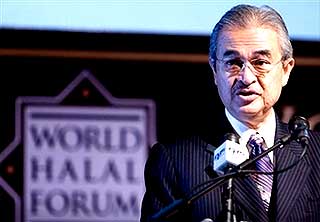 Abdullah Ahmad Badawi said the world's population of 1.6 billion Muslims are a "captive market" for halal products - those deemed permissible under Islam.
But rapid advancements in technology and changes such as the introduction of genetically modified food are challenging definitions and standards over what is halal, he said.
"There needs to be a 'musyawarah' or meeting of minds among Muslim jurists, scientists and business leaders on how to further develop the global halal industry," Abdullah told business leaders at the opening of the World Halal Forum in Kuala Lumpur.
"If not, we will run the risk of being left behind and miss out on the lucrative potential offered by the halal sector," he said in a keynote speech.
"If Islamic judgements cannot be made quickly and accurately on the questions that the industry poses, then halal integrity may become obsolete and eventually falter. We cannot and must not allow this to happen."
Under the concept of halal - meaning "permissible" in Arabic - pork and its by-products, alcohol and animals not slaughtered according to Koranic procedures are all "haram" or forbidden.
Duty for Muslims
Applying halal standards stretches beyond food to include products such as cosmetics, which may contain animal-derived ingredients, and conditions under which products are prepared and stored.
Abdullah, also the chair of the 57-nation Organisation of the Islamic Conference, said it was a "duty for Muslims" to develop the halal sector.
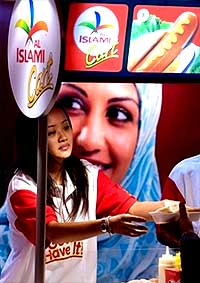 "I would like to call on the leading Muslim nations in particular to increase their investments into the halal sector," he said.
Mainly Muslim Malaysia is trying to position itself as a global hub for the halal industry, and organisers of the World Halal Forum said some 900 participants from 40 countries had registered for the event.
Key among issues being grappled with is the pressing need for a standardised form of certification of halal products, which officials say is hampering development of the industry.
Differing standards across Muslim countries and differences of religious interpretation are confusing companies, forcing them to seek halal certification for products in several countries, they say.


