


/file/publisher-c1a3f893382d2b2f8a9aa22a654d9c97/2023/09/a6ecbecb1f631d1b504674858c921ac4.jpg)

Mounting hospital bills lead to stateless mum-baby murder-suicide
This is Part 3 of a six-part Malaysia Day series on the issue of statelessness in the country.
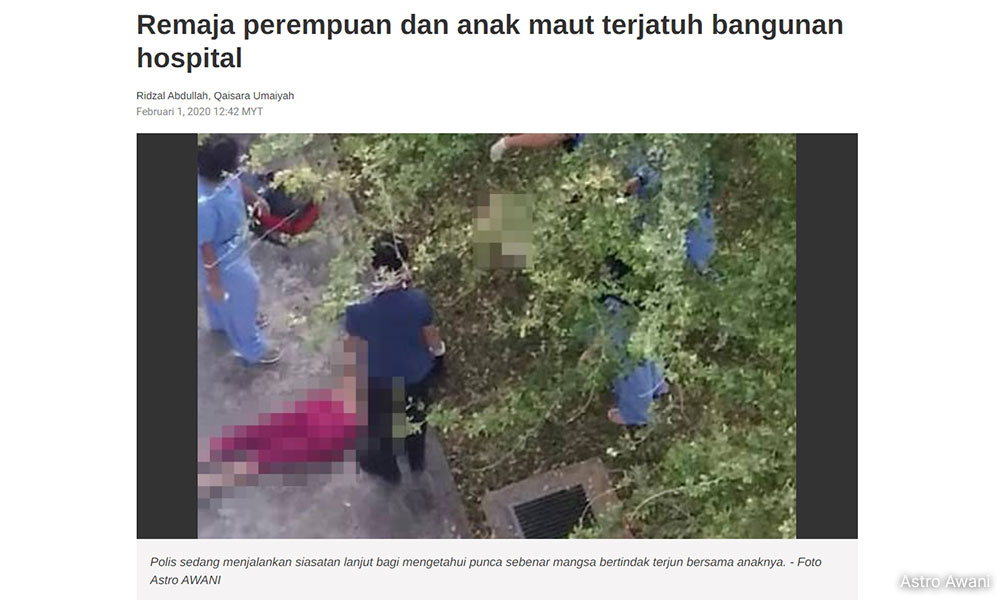
On Feb 1, 2020, a teen mother paced the floor of Lahad Datu Hospital.
Her five-month-old baby had been hospitalised for 11 days for a bacterial infection and her indigenous Bajau Laut family could not afford the hospital bills.
Even though they were natives of the state, they did not have documentation to prove citizenship and could not access subsidised healthcare, even in public hospitals.
On that day, the hospital bill amounted to more than RM3,000, and bill collectors were demanding payment.
Distressed, the young mother cradled her infant, freshly off the ventilator. She started pacing the hospital floor and told hospital staff she was heading to the toilet.
Not long after, the mother and her baby were found dead...
This is Part 3 of a six-part Malaysia Day series on the issue of statelessness in the country.
On Feb 1, 2020, a teen mother paced the floor of Lahad Datu Hospital.
Her five-month-old baby had been hospitalised for 11 days for a bacterial infection and her indigenous Bajau Laut family could not afford the hospital bills.
Even though they were natives of the state, they did not have documentation to prove citizenship and could not access subsidised healthcare, even in public hospitals.
On that day, the hospital bill amounted to more than RM3,000, and bill collectors were demanding payment.
Distressed, the young mother cradled her infant, freshly off the ventilator. She started pacing the hospital floor and told hospital staff she was heading to the toilet.
Not long after, the mother and her baby were found dead on a grassy patch next to the building. The incident was described by the authorities as a murder-suicide.
Their tragic deaths barely made a blip on the national conscience.
Worse, the circumstances that led to their deaths repeat each time a stateless Bajau Laut person seeks medical attention at the Lahad Datu Hospital.
Fear of seeking medical treatment
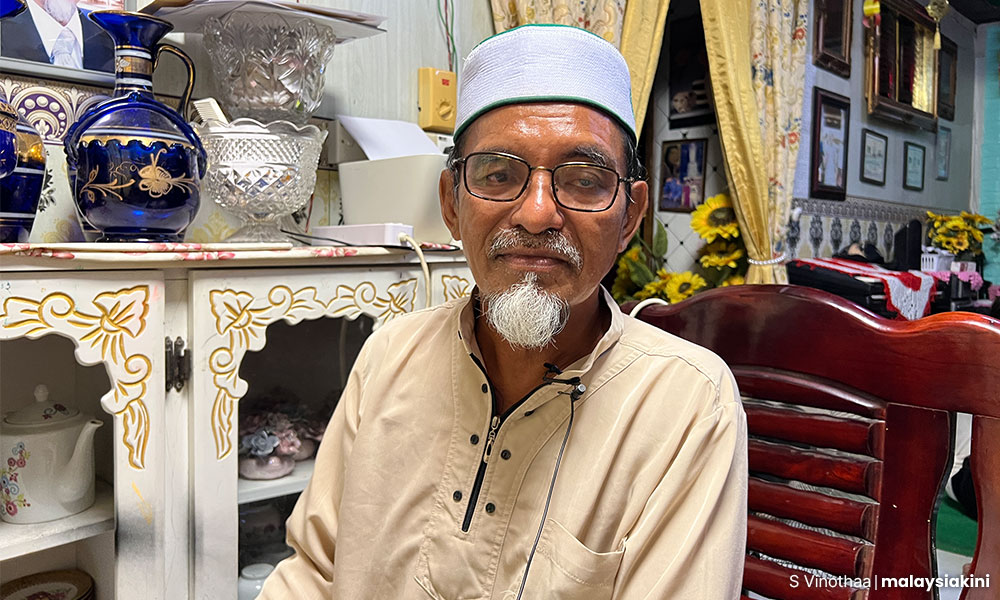
Mohd Hassan Garang, 64, was the chief of Kampung Panji, where the young couple lived, before the tragedy.
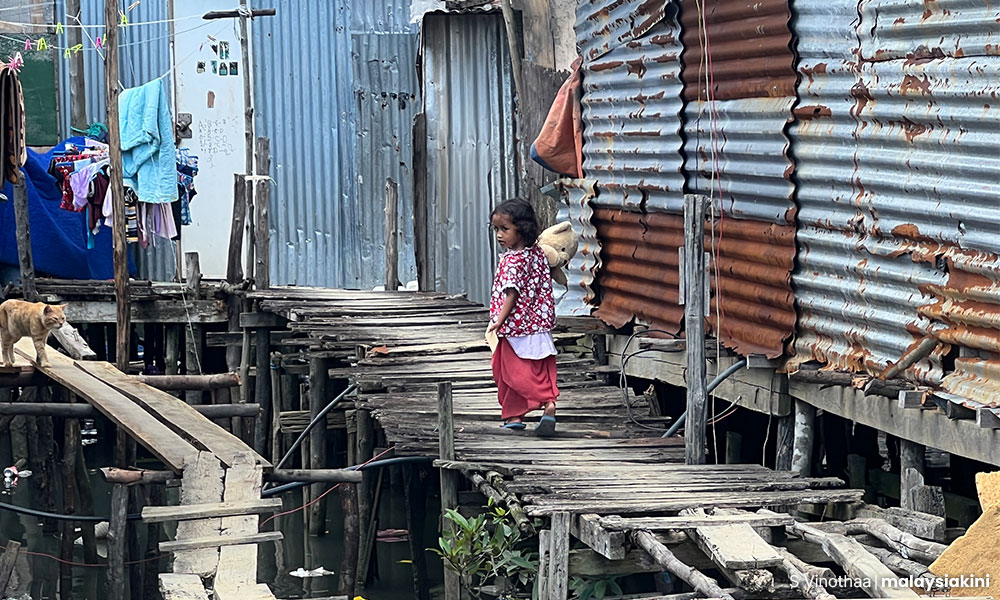
The young mother, her baby, and her husband had lived in a small wooden house on stilts alongside hundreds of other wooden houses similarly fashioned in their simplicity, firmly planted into the muddy seabed just off the shores of Lahad Datu town.
Hassan recalled how before she made her final decision, the teenager was threatened with police detention if she didn’t settle the bill.
“I investigated the case immediately and found they even threatened to detain her and her baby at the hospital,” he said.
Hospital sources who spoke to Malaysiakini on condition of anonymity confirmed that learning she could lose custody of her child added to the mother’s distress.
“It was common for hospital staff to threaten patients saying: ‘You cannot leave the hospital if you don’t settle your bill’ or ‘we will call the police’,” Hassan said.
READ MORE: Baby snatching: How stateless mums lose their infants in Sabah hospital
Hassan said the constant berating and rude treatment of Bajau Laut and other undocumented people at the hospital made them feel incredibly insecure.
“What more a young, timid girl with no friends in the hospital, vulnerable with worry for the welfare of her baby,” he said.
Following the tragedy, fewer and fewer people from the Bajau Laut community are seeking medical treatment, with some waiting until they are in critical condition, he said.
This is because upfront payment for registration is temporarily waived in emergency situations.
“So, many will wait and bear with the pain until it is unbearable. Many have perished this way,” he said.
Malaysiakini has contacted the Lahad Datu Hospital for comment.
National Human Rights Commission (Suhakam) commissioner Mariati Robert has visited the hospital to investigate the complaints and said the commission can only issue a statement once the probe is completed.
Treated like intruders
The Bajau Laut are recognised by the Sabah government as indigenous to the state but are generally hounded as "illegal immigrants" due to their undocumented status.
As non-citizens, they must make upfront payments for all medical services they receive in public hospitals, starting with a registration fee of RM100 for the emergency department and RM120 for outpatient clinics
Government circulars are clear about charges for foreign nationals but are silent about the stateless category of patients medical officers refer to as UR or “unregistered”.
Unlike the charges which differ between citizens and non-citizens, the issue of statelessness isn’t so black and white.
In several families met by Malaysiakini, some siblings from the same parents are citizens while others are considered foreign.
The reasons are often bureaucratic, leaving devastating consequences like in the case of a stateless nine-year-old Andy (not his real name) who died of HIV/AIDS after being deprived of life-saving treatment for many years.
He was stateless even though he was born in Malaysia to a Malaysian father because his parents were unwed.
The boy’s mother is stateless even though she was born to Malaysian parents who were married because her father's name was misspelled on her birth certificate and a delay in registering for a MyKad as a teenager.
READ MORE: Stateless boy with HIV dies after deprived treatment for years
Inherited statelessness
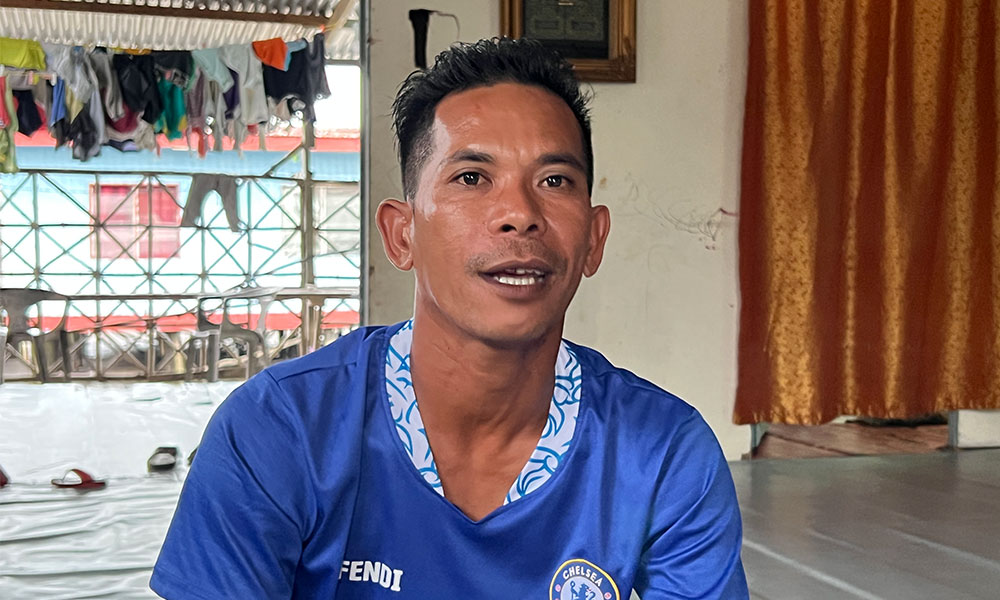
Like Andy, the children of Fandry Alsao, 35, face citizenship issues even though they were born in Malaysia and Fandry is Malaysian.
His wife, who declined to be named, is the third generation in her family to be born in Malaysia. However, her birth certificate states her ethnicity as “Filipino” and that she is a “non-citizen”, even though she has never stepped out of Malaysia and has no known family in the Philippines.
Because of her status, the couple could not register their marriage and, as such, their six children inherited their mother’s statelessness.
According to the law, anyone who was born in Malaysia to a Malaysian parent will be granted citizenship but the parents’ marriage must be registered.
Fandry’s citizenship allows him to extend subsidised healthcare privileges to his children up to the age of 13.
This is because the Health Ministry’s policy exempts children under the age of 12 from fees if either parent is a citizen or permanent resident.
Their oldest son turned 13 last year.
“He is only 13 years old. How is he supposed to have money to pay for any medical treatment?” Fandry asked.
Treating symptoms at GP
All of Fandry’s siblings are citizens except for his eldest brother, who raised them all after their parents died. The reasons for this discrepancy are unclear.
Fandry's brother, a fisher who declined to be named, hobbles in his boat and heads to sea despite the shooting and at times debilitating pain from his swollen leg. It remains undiagnosed because he couldn’t afford the cost of tests at Lahad Datu Hospital.
“He paid the RM100 registration fee and another RM120 upfront for the blood test but was unaware there were more tests to be done.
“He didn’t have enough to pay for the urine test that followed, so they sent him home without a diagnosis or medication,” Fandry said.
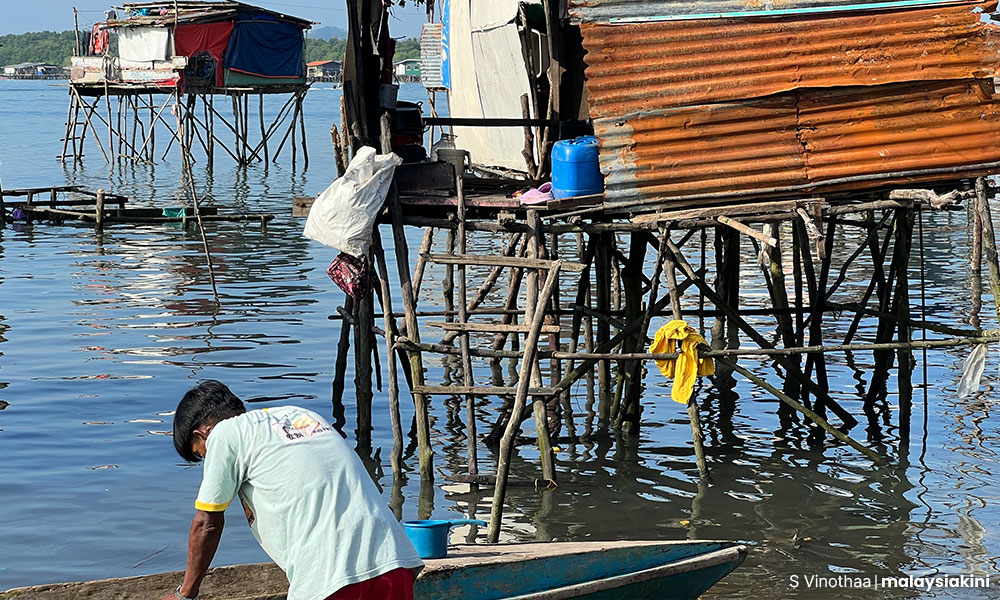
Once his brother saved up enough money again, he opted to visit a private clinic to save on the RM100 registration fee but was only treated with painkillers for the symptoms.
He is not the only one taking this stopgap measure to avoid the exorbitant registration and test fees required upfront at Lahad Datu Hospital.
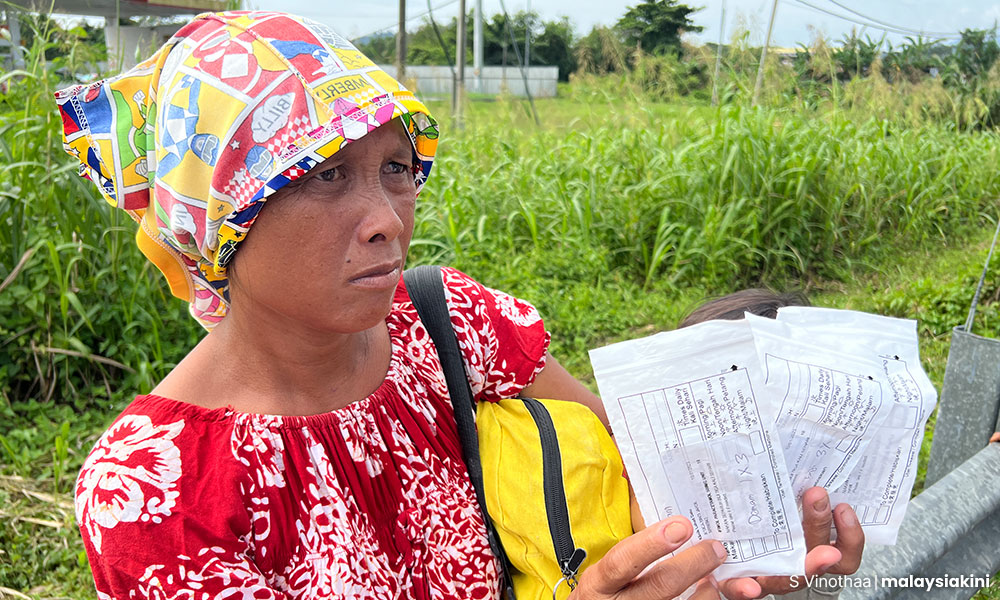
At an intersection just outside of town, Malaysiakini finds a Bajau Laut woman begging for change with her children.
“Each trip to the doctor is planned ahead and I beg at the traffic lights to save up enough to pay for medicine,” she described, pulling out a handful of medication packets.
Saving resources for citizens
Malaysia is not a party to the 1954 United Nations (UN) Convention on Status of Stateless Persons or the 1961 Convention on the Reduction of Statelessness and so is not bound to provide undocumented and stateless persons access to education, employment, housing, and even public relief.
This is despite the UN urging Malaysia to improve its international human rights obligations through recommendations made in 2019 following the 2018 Universal Periodic Review.
Ten percent of its 268 recommendations touched on improvements to health with a specific mention of ensuring non-citizens were not burdened with deposits for admissions to public hospitals.
The recommendations to Malaysia made by UN member states also stressed that non-citizens are not charged higher fees than locals.
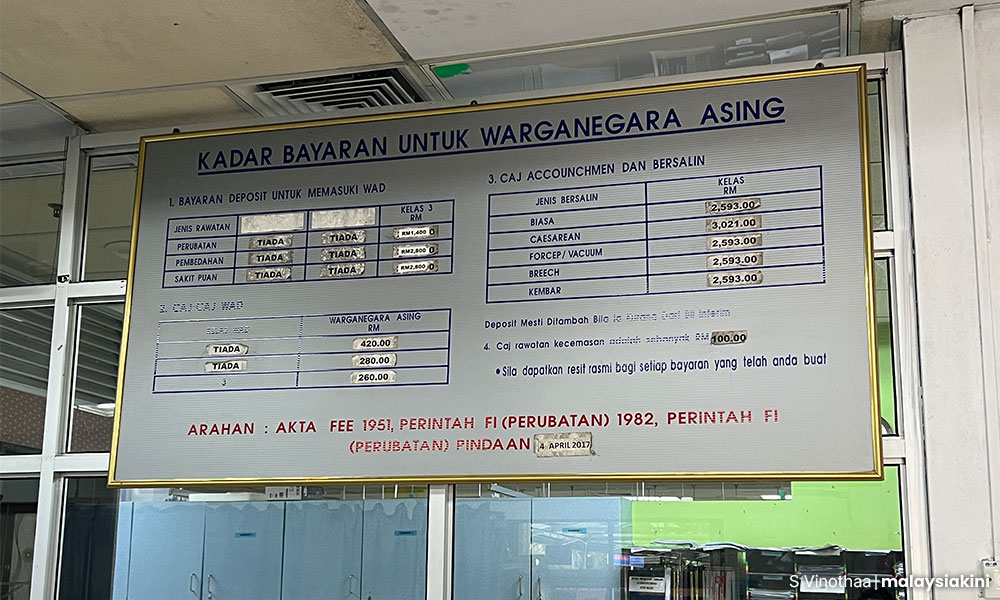
But these calls have remained unheeded, with the Lahad Datu Hospital revenue department’s zeal for payments leaving no room for discretion.
The popular view may be that such actions are justified as resources, including hospital beds, in public healthcare are scarce and citizens should be prioritised.
In 2013, during a Royal Commission of Inquiry hearing on statelessness in Sabah, a Sabah Health Department representative said treatment provided to foreigners was taking up resources that “can be used to treat the locals”.
A matter of life and death
However, one medical officer in a tertiary hospital in Kota Kinabalu said that practically, this is not always the case.
“For example, the hospital has enough equipment and drugs to open 14 beds in the intensive care unit (ICU) but can only accommodate eight patients because we are understaffed.
“So, does it matter if the stateless person can pay the high price listed?” he asked.
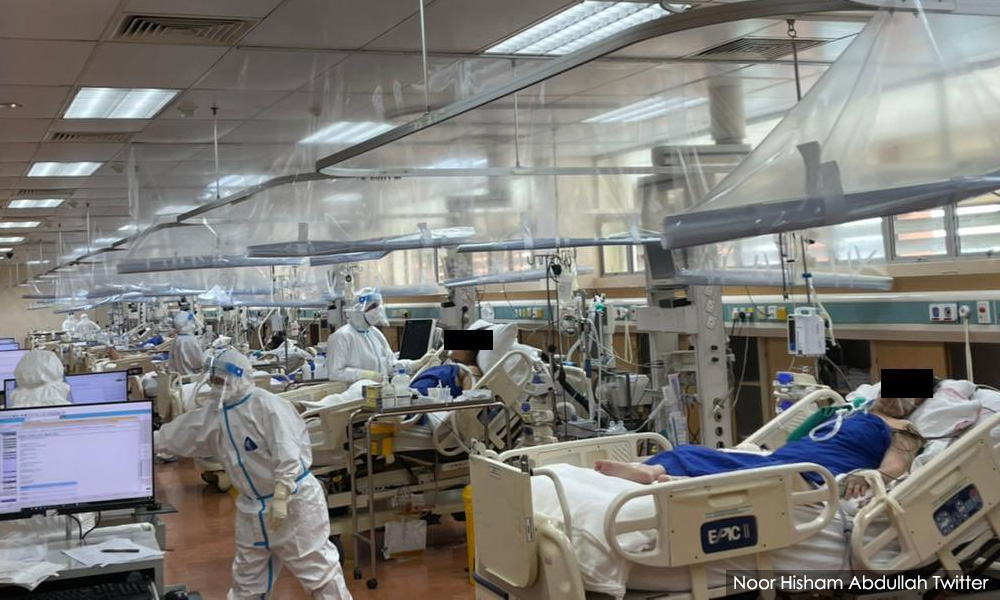
The medical officer shared how during the height of the pandemic, the last ICU bed at a hospital treating Covid-19 was taken up by a foreigner.
“But, did the last patient to be admitted to the ICU ward deny a chance of survival to the six people who died the next day because they could not be given intensive care?” he asked.
He said in the tertiary hospital he worked in, the hospital director allowed doctors a lot of leniency in treating the stateless who could not afford the fees.
But in Lahad Datu and other parts of Sabah, healthcare professionals are deciding who lives or dies based on their citizenship.
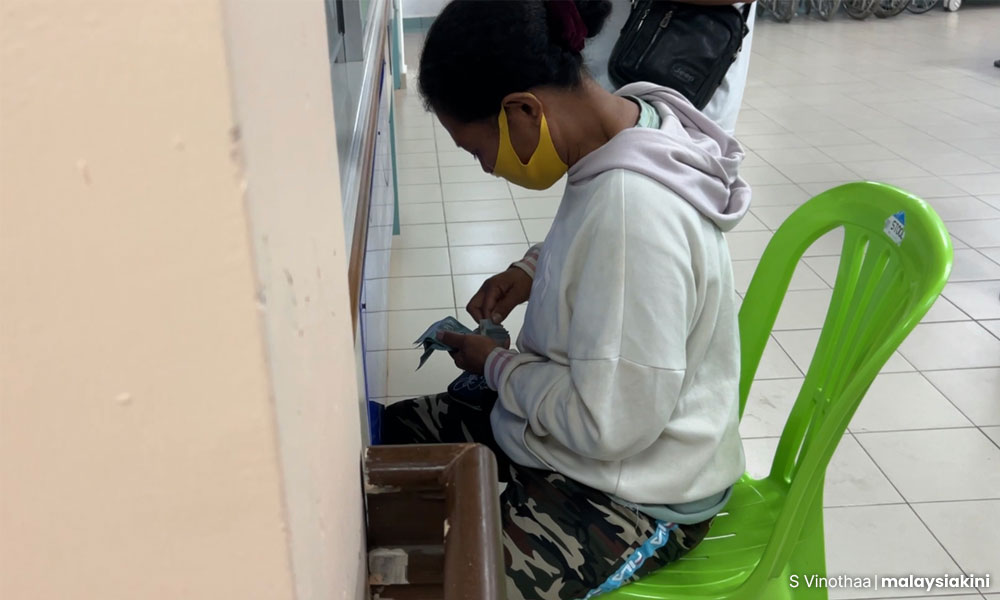
In Kudat, one medical officer recalled holding a critically ill girl in the Red Zone in the emergency department for 12 hours while her father scrambled to find the RM1,200 needed to treat her.
She was experiencing severe pressure on her brain from an injury and needed urgent surgery, but the emergency department could only provide basic care.
Finally, the family was unable to find the money and she was sent home.
“Surgery could have saved the child.”
Part 1: Baby snatching: How stateless mums lose their infants in Sabah hospital
Part 2: Stateless boy with HIV+ dies after deprived treatment for years
Tomorrow: Toddler’s death by croc attack shows tragic fate of the stateless
/file/publisher-c1a3f893382d2b2f8a9aa22a654d9c97/2023/08/af93dbf459226bdf12935790f89f84d1.jpg)
/file/publisher-c1a3f893382d2b2f8a9aa22a654d9c97/2020/09/8a083fbedd0102cb6c5a681fc2700c33.jpg)
/file/publisher-c1a3f893382d2b2f8a9aa22a654d9c97/2023/09/648c67a80914f53d05d5d91eb1d38075.jpg)
/file/1035/b71f20a1a8a386cb25657d9f53ecb8f8.jpg)
/file/publisher-c1a3f893382d2b2f8a9aa22a654d9c97/2023/07/be2ff074744f3c8af454b2ba7a7fdb7d.jpg)


Are you sure you want to delete this comment?
This action cannot be undone.